Gabon strengthens economic diplomacy with African and international partners
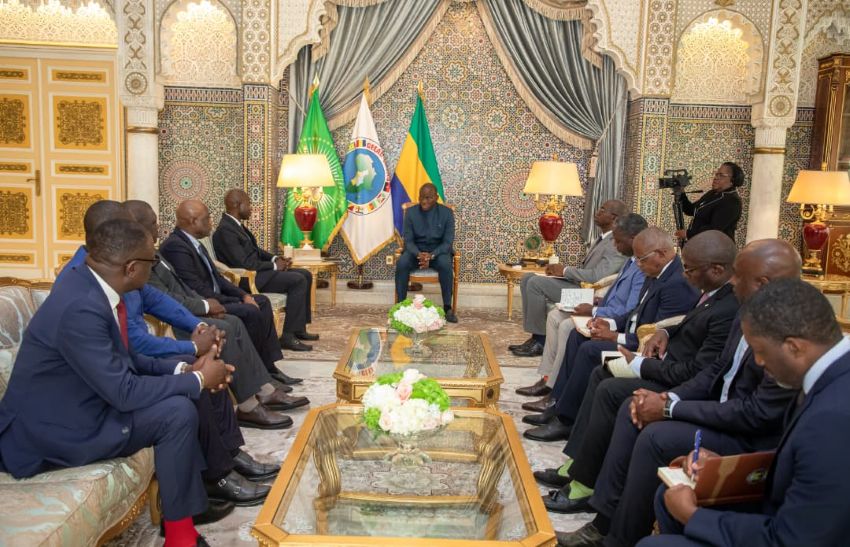
Libreville, June 3, 2026 — Housing, infrastructure, African finance, and private investment. In Libreville, President Brice Clotaire Oligui Nguema is advancing a strategy that blends African capital with international partnerships to drive sustainable growth in Gabon’s economy.
As African nations seek to balance economic expansion, social inclusion, and national sovereignty, Gabon is accelerating efforts across multiple fronts. Tuesday’s high-level meetings—where the president received Idrissa Nassa, CEO of Coris Bank International, and Zhu Junbo, CEO of the Chinese firm COVEC—highlight a core pillar of the government’s agenda.
Beyond formal diplomatic courtesy, these discussions underscore a broader vision: a state determined to mobilize African capital, attract foreign investors, and reignite key infrastructure projects to bolster the country’s economic transformation.
African capital takes center stage
The meeting with Idrissa Nassa carried special significance. The Coris Bank delegation included influential Burkinabè business leaders such as Roland Sow (President of the Burkina Faso Chamber of Commerce), Saïdou Tiendrébeogo (President of Burkina Faso’s Real Estate Developers Association), and Achille Ouédraogo (President of the Young Entrepreneurs Network of Burkina Faso).
This gathering reflects a pivotal shift in Africa’s economic landscape. While historically reliant on European, American, and Asian capital, many African countries now see homegrown financial groups emerging as cross-border investors. Gabon is positioning itself at the heart of this movement.
Key topics included Gabon’s ambitious housing program—a social initiative with far-reaching economic implications. Housing development engages banks, construction firms, material suppliers, public services, and local labor markets, creating a ripple effect of opportunity.
By inviting Coris Bank to participate, the Gabonese president is championing a model where African solutions finance Africa’s development.
Housing as a catalyst for growth
Access to affordable housing remains a cornerstone of Gabon’s presidential agenda. Yet the benefits extend well beyond shelter. In emerging economies, housing drives social stability, wealth creation, and urban development.
By promoting homeownership, the government boosts savings, strengthens the middle class, and fuels economic activity. This explains the critical role assigned to financial partners in executing the housing initiative.
The announcement that Coris Bank will build its new headquarters on Boulevard de la Transition further signals the group’s long-term commitment to Gabon’s economy.
Infrastructure regains its pivotal role
The second meeting focused on a historic challenge for Gabon: infrastructure. Zhu Junbo, CEO of COVEC, outlined plans to resume work on critical road projects, including Ndendé-Tchibanga and Tchibanga-Mayumba in Nyanga, as well as Sibang-Bambouchine in Estuaire.
The impact of these roads extends beyond transportation. They lower logistics costs, facilitate trade, improve access to public services, attract investors, and bridge regional divides. Across Africa, infrastructure is the invisible backbone of economic growth—its absence stifles progress, while its presence fuels it.
Reviving these projects sends a clear message to national and international investors alike.
A strategy for economic sovereignty
Both meetings share a common theme: Gabon’s push to diversify partnerships without compromising its sovereignty. African capital is being tapped, international firms remain engaged, and the sectors prioritized align closely with citizens’ daily lives.
Housing, roads, agriculture, livestock, and financial inclusion—these are the pillars that will help reduce dependence on oil revenues and build a more resilient economy.
The success of this strategy now hinges on the execution of these commitments. Citizens expect completed homes, finished roads, accessible banking services, and tangible economic opportunities.
What’s already evident is President Oligui Nguema’s intent to position Gabon at the center of a new African economic geography—one where development is not dictated by external aid but driven by African investors shaping their own future.