Friction has surfaced at the highest levels of the state following a specific request from Bassirou Diomaye Faye to Ousmane Sonko. The President suggested that their political separation be presented to the public as a mutual consensus, a proposal that was met with a firm refusal. This revelation highlights the deep-seated tensions and the complex atmosphere surrounding the end of their collaboration.
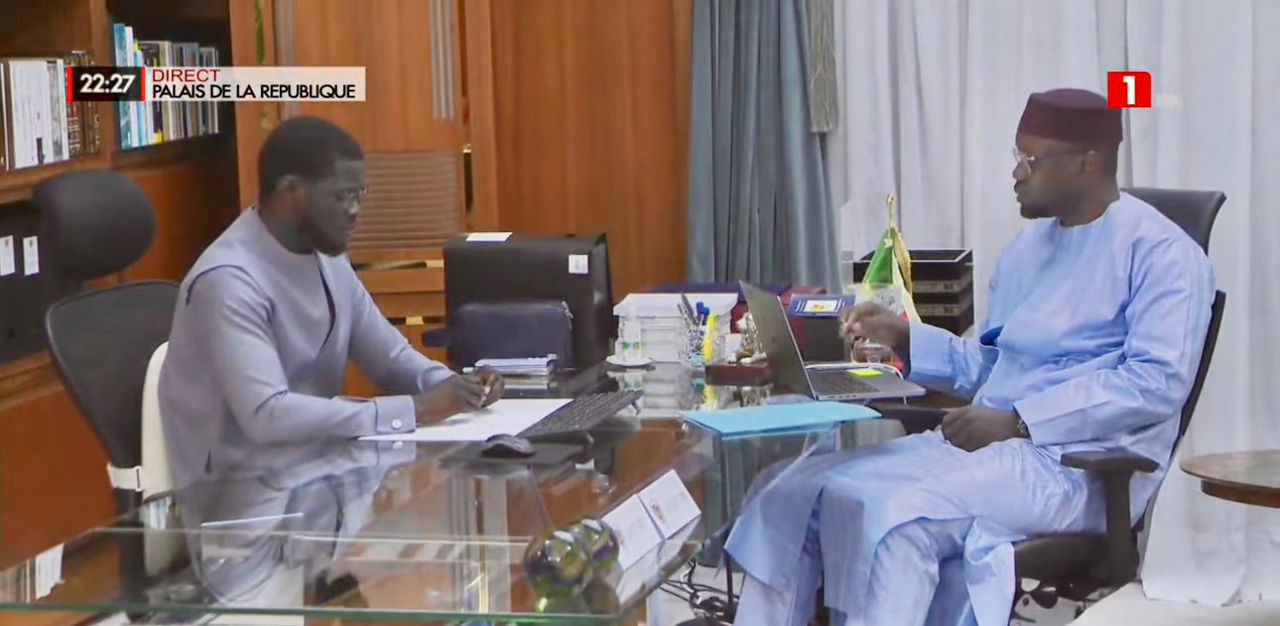
The departure of the former Prime Minister was marked by sharp exchanges and unresolved questions. Ousmane Sonko has clarified the circumstances of his exit, emphasizing that he never sought this rupture and was surprised by the President’s approach.
According to the former head of government, Bassirou Diomaye Faye wanted the official narrative to state that they were parting ways by “mutual agreement.” This was rejected by Ousmane Sonko, who argued that no such discussion had taken place. He maintains that the decision was made unilaterally by the President, leaving no room for a shared conclusion.
In the hours following the dismissal, Ousmane Sonko reportedly requested a short window of 24 to 48 hours to handle the practicalities of the transition. However, the presidency moved forward immediately, launching the official process without coordinating the political communication regarding the split.
A separation accepted in substance but disputed in form
Despite the abrupt nature of the decision, Ousmane Sonko, a pivotal figure in the ruling coalition, describes his departure as a form of “liberation” rather than a political setback. He had established a clear rule from the beginning of their partnership: he would never be the one to initiate a break. Once the decision was finalized, he returned home the same day, followed by a period of silence between the involved parties.
The situation grew more complicated during the formation of the subsequent government. Tensions flared when it became known that the presidency had started consulting outgoing ministers who were members of the Pastef party. Ousmane Sonko advised these officials to decline the invitations, insisting that any such discussions must go through the party’s official channels.
This standoff lasted for several days before an attempt was made to reconnect. A meeting was proposed involving key political figures, including Birame Souleye Diop, El Malick Ndiaye, Alioune Sall, and Daouda Ngom. However, this initiative did not lead to a resolution.
Ultimately, final discussions were held with Prime Minister Al Aminou Lo. Despite these talks, no agreement was reached on the critical issues raised by the former Prime Minister’s camp, particularly concerning judicial matters, public accountability, and the management of national debt.