Gabon-France ties: a landmark state visit reshaping bilateral relations
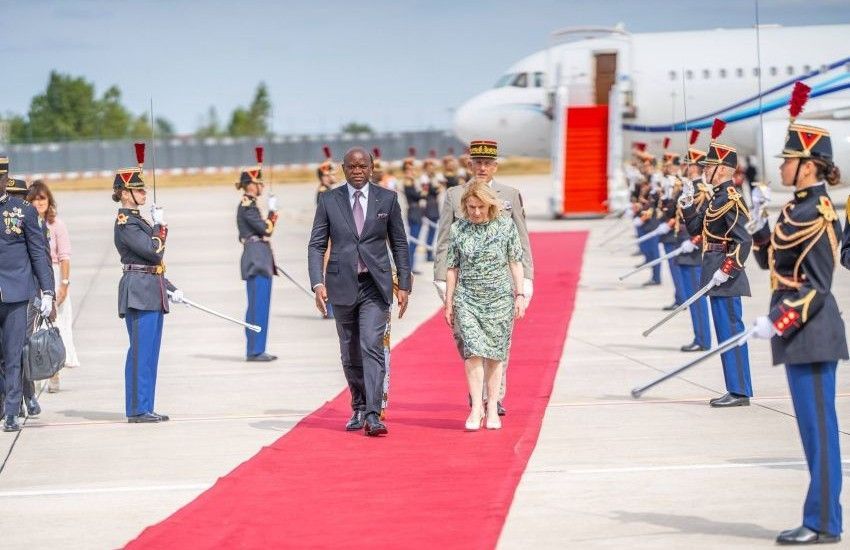
Libreville, Monday 20 July 2026 — Beyond pomp and protocol, the three-day state visit of Gabonese President Brice Clotaire Oligui Nguema to France marks a pivotal moment in reshaping the long-standing partnership between Libreville and Paris. This landmark diplomatic engagement is set against a backdrop of shifting geopolitical dynamics across Africa and France’s evolving strategy on the continent.
While official ceremonies and military honors traditionally dominate such visits, the true significance lies in the substance of the discussions. Economic cooperation, industrial sovereignty, security, diplomacy, and engagement with the Gabonese diaspora emerge as the core pillars of an agenda poised to redefine the future of Franco-Gabonese relations.
The symbolism is unmistakable. President Oligui Nguema, for the first time since assuming office, is received in France on a state visit—the highest diplomatic protocol level. This decision underscores both capitals’ intent to inaugurate a new chapter in their relationship, particularly as global power balances shift and France rethinks its footprint in Africa.
Announced in June by the Gabonese head of state, this visit transcends ceremonial formalities. A high-powered delegation, including government officials, entrepreneurs, and media representatives, accompanies the president, signaling a clear ambition to infuse the trip with economic, institutional, and strategic depth.
A three-day agenda packed with substance
The itinerary begins with a ceremonial stop at the Palace of Versailles, followed by military honors at the Hôtel National des Invalides, culminating in a private tête-à-tête between President Oligui Nguema and President Emmanuel Macron at the Élysée Palace. This bilateral meeting represents the political heart of the visit.
Discussions are expected to build on frameworks established during France’s November visit to Libreville. Among the priorities are the signing of new bilateral agreements designed to strengthen cooperation across key sectors. Central to the talks are Gabon’s economic transformation, infrastructure modernization, industrial development, investment enhancement, and defense partnership evolution.
A particularly notable objective is Gabon’s push to secure the transfer of the De Gaulle military camp’s land title. The site is slated for conversion into a national training center for Gabon’s defense and security forces—a move aimed at bolstering national sovereignty and operational readiness.
The second day places historical memory at the forefront, with a wreath-laying ceremony at the Arc de Triomphe and a visit to Mont-Valérien, a historic site commemorating French Resistance fighters, including many African soldiers executed during World War II. This gesture underscores the deep historical ties binding the two nations.
Diplomacy rooted in people and progress
The visit extends beyond presidential exchanges, featuring institutional meetings with French Senate President Gérard Larcher and Paris Mayor Emmanuel Grégoire. A tour of the restored Notre-Dame Cathedral adds a cultural dimension to the diplomatic agenda.
Yet the most anticipated moment may well be the president’s meeting with the Gabonese diaspora in France. Authorities are framing this encounter as an open dialogue platform, inclusive of critical voices. In a context where recent policies have sparked debate within the diaspora, this exchange serves as a litmus test for Gabon’s commitment to inclusive, transparent engagement with its citizens abroad.
This outreach reflects a broader shift toward a more participatory diplomacy, where expatriates are viewed as key stakeholders in shaping bilateral relations.
From symbolism to tangible outcomes
The true measure of this visit will not be measured in ceremony, but in the ability of both nations to translate dialogue into action. Official gestures and statements carry weight only if the signed agreements deliver measurable benefits for both populations.
For Gabon, the visit offers a strategic opportunity to accelerate the implementation of the Fifth Republic’s vision: securing partnerships that drive industrialization, infrastructure growth, human capital development, and economic diversification.
For France, the visit sends a powerful signal across Africa—one of partnership based on mutual respect, investment, and shared interests rather than outdated models of influence.
As the 72-hour visit draws to a close, history will judge its success not by the grandeur of the events, but by whether it marks the beginning of a new era in Franco-Gabonese relations—one defined by results, renewed trust, and a shared vision for the future.