Gabon 2027: the bold shift to results-based budgeting
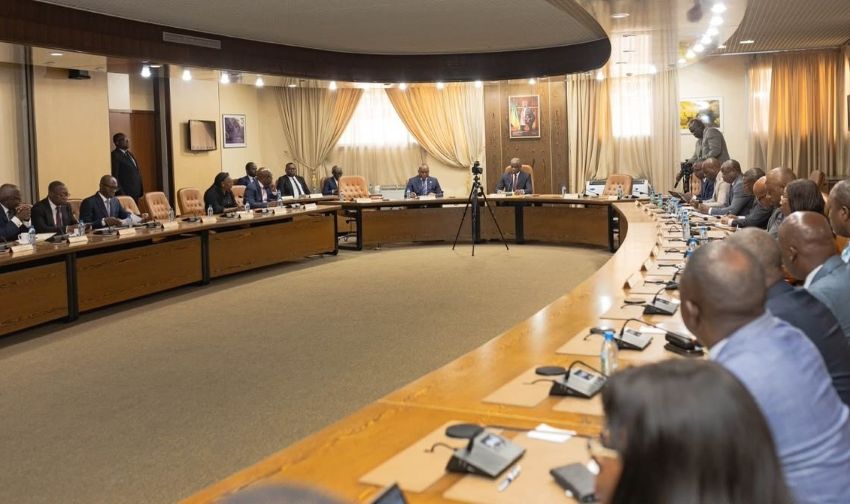
Libreville, July 16, 2026 — Gabon is preparing to launch one of the most ambitious budgetary reforms in its recent history. As the preparatory conferences for the 2027 Finance Bill get underway, officials are not merely initiating an annual accounting exercise. They are signaling a definitive break from decades of administrative management that prioritized credit consumption over measurable outcomes.
The message to government departments is unambiguous. Budgets can no longer be static allocations of operating funds. Every franc mobilized must now generate tangible returns—whether in infrastructure, public services, employment, or economic growth. In a region where public spending efficiency remains a persistent economic challenge, Gabon is positioning its budget as a catalyst for national transformation.
Ending automatic budgeting
At the core of this reform lies a fundamental shift in fiscal philosophy. Public expenditure will no longer be justified by historical precedent but by its capacity to deliver concrete results. New performance benchmarks now include completed roads, constructed schools, improved electricity access, job creation, business development, and revenue growth. This paradigm shift directly addresses longstanding concerns raised by international financial institutions, including the mechanical rollover of budget credits, insufficiently documented expenditures, and unreported public revenue streams.
Under this new framework, departments must submit comprehensive, evidence-based proposals with clear objectives. Public agencies are now required to fully account for generated revenues, ensuring these funds are reintegrated into state coffers to enhance transparency and fiscal accountability. For international partners, this represents a significant credibility signal in an era where governance quality is increasingly central to economic trust.
Ambitious growth with controlled assumptions
The government has set a 5.1% growth target for 2027, up from an expected 4% this year. This acceleration would stem primarily from public and private investments alongside the expansion of productive sectors. Notably, fiscal projections are built on conservative oil price assumptions—a deliberate strategy to reduce the economy’s vulnerability to volatile global energy markets.
Diversification efforts now center on manganese, processed timber, and palm oil as the key growth drivers identified by policymakers. This marks a renewed commitment to economic diversification that, if sustained, could set a regional precedent for reducing oil dependency.
Yet the challenge remains formidable. Few oil-producing nations have successfully transitioned away from hydrocarbon reliance without implementing sweeping economic and governance reforms.
Balancing fiscal discipline with social imperatives
Budget preparations coincide with ongoing discussions between Gabon and the International Monetary Fund. Authorities have reassured the public on one critical point: fiscal consolidation must not come at the expense of citizens.
Social spending is set to be protected, with particular focus on potable water, electricity, healthcare, education, and support for vulnerable households. Six priority areas are already shaping budget negotiations: water and energy services, youth entrepreneurship, infrastructure, housing, social justice, sustainable development, and institutional strengthening.
The equation remains complex. Scarce resources must meet immense social expectations. The true test of the 2027 budget will not lie in parliamentary approvals but in the state’s ability to convert allocated funds into visible improvements for citizens. Ultimately, the verdict will come from the people themselves. If schools function better, if utilities become more reliable, if youth find greater opportunities, and if infrastructure develops as promised, Gabon will have succeeded in its transition to a new era of public financial management. Should this vision falter, the results-based budget may simply join the long list of unfulfilled African reform initiatives. The year 2027 could thus mark a pivotal moment for Gabonese economic governance—and perhaps inspire neighboring nations to follow suit.