equitable development ends Gabon’s regional divides
Libreville — For decades, Gabon has grappled with a stark development paradox. A nation abundant in natural riches with a modest population density and substantial financial means has, paradoxically, allowed glaring disparities to widen between its thriving urban centers and the rest of the country.
In multiple provinces, access to fundamental services—reliable infrastructure, healthcare, education, and economic opportunities—has remained woefully inadequate. President Brice Clotaire Oligui Nguema has now made bridging this territorial divide the cornerstone of his administration’s agenda.
Addressing a joint session of Parliament, he delivered a resolute message: “No community will be overlooked.” Beyond the pledge to construct roads and buildings, this statement signals a deeper commitment—a vision of Gabon where geography no longer dictates destiny, where every region contributes to national prosperity, and where the state’s presence is felt uniformly across the land.
Repairing decades of uneven progress
The challenges are immense. Historically, public investments have favored a handful of urban hubs, particularly Libreville and Port-Gentil. This imbalance has fueled rural exodus, deepened regional inequalities, and fostered widespread perceptions of neglect in inland territories.
Yet the repercussions extend far beyond local frustrations. A province lacking well-maintained roads, functional hospitals, adequate schools, or accessible administrative offices stifles its own economic potential. Development economists consistently highlight territorial inequalities as a critical barrier to sustainable growth in Africa. Without robust infrastructure, attracting investment, leveraging local resources, and generating lasting employment opportunities become daunting tasks.
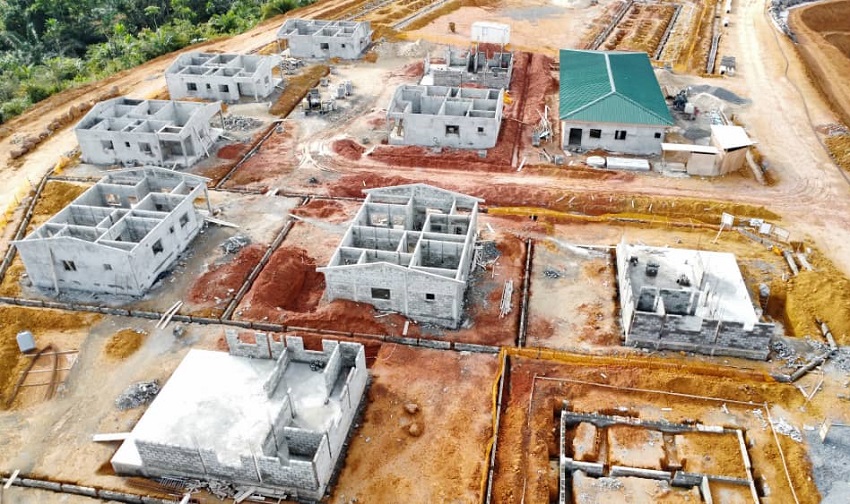
President Oligui Nguema’s strategy directly confronts this reality. The ongoing projects in Cocobeach, Makokou, Oyem, Bifoun, and underserved neighborhoods of Libreville reflect an unprecedented push for balanced territorial development in Gabon’s modern history.
Empowering local economies through strategic infrastructure
The impact of this policy transcends mere construction metrics. It embodies a transformative economic philosophy: national progress cannot hinge on a few decision-making enclaves.
Each new road, hospital, university, or housing project is designed as a catalyst for growth. A paved road unlocks agricultural markets. A modern hospital enhances a city’s appeal. A university retains local talent. A residential program revitalizes the construction sector. These initiatives create ripple effects that can reshape entire regions.
This strategy aligns with global best practices. Countries such as Morocco, Rwanda, and Senegal have demonstrated how proactive territorial development policies can spur economic expansion while easing social tensions.
For Gabon, this approach could catalyze the rise of new regional economic hubs, complementing Libreville and Port-Gentil’s traditional roles as the nation’s economic engines.
Rebuilding trust between citizens and the state
The implications of this policy extend into the political realm. By prioritizing local concerns through presidential field visits and project oversight missions, the administration is breaking away from a governance model often criticized as disconnected from ground realities.
Yet the true test lies ahead. Gabonese citizens will measure success not in rhetoric, but in tangible outcomes: roads completed on schedule, hospitals fully operational, schools equipped and staffed, and reliable access to water and electricity. On these concrete benchmarks hinges the credibility of the presidential promise.
The declaration “No community will be overlooked” embodies more than a development agenda—it represents a fundamental reimagining of the Republic. A vision that refuses to consign any territory to the sidelines of progress.
Should this ambition materialize into lasting results, it could mark one of the most profound transformations in Gabon’s modern era. The strongest nations are not those that merely uplift a few cities; they are those that empower every region to shape their collective future. That is the profound wager President Oligui Nguema has taken: converting territorial equity into a driving force for national cohesion and shared prosperity.