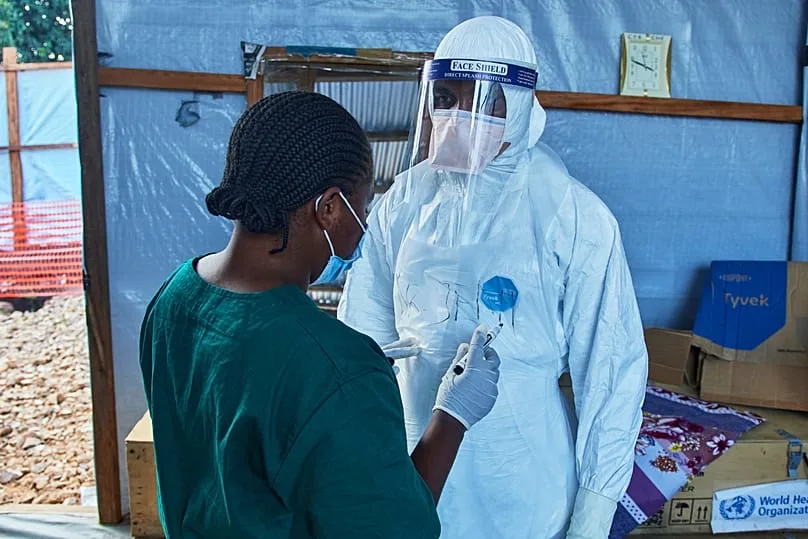
Congo DRC Ebola outbreak death toll surpasses 2,000
Health authorities in the Democratic Republic of Congo (DRC) have reported a grim milestone: more than 2,011 lives lost to the ongoing Ebola outbreak this year, marking one of the deadliest chapters in the country’s public health history. Official data released late Tuesday confirmed 4,381 confirmed cases, intensifying concerns about the epidemic’s rapid escalation.
The path to this devastating tally has been alarmingly steep. While the first 1,000 deaths took nearly nine weeks to accumulate, the second 1,000 were recorded in just three weeks—a stark indicator that transmission is accelerating beyond current containment measures.
Obstacles in reaching remote communities are compounding the crisis. Rebel violence, impassable rural roads, and healthcare worker strikes over unpaid wages have severely hampered the delivery of medical aid and supplies to affected regions, particularly in hard-to-access areas.
A local physician managing patients in Ituri, a northeastern province at the heart of the outbreak, described the situation as “alarming”. Dr. Jean-Marie Akandabo emphasized the urgent need for intensified response efforts in the most affected localities, where healthcare systems are already stretched to their limits.
This is the country’s worst Ebola crisis on record
This marks the 17th recorded Ebola outbreak in the DRC, but it has already been declared the nation’s largest and deadliest. Health experts warn that “it could become the most devastating outbreak ever recorded”, according to Sania Nishtar, CEO of Gavi, the global vaccine alliance. The current case fatality rate stands at 45.9%, far exceeding the 39.6% recorded during the devastating 2014–2016 West Africa outbreak—the deadliest in history, with over 11,000 deaths.
Emergency declared as virus spreads unchecked
The epidemic was officially declared on May 15, yet genomic analysis reveals the virus had likely been circulating undetected since February. In response, the DRC government declared a national health emergency, mobilizing national and international support to curb the spread.
This outbreak is distinct from previous ones due to the rare Bundibugyo ebolavirus strain circulating—one for which no approved vaccines or treatments currently exist. Clinical trials for experimental vaccines have begun in Ituri, the outbreak’s epicenter, as health workers race against time to test potential countermeasures.
The World Health Organization (WHO) has raised urgent concerns about the widening gap between the spread of the virus and the response capacity. Staffing shortages, underfunded health facilities, and ongoing strikes by healthcare workers have crippled containment efforts. Most new cases are being identified outside of monitored contacts, signaling that transmission chains remain largely invisible to health teams.
Global health risks rise as containment fails
Paul Hunter, an infectious disease specialist at the University of East Anglia, UK, highlighted the critical challenge: “Without an effective vaccine, controlling this outbreak depends entirely on early detection and isolation of cases in secure facilities—until recovery or death.” In a region plagued by conflict, disrupted communications, and limited access, “identifying cases early enough to prevent spread may be impossible.”