
Chad’s political landscape under Mahamat Idriss Déby Itno
Since assuming power in April 2021, Mahamat Idriss Déby Itno has faced mounting pressure from both domestic and international observers over his governance approach. His administration has been characterized by a mix of strategic reforms and heavy-handed tactics, particularly against dissenting voices. Critics argue that his government’s crackdown on opposition groups has intensified, raising concerns about Chad’s democratic trajectory.
Opposition figures and their fractured unity
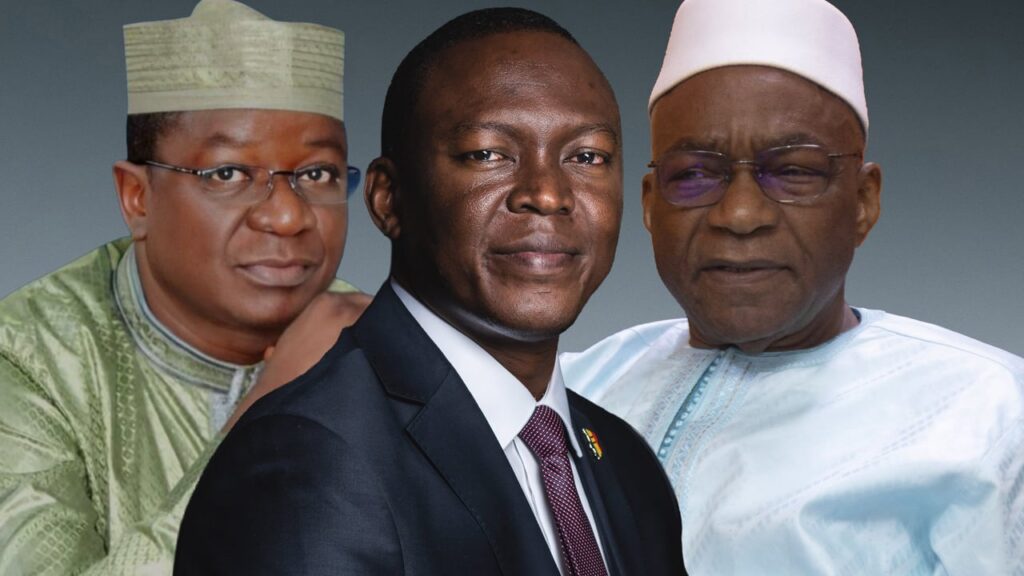
The country’s political opposition, once a vocal force, now finds itself weakened by internal divisions. Key figures such as Albert Pahimi Padacké, Succès Masra, and Saleh Kebzabo have struggled to present a united front against the transitional leadership. Despite their shared goal of challenging Déby Itno’s rule, their strategies and priorities often clash, leaving them fragmented in their efforts.
Albert Pahimi Padacké’s shifting alliances
Albert Pahimi Padacké, a prominent political figure, has navigated a complex web of alliances. His party, the Union Nationale pour la Démocratie et le Renouveau (UNDR), has at times aligned with the transitional government, while at others, it has vocally opposed it. This inconsistency has eroded public trust in his leadership and further splintered the opposition’s cohesion.
Succès Masra’s bold defiance
Succès Masra, leader of the Les Transformateurs party, has emerged as one of the most vocal critics of Déby Itno’s administration. His calls for democratic reforms and accountability have resonated with younger, disillusioned voters. However, his confrontational stance has also made him a target for state repression, including arrests and restrictions on public gatherings.
Saleh Kebzabo’s enduring influence
Saleh Kebzabo, a veteran politician with decades of experience, remains a significant figure in Chad’s opposition. His party, the Parti National pour la Démocratie et le Développement (PNDS), has historically been a major player in the country’s political scene. Yet, even Kebzabo’s influence has waned under the current administration, as his attempts to mobilize support have been met with obstacles.
Government tactics and the erosion of dissent
The transitional government has employed a range of measures to suppress opposition activity. These include legal restrictions on political gatherings, media censorship, and targeted arrests of high-profile critics. International human rights organizations have condemned these actions, warning that they undermine Chad’s constitutional commitments and stifle political pluralism.
The road ahead for Chad’s opposition
With the transitional government showing no signs of easing its grip, the opposition faces an uphill battle. Rebuilding unity among fractured factions will be critical to mounting an effective challenge. Meanwhile, civil society and international partners continue to call for a return to democratic norms, but the path forward remains uncertain. As Chad’s political crisis deepens, the fate of its opposition hinges on its ability to overcome internal strife and adapt to an increasingly repressive environment.