In Chad, the political landscape often sparks debate regarding the true alignment of its leaders. A central question frequently arises: is Mahamat Idriss Déby Itno genuinely a sovereignist?
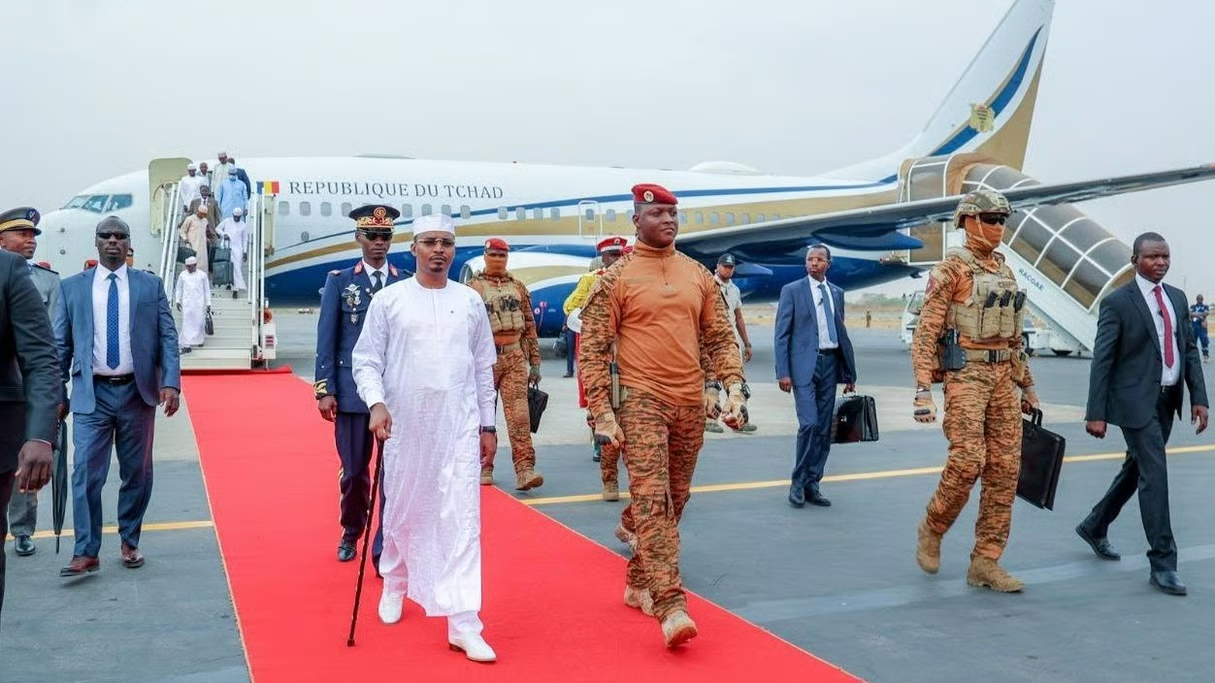
This inquiry gains particular traction when observing his diplomatic engagements. For instance, a notable interaction occurred on February 21, 2025, when Mahamat Idriss Déby Itno was formally welcomed by Ibrahim Traoré, the head of the Burkinabè junta, upon his arrival in Ouagadougou. This meeting between the Chadian transitional president and a key figure within the Alliance des États du Sahel (AES) – an alliance often associated with strong sovereignist rhetoric and a distinct stance on regional and international partnerships – offers a glimpse into the complexities of Chad’s foreign policy and Déby Itno’s strategic positioning.
Such high-level exchanges with leaders like Ibrahim Traoré, and by extension, the broader context of the AES which includes figures like Assimi Goïta of Mali, are closely scrutinized by observers seeking to understand the depth of Mahamat Idriss Déby Itno’s commitment to sovereignist principles, distinguishing between outward appearances and actual policy direction. The question remains a significant point of discussion in regional political analysis.