Cameroon’s security crossroads: why Atonfack Guemo’s call demands decisive action
In a bold editorial broadcast during Honneur et Fidélité on September 19, 2026, Atonfack Guemo, Director of Communications at Cameroon’s Ministry of Defense, issued a turning-point call to action. His message wasn’t just another warning—it was a strategic pivot in how Cameroon must confront the escalating global security crisis threatening its stability.
The timing couldn’t be more critical. As conflicts reignite across continents and asymmetric warfare intensifies, Cameroon finds itself on the front lines of a battle that knows no borders. Guemo’s intervention marks a decisive moment where passive vigilance must give way to active, collective defense of the nation’s sovereignty.
From global insecurity to Cameroon’s doorstep
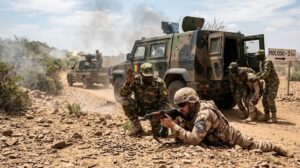
The world is witnessing an unprecedented surge in armed conflicts—both conventional wars and low-intensity asymmetric attacks that claim over 200,000 lives annually. This globalized violence has created a pervasive sense of permanent insecurity, particularly in African nations targeted by expanding terrorist networks.
Cameroon faces this threat on multiple fronts:
- Eastern borders: Containing spillover from regional instability while combating transnational extremist projects
- Northern regions: Neutralizing the advance of obscurantist ideologies seeking to destabilize communities
- Western areas: Addressing secessionist ambitions that threaten national cohesion
Each of these challenges demands not just military response, but a holistic approach that integrates economic, social, and cultural dimensions of security.
Cameroon’s security strategy: progress and remaining vulnerabilities
Despite these formidable challenges, Cameroon’s security apparatus has achieved notable successes in preventing, containing, and reducing violent incidents across the territory. The country’s proactive measures have earned international recognition for their effectiveness in countering asymmetric threats.
However, as Guemo emphasized, the battle is far from won. Sporadic violence continues to erupt in certain regions, serving as a stark reminder that security requires constant vigilance—not just from defense forces, but from every citizen.
The Director’s call isn’t about spreading fear, but about mobilizing a patriotic duty that transcends individual interests. In an era where security threats have become as diverse as they are sophisticated—spanning land, air, maritime, and cyber domains—collective action becomes the only viable path to survival.
Why this turning point matters more than ever
The current global security landscape presents three critical realities that Cameroon cannot ignore:
- Escalating terrorism: Terrorist groups have evolved beyond traditional attack methods, now exploiting cyber space, financial networks, and regional alliances to amplify their reach
- Resource warfare: From industrial espionage to systematic plundering of natural resources, Cameroon’s economic assets face unprecedented threats
- Cultural subversion: Traditional values, educational systems, and societal cohesion are under attack through deliberate deformations and propaganda campaigns
In this context, Guemo’s message carries a clear imperative: Cameroon must transition from reactive defense to proactive resilience. This means:
- Strengthening community-based security initiatives
- Enhancing intelligence sharing between civilian and military structures
- Investing in cybersecurity infrastructure
- Promoting economic resilience through sustainable development
- Preserving cultural identity as a bulwark against ideological infiltration
The path forward: patriotism as national defense
Guemo’s closing words resonate as both a warning and a call to unity: “Let us remain patriots, let us stay vigilant, let us love Cameroon definitively.” This isn’t mere rhetoric—it’s a strategic framework for survival in an increasingly dangerous world.
The choice is clear: Cameroon can either continue reacting to crises after they occur, or it can build the collective resilience needed to deter threats before they materialize. The latter path requires more than government action—it demands a national awakening where every citizen becomes a stakeholder in the country’s security.
As the world grows more volatile, Cameroon’s ability to navigate this turning point will determine not just its stability, but its future as a sovereign nation capable of defending its people, its values, and its place on the global stage.