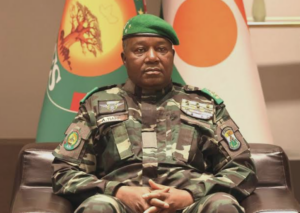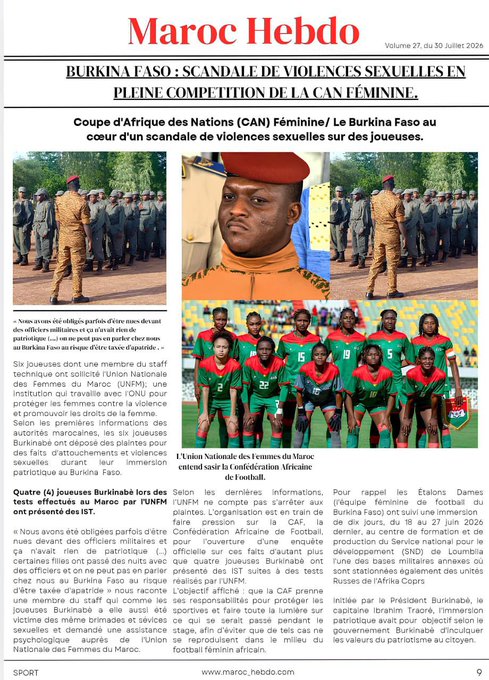
The Burkina Faso national women’s football team arrived at a military camp in late 2023 under the banner of a ‘patriotic immersion’ program, designed to instill discipline and national pride ahead of continental competitions. What was meant to symbolize the captain Ibrahim Traoré regime’s vision of a militarized society has instead become a flashpoint for serious allegations of sexual abuse.
Six members of the squad, along with one team official, have filed a complaint in Morocco with the National Union of Moroccan Women, accusing military officers of sexual violence during their time at the camp. If substantiated, these claims would represent a severe breach of human rights and expose the risks of unchecked military authority within civilian spheres.
Military expansion beyond defense: a growing national concern
Since taking power in 2022, Traoré has steadily extended the reach of the armed forces into areas far removed from traditional security roles. Military oversight now extends to education, youth programs, cultural initiatives, political messaging, and even sports. The stated goal is to forge a unified national identity through discipline and service, but critics warn that this militarization erodes the checks and balances essential to a functioning democracy.
Human rights advocates have long sounded the alarm over the shrinking space for independent oversight. As civilian institutions cede authority to military structures, accountability mechanisms grow weaker, increasing the likelihood of abuses going unchallenged. The allegations against the women’s football team are not isolated incidents but part of a broader pattern of concern.
Impunity thrives in the absence of oversight
A healthy democracy relies on a balance of power: an independent judiciary, free press, active civil society, and functioning political opposition. When these pillars weaken, so too does the ability to expose wrongdoing. Victims of abuse often face insurmountable barriers to justice, including professional retaliation, social stigma, and fear of further violence.
In this case, the decision to file a complaint outside Burkina Faso—specifically in Morocco—raises critical questions about trust in domestic institutions. The plaintiffs reportedly waited until they were abroad to take action, a move that underscores deep-seated apprehensions about reporting crimes within the country. The timing and location of the complaint suggest a lack of confidence in national mechanisms for victim protection and legal recourse.
A climate of fear stifles dissent
The current environment in Burkina Faso offers little encouragement for those who might challenge authority. Criticism of the military is often equated with disloyalty, and public dissent carries real risks. Journalists, activists, and civil society leaders report intimidation, arbitrary restrictions, and coercive measures aimed at silencing opposition. Independent media outlets have faced curbs on their operations, limiting the flow of alternative perspectives and investigative reporting.
Security imperatives have been prioritized over human rights concerns, pushing victims of abuse and rights defenders to the margins. The resulting silence should not be mistaken for consent. Rather, it reflects a climate of fear where speaking out can lead to severe consequences.
Beyond football: broader implications for governance and rights
This scandal extends well beyond the realm of sports. It exposes the dangers of unchecked military influence in civilian life and raises urgent questions about the state’s duty to protect its citizens, especially women, who are subjected to state-sponsored programs. While combating terrorism is a legitimate objective, it cannot justify the erosion of judicial safeguards, public freedoms, or institutional accountability.
The decision to seek recourse through an international body signals a broader crisis of confidence in Burkina Faso’s justice system. For the victims, foreign intervention offers a glimmer of hope for impartiality and protection. Yet, it also places additional pressure on national authorities to conduct a transparent, credible, and independent investigation—one that identifies responsibility, supports survivors, and delivers justice.
Patriotism must not silence accountability
No political project, no matter how ambitious, can endure without the foundation of the rule of law. The ‘patriotic immersion’ program was framed as a noble effort to rebuild the nation, but it cannot justify the abandonment of fundamental rights or the obstruction of truth when grave violations occur.
If these allegations are confirmed, they would mark a pivotal moment in assessing Burkina Faso’s governance. They would reveal the perils of concentrating power in a single institution and the human cost of weakening the systems meant to safeguard citizens. The path forward demands not only accountability for the accused but also a recommitment to democratic principles, transparency, and the protection of every individual—regardless of the uniforms they wear or the flags they serve.