Burkina Faso’s military leader dismisses democracy as incompatible with local realities
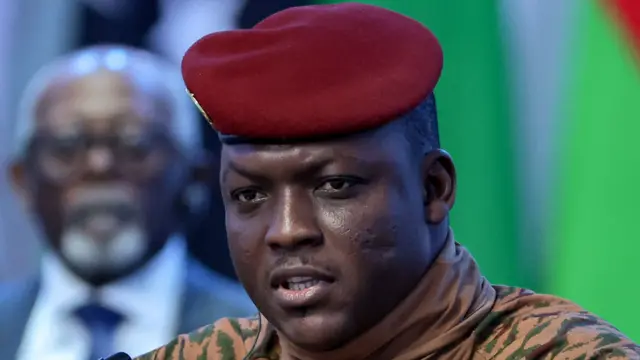
In a televised address, Burkina Faso’s military leader has declared that citizens must abandon democratic ideals, calling the system unsuitable for the nation’s context. Captain Ibrahim Traoré, who seized power three years ago, argued that Western-style democracy has repeatedly failed African societies, citing Libya as a cautionary example.
The 38-year-old leader, who positions himself as a revolutionary opposing Western imperialism, stated: “People must forget about democracy. Democracy is not for us.”
Traoré’s comments come amid his government’s decision to extend its transitional mandate by five years, just two months before the originally promised return to civilian rule in July 2024. This move follows the January announcement banning all political parties as part of a controversial state reconstruction initiative.
Rejection of Western democracy and calls for alternative governance
During the interview, Traoré drew parallels with Libya’s post-Gaddafi collapse, emphasizing how Western interventions often lead to instability. He asserted that Burkina Faso would pursue its own governance model, rooted in sovereignty, patriotism, and revolutionary mobilization, rather than adopting foreign frameworks.
“Wherever Western powers attempt to impose democracy, bloodshed follows,” he declared, adding that Burkina Faso’s new system would prioritize traditional leadership and grassroots structures over conventional political parties.
Political repression and shifting alliances
The military leader has faced criticism for suppressing dissent, targeting opposition figures, media outlets, and civil society groups. Reports indicate opponents have been sent to frontline positions in the fight against Islamist militants—a tactic some view as punitive.
Despite these controversies, Traoré has garnered significant support across Africa for his anti-Western rhetoric and panafricanist stance. Burkina Faso, along with neighboring military-led governments in Mali and Niger, has distanced itself from Western security collaborations, particularly with France, in favor of ties with Russia.
However, the shift has not quelled the ongoing Islamist insurgency that has plagued the region for over a decade. Violence continues unabated, with a recent report by Human Rights Watch documenting over 1,800 civilian deaths in Burkina Faso since Traoré’s 2023 takeover—two-thirds attributed to state forces and allied militias.
Economic and military sovereignty as national priorities
Traoré has repeatedly stressed the need for Burkina Faso to achieve self-reliance in both economic and military spheres. He argued that the country’s development cannot progress under conventional working hours, advocating instead for intensive efforts to bridge the gap with wealthier nations.
“Six-to-eight-hour workdays will not suffice to transform Burkina Faso’s future,” he stated, underscoring his commitment to revolutionary change over incremental reforms.
As the debate over governance models intensifies, Burkina Faso remains at the heart of a broader regional shift, where military-led governments increasingly challenge democratic norms in the name of sovereignty and anti-colonial struggles.