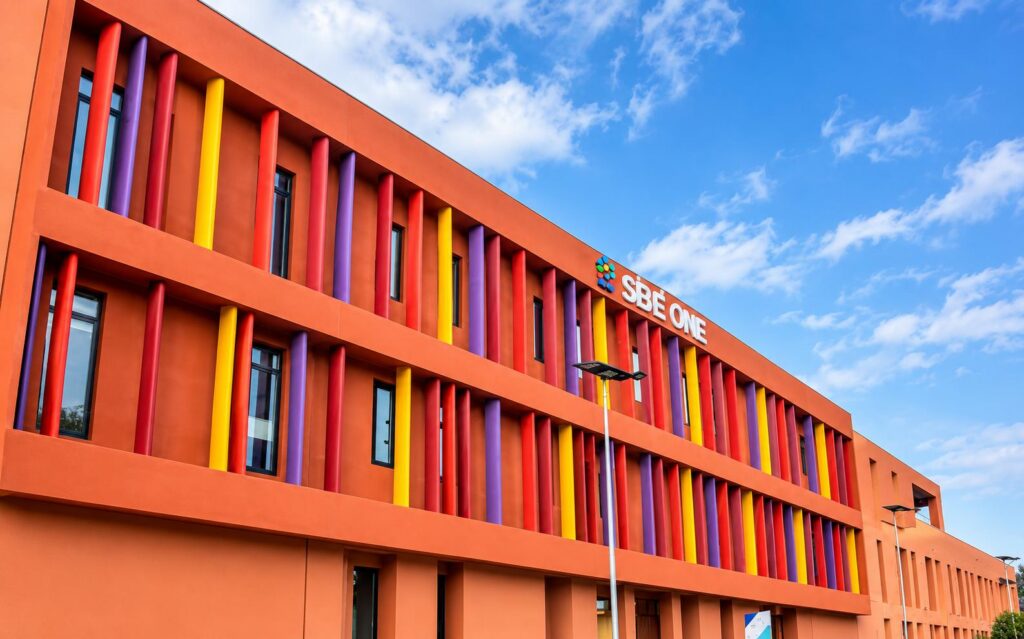
The higher education landscape in Benin has crossed a significant threshold. On September 15, 2026, the Sèmè City Institute of Technology (SCITI) and the University of Reims Champagne-Ardenne (URCA) formalized a strategic partnership through the signing of an agreement to launch the Master’s program “Engineering of Design – Sustainable Engineering track.” The announcement has triggered widespread reactions across academic, industrial, and political circles, with many questioning whether this marks a genuine turning point or merely a symbolic gesture.
What the partnership means for SCITI
This new curriculum represents the very first Master’s-level program offered by SCITI, the engineering school integrated into the national innovation hub Sèmè City. Born from cooperation between the Beninese government and the French university, the track leads to an international diploma aimed at training a new generation of technical leaders on national soil. For SCITI, the stakes are considerable: delivering a Master’s program for the first time places the institution under close scrutiny, and its ability to attract top students and faculty will be tested in the coming months.
A curriculum built around the full product lifecycle
The program focuses on the entire lifecycle of products and infrastructure. Students will learn to integrate environmental, economic, and performance criteria from the earliest phase of theoretical modeling. This approach reflects a growing recognition that sustainable design cannot be an afterthought—it must be embedded from the outset. The curriculum is expected to combine rigorous engineering fundamentals with applied projects that address real-world challenges facing Benin and the wider region.
Training designers, not just executors
This initiative aligns with Benin’s broader economic and industrial transformation policy. While the sub-region has long depended on importing technologies and external expertise for its major construction projects, the government intends to equip the country with engineers capable of building solutions tailored to local realities. The stated objective is to strengthen the human capital needed to support the development of the country’s industrial zones, such as the Glo-Djigbé Special Economic Zone (GDIZ), and to anchor Benin among West Africa’s technology innovation hubs. Yet critics argue that without sustained investment in research infrastructure and retention strategies, the risk of a brain drain could undermine these ambitions.
Public debate and what comes next
Reactions to the announcement have been mixed. Supporters see the Master’s as a bold step toward self-reliance, while skeptics point to the challenges of ensuring that graduates remain in Benin and contribute to the local economy. The coming months will reveal whether the partnership delivers on its promises, how the first cohort performs, and whether other institutions follow suit. For now, the SCITI–URCA alliance has succeeded in putting the question of Benin’s engineering autonomy squarely on the national agenda.