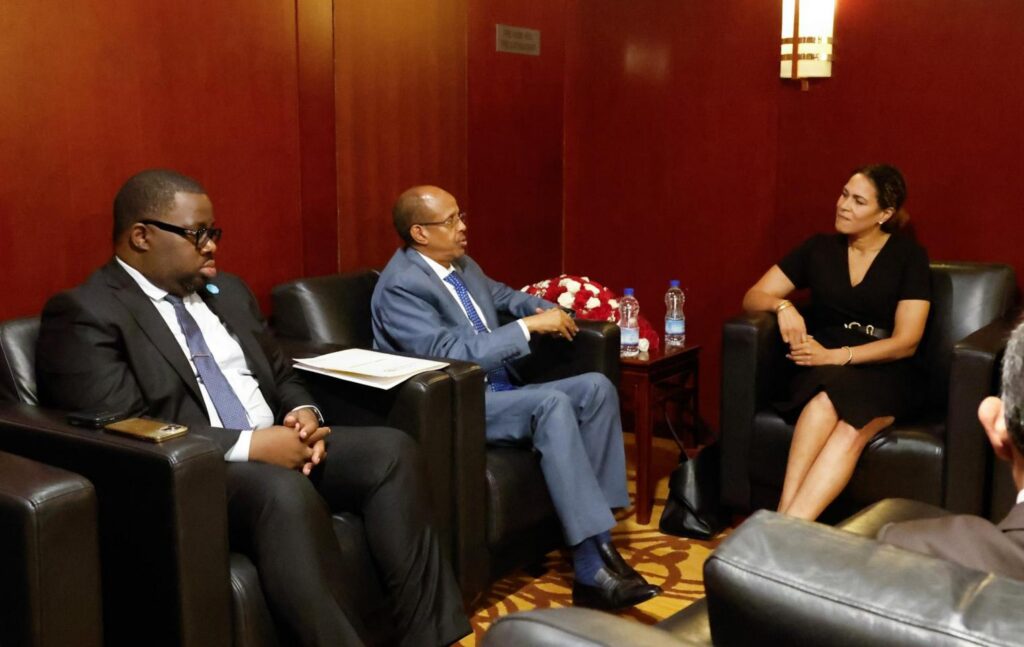
The corridors of the African Union headquarters in Addis-Abeba buzzed with significance this week. On July 28 and 29, Benin’s Foreign Minister Corinne Amori Brunet held strategic talks with Mahmoud Ali Youssouf, Chair of the African Union Commission. The meetings were far from ceremonial—they were laying the groundwork for a momentous milestone: Benin’s upcoming rotation as Chair of the African Union Peace and Security Council in September.
This opportunity didn’t emerge overnight. Back in February 2026, Benin was elected to the Peace and Security Council for the 2026–2028 term. Now, as the September presidency approaches, the stakes couldn’t be higher. The Council is the continent’s most scrutinized body, tasked with resolving conflicts, deploying peacekeeping missions, and overseeing political transitions. For a mid-sized nation, holding this role—even temporarily—places Benin under the African spotlight.
The timing amplifies the importance of this presidency. It coincides with the 81st session of the United Nations General Assembly in New York, a global stage where continental priorities gain international attention. Cotonou aims to leverage this dual platform to elevate African perspectives on peace and security while strengthening ties between the African Union and the United Nations—a collaboration critical for addressing crises from the Sahel to the Horn of Africa.
For a country long seen as a regional observer, this diplomatic spotlight represents a deliberate shift. Since President Romuald Wadagni took office, Benin has pursued a more assertive role on the continent, balancing visibility with measured diplomacy. The current engagement in Addis-Abeba underscores this strategy: Benin is not merely preparing to lead—it’s shaping the agenda.
Yet the path forward is complex. The security landscape is increasingly volatile, with armed groups expanding toward coastal Gulf of Guinea states, fragile transitions in the Sahel, and simmering tensions within regional blocs. Success for Benin’s presidency will hinge on its ability to navigate these divides, fostering consensus where interests clash. The true test isn’t volume—it’s the art of negotiation, steering discussions toward solutions that resonate across 54 member states.
The challenge for Minister Corinne Amori Brunet is clear: translate this exposure into lasting influence. Leading the Peace and Security Council demands more than goodwill—it requires setting priorities, brokering compromises amid competing agendas, and delivering a message that is both resolute and unifying. A single misstep could erode hard-won credibility. Conversely, a steady hand could cement Benin’s reputation as a pragmatic, solutions-driven partner.
Of course, the September presidency is just one chapter in a two-year mandate. Its legacy will be measured by how effectively Benin sustains its priorities beyond the gavel’s handover. The coming weeks will reveal whether the meticulous groundwork in Addis-Abeba translates into tangible actions at the UN session.
In a region where security fractures deepen daily, a voice that champions dialogue and strategic patience is invaluable. By positioning itself at the heart of continental peace architecture, Benin is wagering that patience in diplomacy remains its greatest asset. The proof will arrive in September.