Benin and Nigeria forge a united front against rising terror threats
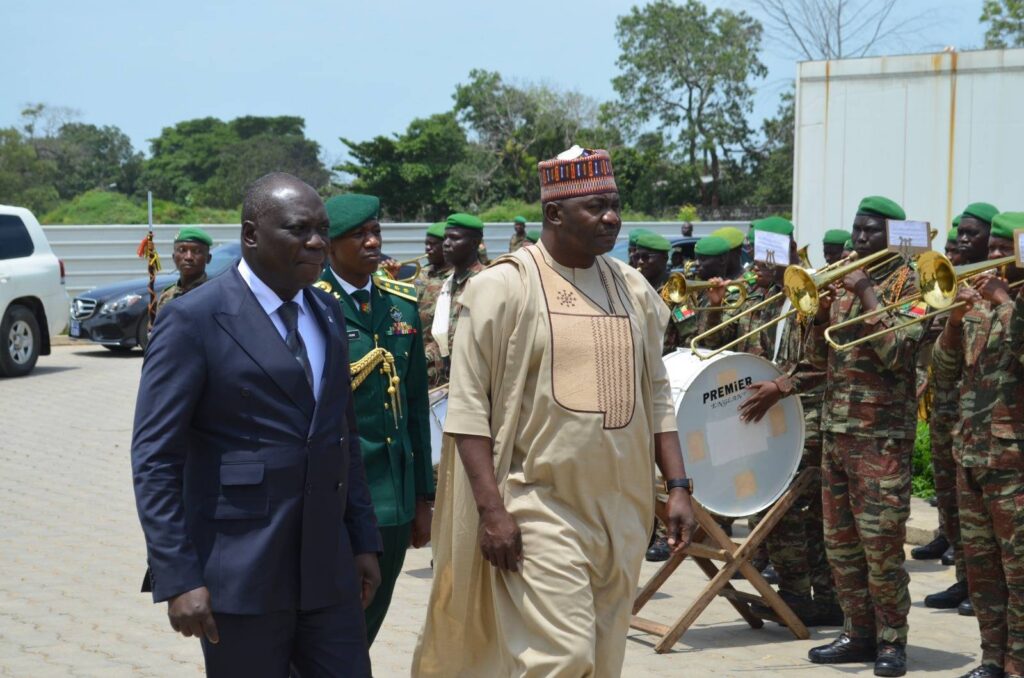
The escalating activities of armed militant groups across West Africa have prompted Benin and Nigeria to deepen their military collaboration. On a recent visit to Cotonou, Nigeria’s Defence Minister, General Christopher Gwabin Musa, led a high-level delegation to meet his Beninese counterpart, Gildas Agonkan. This strategic encounter marks a significant step toward a stronger, more coordinated regional security framework.
Shared urgency drives high-level talks
The visit unfolded in an atmosphere of shared resolve, reflecting both nations’ commitment to addressing a growing menace. General Musa, a key figure in Nigeria’s security apparatus, underscored the gravity of the situation during his visit to the Togbin military barracks. There, he engaged with Nigerian troops stationed in Benin for the country’s 66th independence anniversary celebrations—a gesture highlighting the deep historical, geographical, and cultural ties between the two nations.
The working session at the Ministry of Defence shifted focus from diplomacy to action. The goal: transforming long-standing solidarity into a robust operational shield capable of countering the spread of jihadist violence.
Terrorism knows no borders in West Africa
The Sahel region and the Gulf of Guinea are experiencing unprecedented instability. Non-state armed groups, including factions linked to Al-Qaeda and the Islamic State, are expanding their reach southward, posing direct threats to coastal states. Northern Benin, bordering Burkina Faso and Niger, faces persistent pressure, while Nigeria continues to battle Boko Haram, ISWAP, and armed banditry on multiple fronts.
Following the discussions, both defence ministers agreed on a critical point: isolated national efforts are no longer sufficient. As General Musa emphasized, the priority is to establish effective mechanisms to enhance counter-terrorism cooperation. He pointed to porous borders as a major advantage for militant groups, stressing that a regional response—encompassing Benin, Nigeria, Niger, Burkina Faso, and Mali—is essential despite political and diplomatic challenges.
Strengthening South-South military cooperation
Gildas Agonkan, Benin’s Minister of National Defence, echoed this sentiment, framing the meeting as a political commitment to an unbreakable alliance. “Our strategies must be merged so that, together with other West African nations, we can overcome this scourge stifling our development,” he stated.
The proposed South-South military cooperation hinges on several pillars: continuous exchange of strategic intelligence to disrupt militant financing networks, joint border patrols in vulnerable areas, and enhanced interoperability between forces. The core strategy is to maintain relentless cross-border pressure, ensuring militants cannot evade capture by slipping between nations. This approach reinforces the principle that African crises demand African solutions, leveraging the expertise of local armies.
Civilian alliances: the backbone of security
The Cotonou meeting also highlighted a critical yet often overlooked aspect of counter-terrorism: community engagement. Terrorism thrives in environments marked by economic despair and social isolation, particularly in rural areas. Military force alone cannot address these root causes.
General Musa urged Beninese and Nigerian citizens to remain vigilant, encouraging close collaboration with defence and security forces by reporting suspicious activities. Without active public participation and a strong Army-Nation bond, vital intelligence fails to reach authorities. Community awareness thus becomes the first line of defence against both ideological and operational infiltration by armed groups.
A cornerstone for regional stability
The enhanced security coordination between Benin and Nigeria transcends bilateral relations, serving as a foundational pillar for peace across West Africa. By securing their shared borders and fostering seamless cooperation, both nations send a powerful message to criminal networks.
Economic growth, trade integration, and public welfare are inextricably linked to territorial stability. By reaffirming their joint commitment in early August 2026, Benin and Nigeria demonstrated their readiness to serve as the region’s security bulwarks against violent extremism. The roadmap is now clear: translating words into action on the ground to ensure a peaceful future for generations to come.