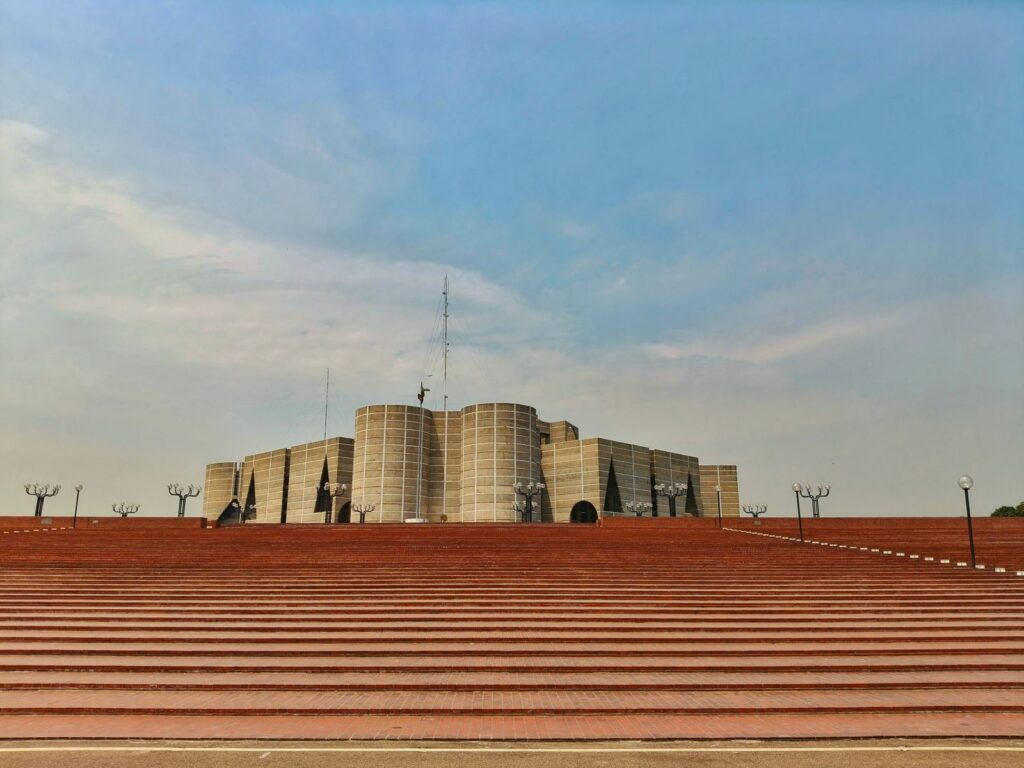
The Bénin Senate convened its inaugural session in Porto-Novo this week, officially marking the country’s transition to a bicameral parliamentary system. This new legislative body, established through constitutional reform, complements the National Assembly and fundamentally reshapes the country’s institutional landscape. Its inauguration represents one of the most significant political milestones of President Patrice Talon’s second term.
The timing comes amid a politically charged atmosphere, following recent electoral contests and shifts in the partisan landscape. While the government views the bicameral system as a mechanism for refining legislative texts, balancing decisions from the National Assembly, and fostering richer public debate, critics question its financial feasibility and democratic calibration in a nation of under 13 million people.
Redesigning the nation’s legislative architecture
Bénin has operated under a monocameral model since the 1990 National Conference, a framework widely regarded as a cornerstone of West African democratic renewal. The shift to bicameralism departs from this tradition and aligns the country more closely with neighboring systems, where an upper chamber often represents territorial collectives, notables, or intermediary bodies. The new Senate’s primary role will be to review draft and proposed laws in a second reading, reinforcing legal stability and coherence.
The constitutional amendment, championed by the presidential majority, envisions a mixed composition of indirectly elected members and appointees, with operational modalities yet to be tested in practice. Key aspects under scrutiny include selection methods, term lengths, and the Senate’s relationship with the National Assembly. Observers are particularly focused on the chamber’s precise powers in budgetary oversight, constitutional review, and government accountability.
Testing the political durability of President Talon’s reforms
The Senate’s launch also serves as a litmus test for President Patrice Talon’s institutional legacy, with his second term concluding in 2026. The head of state has prioritized institutional reform alongside economic initiatives outlined in the government’s action program. While the new chamber offers the executive an additional platform to consolidate political balances, it may also provide a voice for perspectives that struggle to gain traction in the National Assembly.
Opposition parties, long sidelined due to tightened electoral participation rules, are monitoring the Senate’s rollout with cautious skepticism. The gradual reintroduction of formations like Les Démocrates into the National Assembly in 2023 already reshaped parliamentary discourse. The Senate’s emergence could further reshape this dynamic, depending on the profile of appointed senators and their operational independence from the presidential majority.
Economic and diplomatic implications
Financially, the bicameral system introduces additional operational costs, a point the government must address to maintain credibility with development partners and public trust. Despite boasting one of West Africa’s most robust growth trajectories, Bénin must safeguard its financial reputation and investor appeal. International observers, including the International Monetary Fund and World Bank, will closely assess how institutional reform aligns with fiscal discipline.
Diplomatically, Bénin’s democratic consolidation remains a key asset in a Sahel region marked by political turbulence. Cotonou aims to preserve its reputation as a reliable partner for the European Union, France, and the United States while expanding ties with Gulf nations and Asian markets. The clarity and stability of the new parliamentary framework will influence perceptions of the country’s institutional robustness.
In the coming months, attention will turn to how the Bénin Senate integrates into the legislative agenda, particularly ahead of the 2026 presidential election. The chamber begins its work this week, setting the stage for a new chapter in the country’s governance.