The African Development Bank (AfDB) has earmarked a substantial portfolio of $658.6 million for Gabon, yet execution delays continue to hinder progress. Despite recent improvements in certain performance indicators, the gap between financial commitments and actual disbursement rates remains a persistent challenge. While this issue extends beyond Gabon’s borders, its impact is notably pronounced in the country, prompting the AfDB to reassess its support strategies.
Significant financial commitment, slow implementation
Gabon ranks among the AfDB’s key partners in Central Africa, with its portfolio targeting sectors critical for diversifying an economy heavily reliant on oil revenues. However, prolonged delays in loan agreement ratifications, cumbersome procurement processes, and inter-ministerial coordination hurdles continue to stall project execution. These administrative bottlenecks have been a recurring theme in joint performance reviews for years, raising questions about Gabon’s capacity to absorb development aid—especially under the current transitional leadership led by President Brice Clotaire Oligui Nguema, which has prioritized infrastructure reconstruction and public investment revival.
AfDB shifts to proactive implementation support
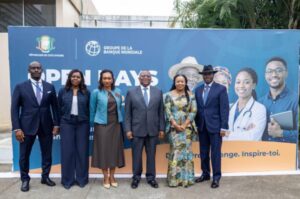
To address these challenges, the AfDB convened a targeted workshop in Libreville aimed at streamlining project execution. The initiative involves a granular review of each project to pinpoint bottlenecks delaying disbursements and collaboratively devise tailored solutions. This approach reflects a broader shift among major lenders: moving beyond traditional fiduciary oversight to hands-on guidance for project owners. In Gabon’s case, the AfDB is focusing on strengthening local expertise in procurement, financial management, and monitoring—areas where recurring diagnostics highlight critical skill gaps and high turnover among technical officials, both of which prolong the time between agreement signing and groundbreaking.
Why speed matters for Gabon’s transition
The urgency of accelerating the AfDB’s portfolio extends beyond technicalities. The transitional government has positioned infrastructure revival as a cornerstone of its agenda, and sluggish execution of co-financed projects risks undermining this narrative—particularly as Libreville seeks additional concessional financing from other multilateral partners. For the AfDB, Gabon’s performance is also a credibility test in Central Africa, where disbursement rates often lag behind the regional average. Given Gabon’s status as a middle-income economy with stronger administrative capacities than its neighbors, a rapid turnaround in execution metrics could signal stability to private investors closely watching the transition’s trajectory.
The coming months will be pivotal. The roadmap finalized in Libreville must translate into measurable milestones: faster fulfillment of disbursement prerequisites, shorter procurement timelines, and higher physical execution rates on flagship projects. Failure to deliver could leave the $658.6 million portfolio untapped, squandering an opportunity to drive tangible economic transformation.