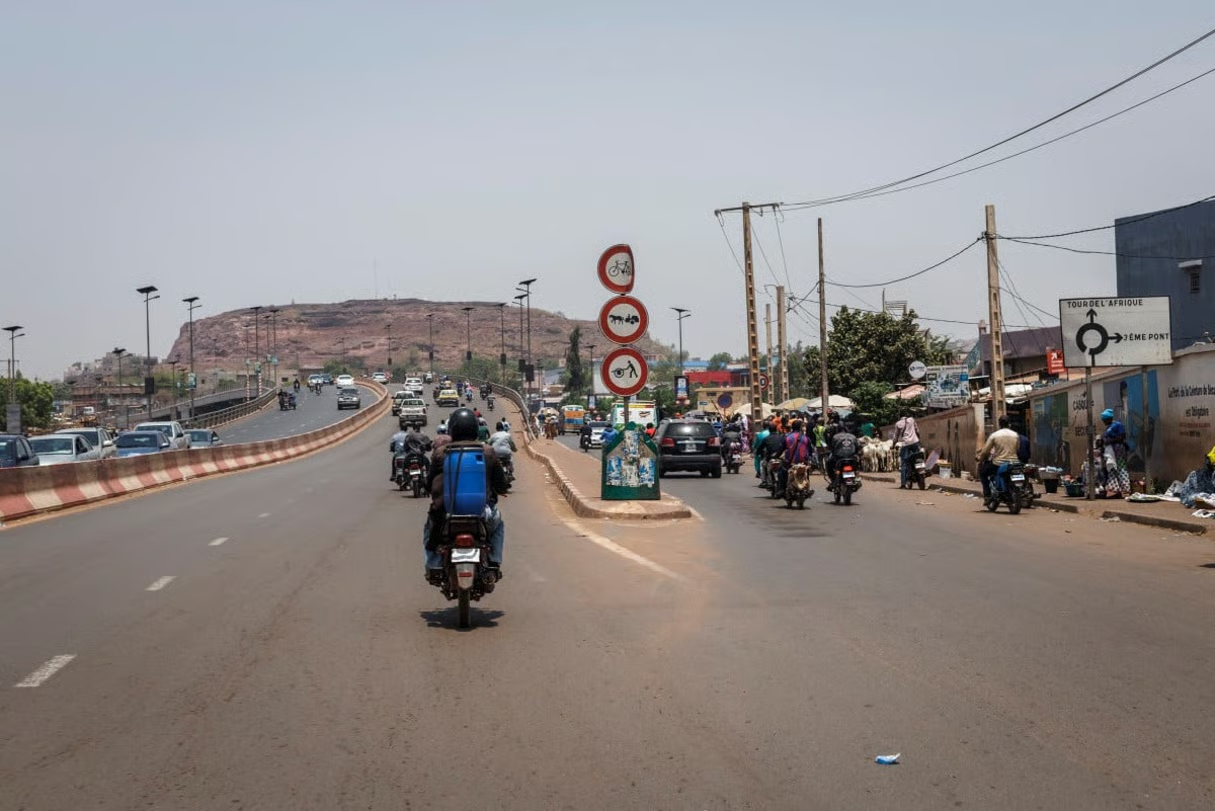
A dozen transport companies have halted all road routes to and from Bamako as jihadist groups tighten their stranglehold on the Malian capital through road blockades and vehicle burnings.
escalating jihadist attacks threaten Bamako’s supply chains
Mali is grappling with severe instability following large-scale coordinated offensives on April 25-26. These attacks, orchestrated by the Group for the Support of Islam and Muslims (JNIM)—affiliated with Al-Qaeda—and the predominantly Tuareg Azawad Liberation Front (FLA), targeted strategic positions held by the ruling junta. The violence has since escalated into a full-scale blockade of Bamako’s critical road networks.
Since April 30, jihadist factions have enforced a road blockade around Bamako, severing key supply arteries. This siege is particularly damaging for the landlocked nation, which relies heavily on overland imports for essential goods. The disruption has already forced transport operators to reassess their operations.
« We’ve temporarily suspended services to safeguard passengers and minimize losses, » shared a transport agency manager with Agence France-Presse (AFP). The manager revealed that six buses were torched by militants on Saturday along the Ségou route, a major artery into the capital.
unofficial suspensions add to transport crisis
While over ten transport firms have publicly announced service suspensions, several others have quietly halted operations out of fear of reprisals. « Some companies stopped without notice because authorities might force them to continue, » the agency head explained under anonymity. Though the six primary routes into Bamako are now impassable, smaller minibuses continue to slip through alternative paths to reach the city.
fuel, electricity, and water shortages grip Bamako
The jihadist blockade has triggered severe shortages in Bamako. Long queues formed outside gas stations on Monday as diesel supplies dwindled, with reports indicating near-total depletion over the past weeks. Authorities claim over 700 fuel tankers recently arrived via the Bamako-Abidjan corridor, yet public access remains limited. In recent days, militants have torched multiple supply convoys and passenger buses.
The crisis has also crippled Bamako’s utilities. A resident told AFP that power outages lasted 72 hours before a brief three-hour restoration, only to resume again. Énergie du Mali (EDM) attributed disruptions to « an incident, » though an anonymous EDM official later linked the sabotage directly to « terrorist groups » targeting the electrical grid. Meanwhile, water supply disruptions have affected several districts due to scheduled load shedding, as reported by the Malian Water Management Company.