The latest findings from Afrobarometer have shattered the official narrative of Togo’s economic progress under President Faure Gnassingbé. Instead of celebrating the National Development Plan and touting macroeconomic stability, the survey reveals a nation on the brink, with 62% of citizens believing the country is hurtling toward collapse. The disconnect between government claims and public sentiment has never been more glaring, as Togolese face severe poverty, chronic water shortages, and crumbling healthcare systems.
The pulse of disillusionment
In Lomé, the capital, the Afrobarometer data serves as a wake-up call. Over six in ten Togolese now view the country’s trajectory as disastrous—a staggering 11-point surge in pessimism since 2021. This isn’t fleeting frustration; it’s a damning indictment of economic mismanagement, with 63% of citizens rating the government’s performance as poor or very poor. The despair runs deeper than statistics, rooted in daily struggles: disappearing purchasing power, vanishing job opportunities, and a youthful population with no future to look forward to.
The human cost behind the numbers
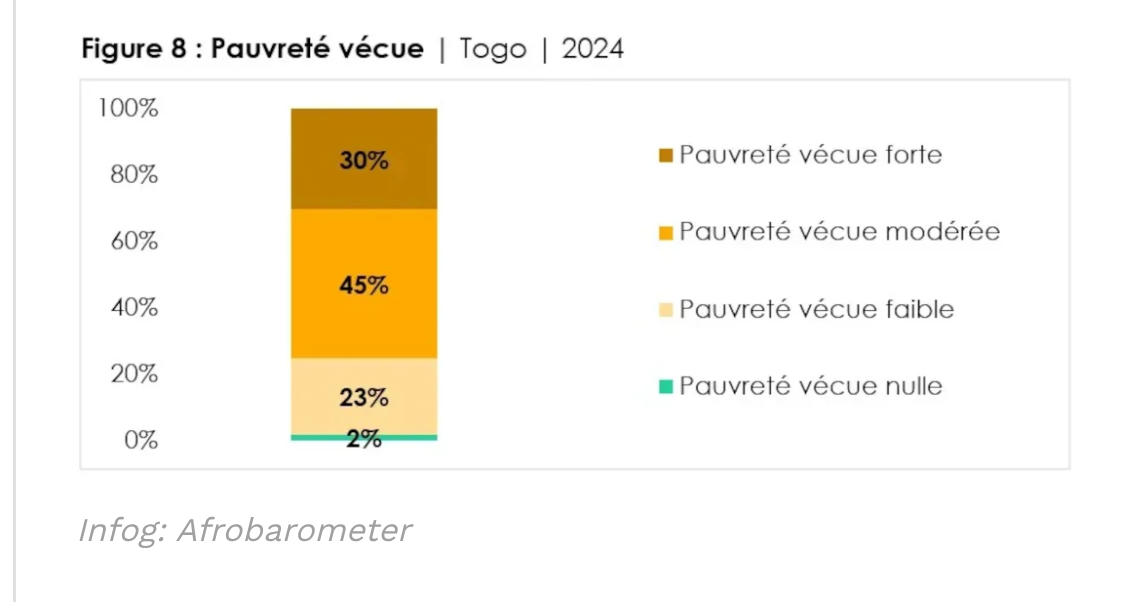
Afrobarometer didn’t just tally GDP figures—it captured the lived reality of poverty. The results are harrowing: most respondents describe their living conditions as poor, and over half report their financial situation has worsened in the past year. Today, three-quarters of Togolese live in moderate or severe poverty, proving that economic growth benefits the few, not the many. Survival has become a daily grind, with families struggling to afford basics like food, medicine, and clean water.
A tale of two Togos: Wealth hoarded, poverty spread
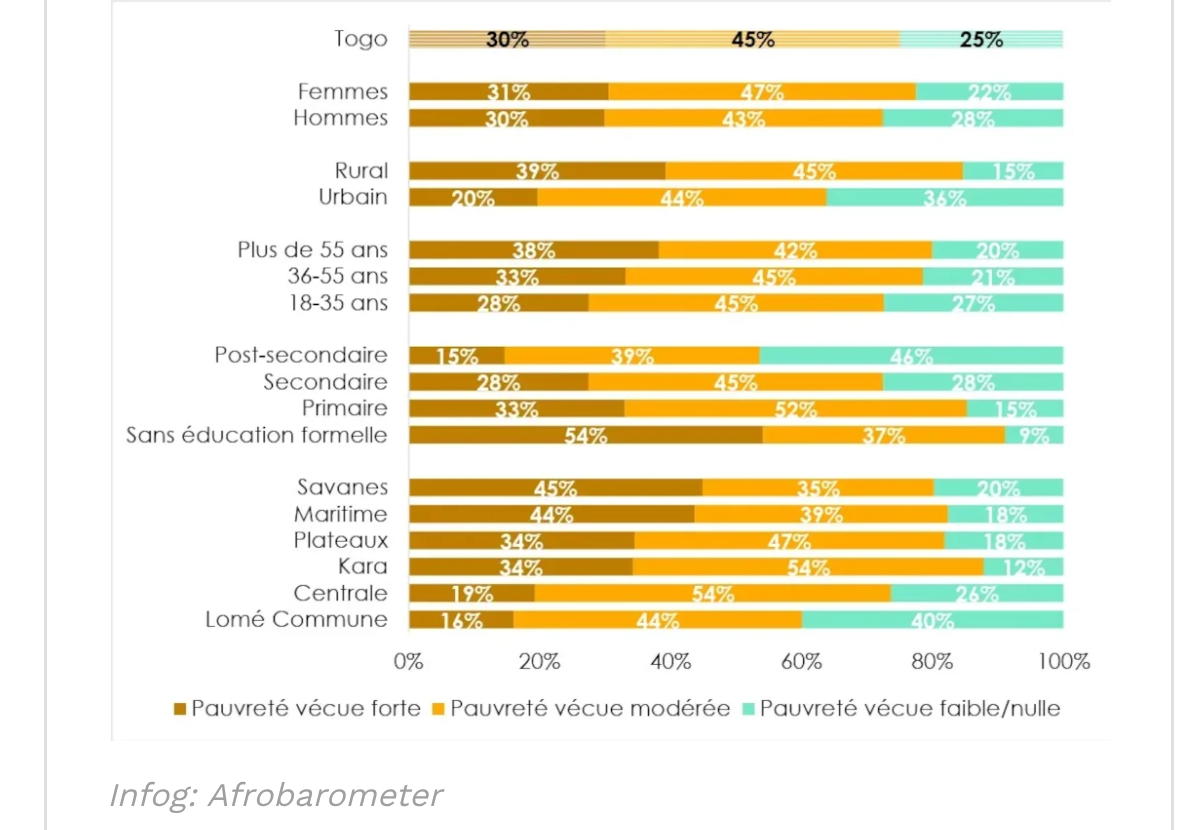
The crisis isn’t uniform—it’s a story of deepening inequality. Take the Kara region, a traditional power base, where 88% of residents live in poverty. This flies in the face of the government’s claims of balanced development. Meanwhile, women, rural communities, and the uneducated bear the brunt of the system’s failures. Even education, once a ladder out of hardship, offers little protection in a job market plagued by favoritism and scarcity.
From promises to despair: Where did it go wrong?
The gap between elite opulence and public suffering has never been wider. While a privileged minority flaunts luxury, the majority grapple with indignity—unpaid wages, collapsing infrastructure, and a government that prioritizes vanity projects over human needs. Afrobarometer’s findings paint a society teetering on the edge, its faith in institutions eroding as basic rights slip further out of reach.
The Togo of today is a cautionary tale. When 62% of citizens agree the country is on the wrong path, the legitimacy of the entire system is in question. The so-called Togolese economic miracle? For millions, it’s a cruel joke. Unless governance shifts to prioritize people over politics, the nation risks sinking under the weight of its own neglect. The message from the streets is clear: Togolese are exhausted by survival. The question now is whether Lomé will finally listen—or if the ship will sail without them.