L’opposition saisit le Conseil constitutionnel
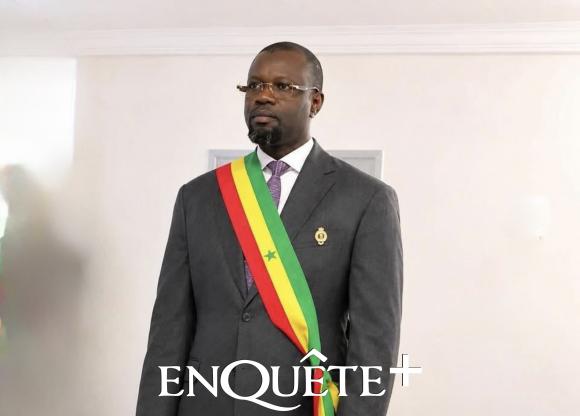
A coalition of opposition parliamentarians has formally lodged a petition with the Constitutional Council, seeking to invalidate the recent reintegration of Ousmane Sonko as a deputy and his subsequent election to the presidency of the National Assembly. Their legal challenge, made public recently, invokes Article 54 of the Constitution and highlights alleged administrative obstruction in providing relevant parliamentary documents.
This move marks a significant institutional escalation by the parliamentary opposition. Non-affiliated and opposition deputies, who signed a statement dated June 1, 2026, confirmed their submission to the “sages” of the Constitutional Council. Their appeal specifically targets the National Assembly Bureau’s decision from May 24, which facilitated Ousmane Sonko’s return as a deputy. The core of their argument revolves around Article 54 of the Constitution.
According to the petitioners, Mr. Sonko, having been appointed Prime Minister and subsequently elected as a deputy in 2024, was immediately in a position of incompatibility upon his election. They contend that by choosing to retain his governmental responsibilities, he effectively relinquished his parliamentary mandate, as stipulated by the Constitution and the internal rules then in force. Therefore, his reintegration, followed by his ascension to the Speaker’s chair, represents a clear and direct violation of the Constitution and the fundamental principle of the separation of powers. The signatories emphasize the Constitutional Council’s unique role as the arbiter of parliamentary mandate validity and the regulator of state institutions, asserting it is the sole body capable of preventing such an act from going unchecked.
The statement from the deputies also details a second, procedural complaint. They assert that they were compelled to resort to bailiff summonses to obtain the necessary documentation for their appeal, specifically the act of Mr. Sonko’s reintegration and the minutes from the plenary session of May 26, 2026. Despite being served on June 1 by Maître Abou Sall, both the Secretary-General and the First Vice-President of the National Assembly reportedly declined to provide these documents. The opposition characterizes this refusal as a severe impediment to deputies’ rights and democratic transparency, given the inherently public nature of such records. Consequently, they urge the Constitutional Council to rectify this perceived “forfeiture,” which they believe undermines the proper functioning of the parliamentary institution, while reaffirming their commitment to legal and peaceful avenues of action.
This legal challenge unfolds amidst a period of intense political activity. Ousmane Sonko, who was dismissed from his role as Prime Minister on May 22, 2026, by President Bassirou Diomaye Faye, made a dramatic political comeback. He was elected President of the National Assembly on May 26, securing 132 out of 133 votes cast. This election saw him succeed the resigning El Malick Ndiaye, making him the second-highest-ranking figure in the state. The opposition had boycotted the vote, already decrying what they termed a “constitutional coup.”
The legal interpretation of these events remains a subject of heated debate. Some legal scholars argue that Article 54 of the Constitution merely establishes a principle of incompatibility without explicitly addressing suspension, mandate preservation, or an automatic right to reintegration. This, they suggest, necessarily leads to concrete institutional consequences. Conversely, other analyses, more supportive of Mr. Sonko’s return, reference Article 123 of the internal rules, which outlines provisions for the replacement of a deputy appointed to a governmental position.
A significant uncertainty persists regarding the very admissibility of the opposition’s petition. Several prominent opposition figures, including Aïssata Tall Sall, have previously pointed out that parliamentarians typically lack the authority to directly refer such matters to the Constitutional Council, a prerogative usually reserved for the President of the Republic. Furthermore, the presidency has denied any direct appeal to the “seven sages” by the head of state himself. Therefore, the Constitutional Council’s initial decision on the admissibility of the deputies’ recourse will represent the first crucial obstacle to be overcome.