Senegal’s debt strategy: exploring alternatives to IMF programs
The issue of Senegal’s national debt has once again taken center stage in economic discussions. In Dakar, economists, financial experts, and government officials are actively exploring financing and restructuring options that go beyond traditional reliance on the International Monetary Fund (IMF), especially amid tight budgetary constraints and the urgent need for economic revival.
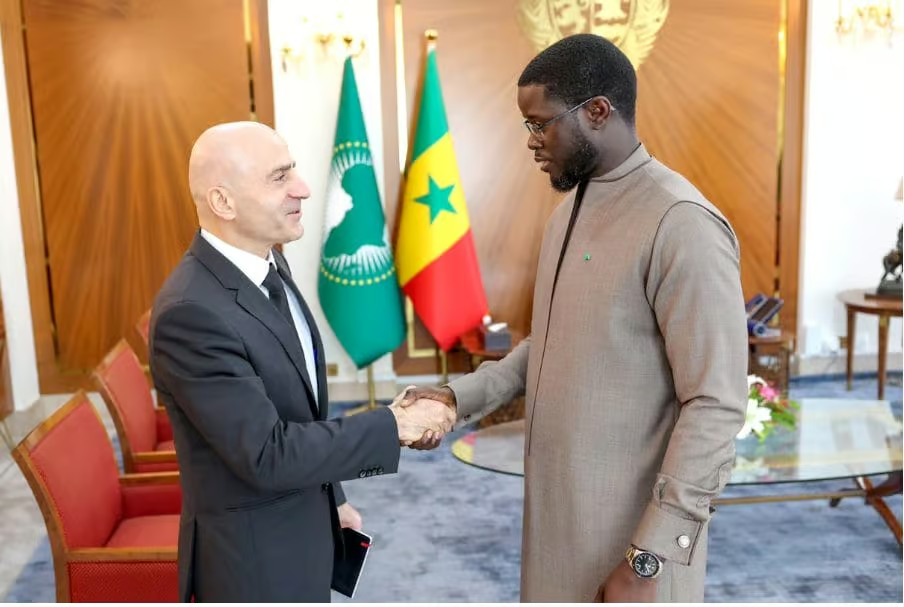
President Bassirou Diomaye Faye meets with Edward Gemayel, head of the IMF mission for Senegal in Dakar, August 28, 2025 © DR
This strategic reassessment comes as Senegal seeks to maintain financial flexibility while reassuring both domestic and international stakeholders. As a member of the West African Economic and Monetary Union (WAEMU), Senegal operates within a shared monetary framework where debt sustainability and fiscal discipline are closely monitored across the subregion, in line with guidelines set by the Economic Community of West African States (ECOWAS), the African Union, and the African Development Bank.
What are Senegal’s options for managing its debt?
Key discussions are centered on diversifying financing sources. Among the most viable solutions being considered are:
- Enhanced use of the WAEMU regional market for sovereign borrowing, capitalizing on favorable financing conditions within the monetary union.
- Increased mobilization of domestic savings through targeted financial instruments to reduce reliance on external borrowing.
- Development of thematic bonds focused on sustainable development, green energy, or infrastructure to attract socially responsible investors.
- Optimized use of concessional financing — loans offered at below-market interest rates — to minimize debt servicing costs and ease pressure on public finances.
Experts emphasize the dual challenge of expanding tax revenues without stifling economic activity and improving public financial transparency. They also stress the importance of prioritizing public investments to avoid crowding out essential sectors such as education, healthcare, and infrastructure — areas already under strain due to rising debt obligations.
The situation in Senegal reflects a broader challenge facing many African economies: finding sustainable liquidity solutions without over-reliance on multilateral assistance programs like those offered by the IMF. Restructuring debt in a way that supports long-term growth while maintaining investor confidence remains a delicate balance.
As policymakers in Dakar deliberate, the outcome of their decisions could set a precedent for other nations grappling with similar financial pressures across the continent.