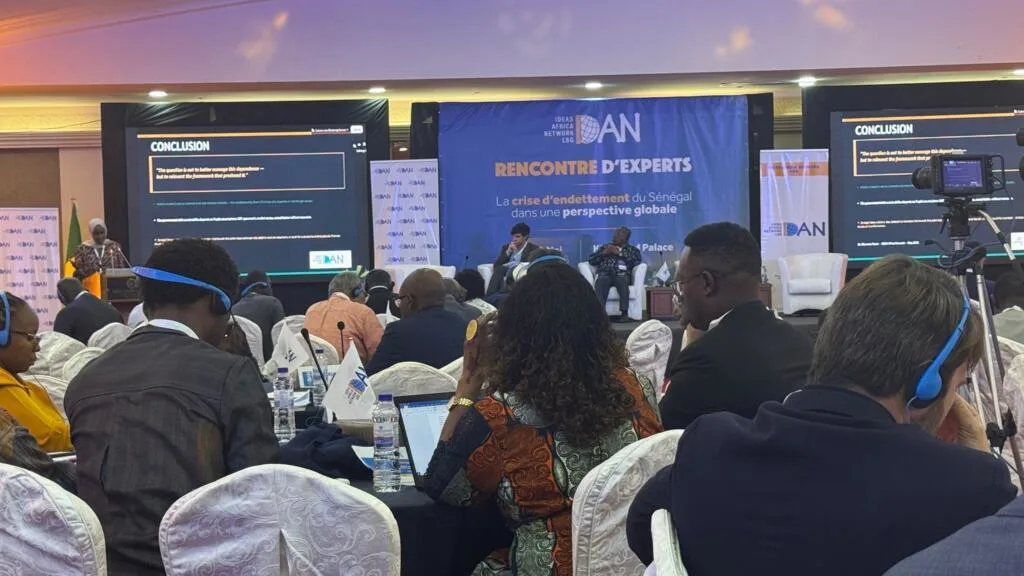
The economic landscape of Senegal is at a crossroads as policymakers and financial experts gather in Dakar to deliberate on innovative strategies to address the nation’s mounting debt crisis. The conference, held under the patronage of Prime Minister Ousmane Sonko, underscores the urgent need for alternative financial pathways, diverging from the traditional route proposed by the International Monetary Fund (IMF).
Originally slated to attend, Prime Minister Sonko was notably absent due to health reasons, as confirmed by Justice Minister Yacine Fall. In his stead, Ayib Daffé, leader of the ruling Patriotic Africans of Senegal for Work, Ethics, and Fraternity (PASTEF) parliamentary group, took the podium. Daffé emphasized the imperative to “expand perspectives” and “move beyond conventional thinking,” particularly in response to the IMF’s proposed debt restructuring—a measure Dakar has firmly rejected.
Why the IMF’s approach falls short
At the heart of the discussion lies a critical assessment of the IMF’s traditional debt management strategies. Economists at the conference argue that Senegal’s external debt has become unsustainable—a stark contrast to the government’s earlier assertions. The nation’s current revenue streams are insufficient to cover both principal and interest payments, warns Souleymane Bah, an economist attending the event. “The state’s revenues cannot sustain principal and interest repayments,” he notes. “Typically, what happens is that new loans are taken to repay existing debts. However, with rising interest rates, this is no longer a viable solution. We urgently need alternative approaches.”
The Ideas Africa Network, a think tank spearheading the conference, contends that the IMF’s framework prioritizes creditor interests over transformative economic growth. Ndongo Samba Sylla, an economist and researcher with the network, critiques the IMF’s methodology: “The IMF’s approach is fundamentally opposed to economic transformation. It is purely accounting-driven and pro-creditor, designed to ensure debt repayment rather than foster economic development. The focus is on securing new loans to signal creditworthiness, not on investing in structural change.”
Exploring bold alternatives
The conference has sparked dialogue around several radical yet potentially transformative solutions. Among the proposals discussed are:
- Monetary system reform: Reevaluating Senegal’s monetary framework to enhance fiscal sovereignty and reduce dependency on foreign financial institutions.
- Exit from the CFA Franc: Deliberating on the feasibility of leaving the West African CFA Franc zone, a move that could provide greater monetary independence.
- Debt cancellation for ‘illegitimate’ loans: Advocating for the cancellation of portions of debt deemed opaque and improperly contracted, particularly loans secured without transparency during previous administrations.
However, these discussions introduce a layer of complexity to the political narrative. While experts in Dakar explore these alternatives under Sonko’s patronage, President Bassirou Diomaye Faye is simultaneously engaging with IMF leadership in Nairobi. The timing of these parallel efforts raises questions about the government’s unified stance on debt management and economic policy.
The IMF’s recent downgrade of Senegal’s credit rating by agencies like Standard & Poor’s has further intensified the urgency of the situation. With public debt poised to escalate, the need for decisive and innovative solutions has never been more pressing.
As Senegal stands at this pivotal juncture, the outcomes of these deliberations could redefine the nation’s economic trajectory, shaping its future prosperity and financial sovereignty.