Senegal’s political landscape shaken: what lies ahead for Sonko and Faye?
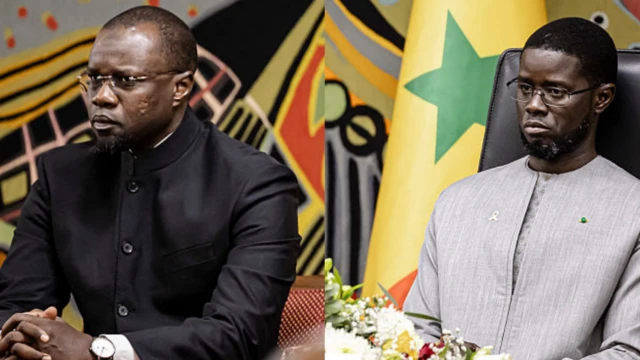
Photo credit: Getty Images
The dismissal of Prime Minister Ousmane Sonko on May 22, 2026, marked the definitive end of the political alliance that propelled Bassirou Diomaye Faye to the presidency in 2024 under the campaign slogan « Diomaye mooy Sonko »—a fusion of their political identities. This partnership, once hailed as a historic breakthrough for Senegal’s third democratic transition, now lies in ruins.
For months, tensions simmered between the two figures over governance, economic policy, and party control. The decree terminating Sonko’s premiership, Decree No. 2026-1128, crystallized these divisions, exposing the structural contradictions of a dual-headed power system that proved unsustainable within Senegal’s constitutional framework.
The rupture introduces an unprecedented period of uncertainty. For the first time since the PASTEF party assumed power, the president and his former mentor must now confront one another directly. The fallout from this decision will reshape the political dynamics leading up to the 2029 presidential election.
Duality at the heart of Senegalese politics
Political analyst Maurice Soudieck Dione had long warned of this rupture. The origins of the crisis trace back to the 2024 presidential election, when Sonko, barred from running due to legal troubles, orchestrated Faye’s candidacy as his political heir. Yet this electoral alliance quickly evolved into a constitutional contradiction.
« The president’s legitimacy stems from the ballot box, while the prime minister retained the moral and militant legitimacy of the PASTEF project. This duality was always precarious, » explains Dione. « Senegal’s Constitution grants the president primacy in the executive, making the prime minister subordinate. Yet Sonko wielded immense influence within the party and among the public—a balance that could not endure. »
Dione suggests an alternative arrangement could have mitigated the crisis: « After the November 2024 legislative elections, Sonko might have been better suited to lead the National Assembly, while a technocratic prime minister could have handled day-to-day governance. This would have clarified roles and reduced friction. » But this path was never pursued, he notes, leaving the confrontation almost inevitable.
Rivalry driven by 2029 presidential ambitions
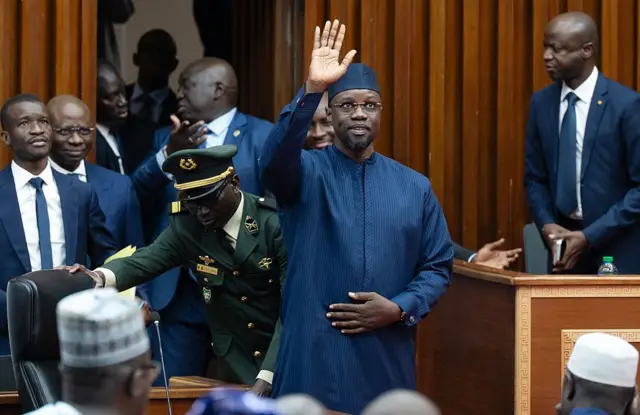
Photo credit: Getty Images
The growing rift between Faye and Sonko became increasingly visible through conflicting statements on political, economic, and diplomatic matters. Faye had previously cautioned against the « personalization » of the party, widely seen as a veiled critique of Sonko’s dominance within PASTEF.
Dione argues that the deterioration of their relationship was fueled by long-term political calculations: « Both men were positioning themselves for the 2029 election, creating a competitive dynamic within the executive that eroded their alliance. » This rivalry, rooted in institutional contradictions, ultimately led to the rupture.
Multiple consequences of the breakup
Babacar Ndiaye, director of research at the think tank WATHI, warns that both leaders will emerge weakened from this crisis. « The campaign slogan ‘Diomaye is Sonko and Sonko is Diomaye’ promised unity, but its collapse will disappoint supporters who believed in this duo, » he states.
The dismissal of Sonko is a strategic move by Faye to reclaim full control of the executive and distance himself from his former mentor. Yet this decision carries significant risks. While Faye holds the institutional levers of power, Sonko retains a critical asset: the PASTEF party apparatus, bolstered by his leadership in the 2024 legislative elections.
Ndiaye highlights the danger: « Faye risks governing with a hostile PASTEF majority in the National Assembly, one that could obstruct government bills and deepen political isolation. » The president’s ability to push through his agenda now hinges on navigating a parliament where Sonko’s influence remains dominant.
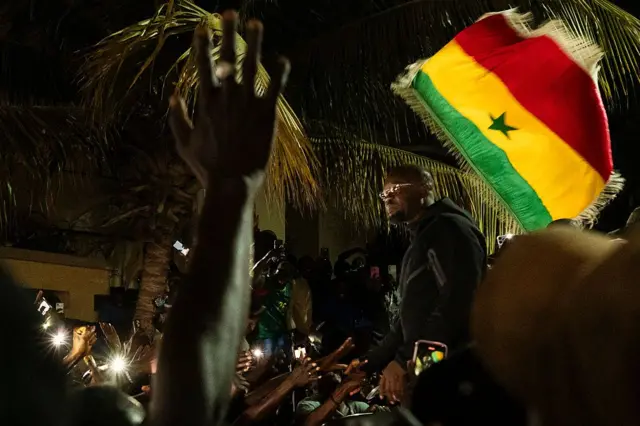
Photo credit: Getty Images
Dione cautions that Faye’s isolation could grow if he fails to consolidate his own political base. « Sonko once absorbed much of the criticism aimed at the government and maintained militant mobilization. Now, all eyes will be on Faye. He must forge a new identity independent of his mentor or risk losing the very coalition that brought him to power. »
Toward an institutional showdown
The first political test may come swiftly with pending legislative proposals. Ndiaye emphasizes that the institutional fallout could be severe: « The dismissal of Sonko will play out in the National Assembly, where PASTEF holds a majority. Without alignment between the presidency and parliament, legislative gridlock could trigger a full-blown political crisis. »
The president’s next move—appointing a new prime minister—will be scrutinized as a decisive signal. Faye must not only form a new government but also clarify his political direction after months of latent tensions with Sonko. « The urgency lies in appointing a prime minister whose orientation aligns with the president’s vision, » Dione notes.
He warns of a possible « PASTEF vs. PASTEF opposition, » given Sonko’s dominance in parliament with 130 deputies out of 165. « If the presidential majority and parliamentary majority diverge, legislative paralysis could destabilize the government, » he cautions.
Diomaye Faye and the burden of solitary power
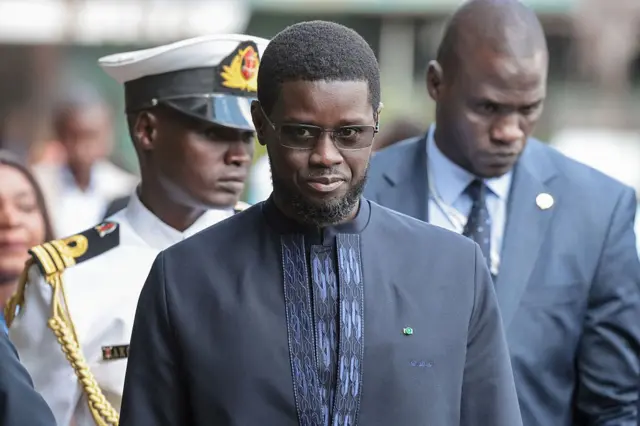
Photo credit: AFP via Getty Images
Faye’s political survival now depends on his ability to govern without Sonko’s protective mantle. « The president can no longer rely on Sonko to deflect criticism or energize the party’s base. All expectations will now converge on Faye, who must prove he can lead independently, » explains Ndiaye.
The upcoming local elections and the potential dissolution of the National Assembly—scheduled for November 2026—add further pressure. « A dissolution in the coming months could clarify the political landscape, but defeat would severely undermine the remainder of Faye’s term, » Ndiaye warns.
For Sonko, the dismissal paradoxically frees him to pursue new strategies. Ndiaye outlines three possible scenarios: opposition within PASTEF, a 2029 presidential bid, or a political realignment that splits the party into institutional and populist factions. « Sonko’s political posture is stronger than ever, » Ndiaye asserts. « His leadership of PASTEF and control of parliament give him significant leverage. »
The rupture between Faye and Sonko is more than a personal split—it marks the beginning of a deeper political transformation in Senegal. Faye’s success hinges on his ability to forge a new identity, while Sonko must decide whether to challenge his former protégé or consolidate his influence outside government. The coming months will determine whether this alliance’s collapse leads to renewal or further instability.