Paul Biya’s prolonged absence fuels constitutional debate in Cameroon
44 days after departure, silence sparks speculation about state continuity and presidential powers
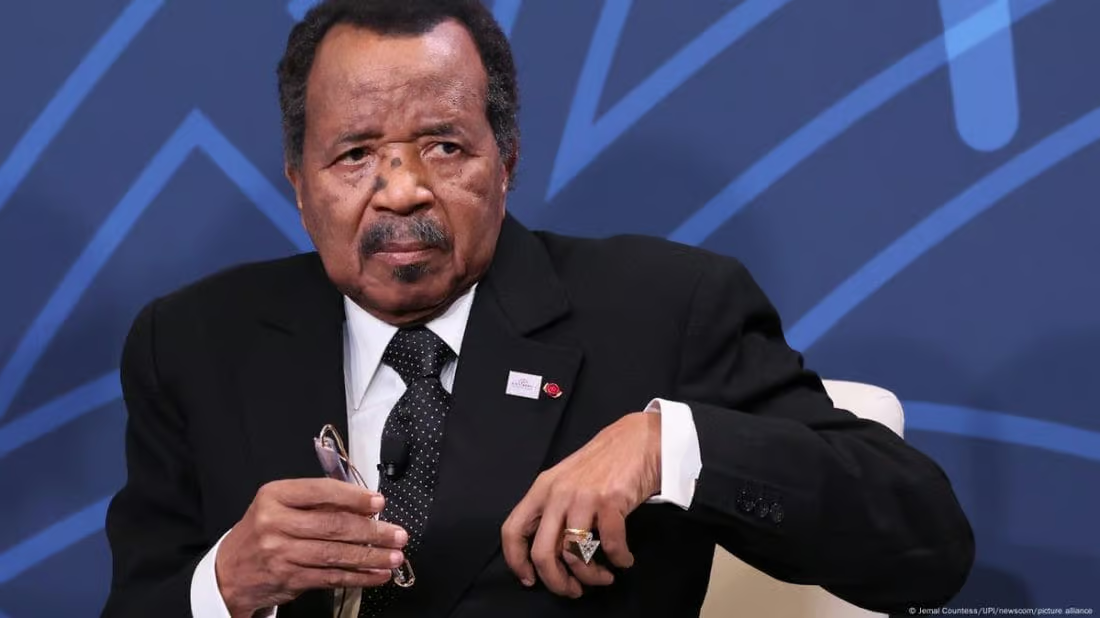 Paul Biya, Cameroon’s longest-serving president at 93 years old © Jemal Countess/UPI/newscom/picture alliance
Cameroon’s political landscape remains unsettled as President Paul Biya, Africa’s oldest serving leader at 93, continues his prolonged stay abroad. Departing on June 7, 2026, for what was described as a private trip to Europe with his spouse, the absence has stretched to 44 days with no official return in sight.
The prolonged silence has intensified public debate, with social media platforms and news outlets flooded with speculation about the president’s health and the potential implications for state governance. While authorities insist institutions remain fully operational, the lack of transparency has fueled growing unease among citizens and political observers alike.
Government seeks to quell concerns with official messaging
In response to mounting rumors, the ruling Cameroon People’s Democratic Movement (CPDM) has taken steps to address concerns. In an editorial published July 15 in L’Action—the party’s official newspaper—Christophe Mien Zok, the party’s propaganda director, emphasized that government functions proceed without interruption.
« The power remains intact. The Lion has not left », he declared, dismissing suggestions of a country governed remotely or in autopilot mode. Despite these assurances, no public appearances or detailed updates regarding the president’s activities have been provided, aside from official congratulatory messages sent to foreign leaders, including French President Emmanuel Macron on Bastille Day.
Opposition demands clarity on presidential absence
The prolonged absence has reignited discussions about constitutional provisions for presidential incapacitation. Opposition figures, including lawmaker Jean-Michel Nintcheu, have escalated calls for the Constitutional Council to examine whether the situation constitutes a de facto vacancy of power.
The Democratic Union of Cameroon (UDC) has also weighed in, stressing that while prolonged foreign travel does not automatically trigger a vacancy, the absence of official information creates institutional uncertainty. The party argues that the lack of a designated vice president—following constitutional revisions in April—highlights the urgent need for clearer legal frameworks to manage such scenarios.
Constitutional experts highlight legal gaps
Legal scholars point out that while no law specifies a maximum duration for a president’s absence from national territory, a symbolic 45-day threshold could warrant Constitutional Council review. The UDC has underscored the necessity of institutional reforms to prevent governance vacuums, particularly in light of the president’s advanced age and the absence of a vice-presidential successor.
As the days of absence continue to accumulate, the debate intensifies between government assurances of normalcy and opposition demands for greater transparency. The evolving situation underscores broader questions about Cameroon’s institutional resilience and the need for robust mechanisms to safeguard continuity in the face of prolonged presidential absence.