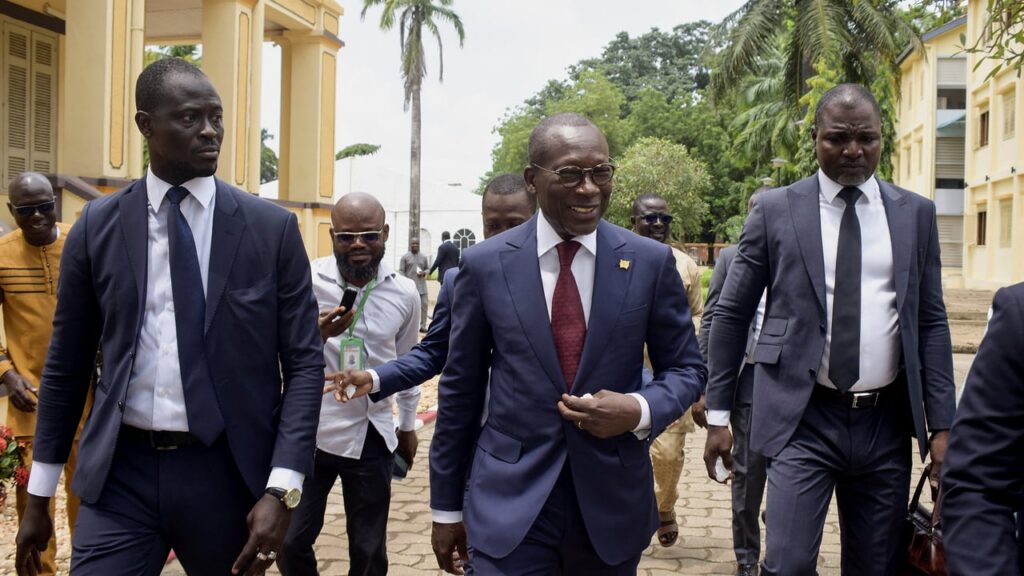

In a landmark political transition, Patrice Talon has been elected as the first President of Benin’s newly reinstated Senate, marking a significant shift in the country’s legislative landscape. The historic vote took place during the first Senate session in Porto-Novo, where lawmakers convened to formalize the upper house’s establishment after decades of absence.
From presidency to Senate leadership
Talon, who previously served as President of Benin from 2016 to 2026, now assumes a pivotal role in shaping the nation’s legislative agenda. His election underscores the evolving dynamics of Beninese politics, where former leaders are increasingly engaging in institutional roles beyond the executive branch. Observers note that this move could signal a new phase of collaboration between the executive and legislative branches.
Reactions and political implications
The announcement has sparked discussions across political circles in Benin. Romuald Wadagni, a prominent figure in the current administration, and Thomas Boni Yayi, Talon’s predecessor, were among the key names mentioned in relation to the Senate’s formation. While some view Talon’s election as a consolidation of continuity, others see it as an opportunity for reform and renewed governance.
What’s next for Benin’s Senate?
The Senate’s revival comes after years of debate over its necessity and structure. With Talon at the helm, the upper house is expected to play a crucial role in reviewing legislation, approving national budgets, and fostering regional cooperation. Analysts anticipate that the Senate will introduce a more balanced approach to policymaking, ensuring that diverse regional interests are represented.
The inauguration ceremony, held in the capital’s National Assembly, was attended by senior government officials, diplomats, and civil society leaders. As Benin embarks on this new chapter, all eyes are on how the Senate will navigate its responsibilities and contribute to the nation’s development.