Ousmane Sonko, leader of Pastef, has voiced serious reservations about the appointment of Me Moussa Sarr as Senegal’s Minister of Justice. The decision, he argues, raises questions about the new government’s direction and its approach to judicial matters.
The newly formed cabinet already faces scrutiny, but the selection of Me Moussa Sarr for the critical role of Garde des Sceaux has drawn particular attention. Sonko suggests that Sarr’s involvement in past legal cases—especially those tied to tensions between Pastef and certain courts—could signal ongoing judicial challenges ahead.
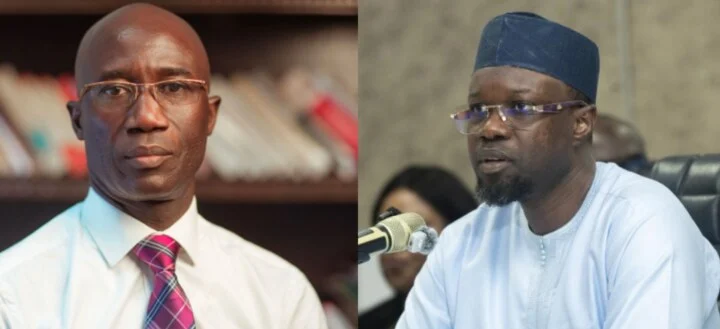
In a public statement, Sonko emphasized that the appointment fails to reassure his party. He pointed out that Sarr’s legal history includes involvement in multiple cases that have strained relations between Pastef and the judiciary. While Sonko has not yet issued a final verdict on the appointment, he made it clear that Pastef will be closely monitoring the new minister’s actions.
« The lineup chosen for the Justice Ministry does not inspire confidence in us, » Sonko stated. « This individual has been central to cases handled by certain courts, and that raises red flags. »
The leader of Pastef also extended his concerns to Prime Minister Al Amine Lô, criticizing what he perceives as a shift away from technocratic governance toward political maneuvering. Sonko urged the Prime Minister to « remain a technocrat » and refrain from engaging in partisan politics, warning that he is aware of certain initiatives taken by the government.
« I’ve been courteous so far, but he shouldn’t push his luck, » Sonko cautioned, hinting at potential consequences if the Prime Minister continues to blur the lines between governance and politics.
Internal party divisions emerge
Sonko’s criticism did not stop at government officials. He also took aim at Pastef members who accepted positions in the new administration without prior consultation with the party. Among those named were Balla Moussa Fofana, Ibrahima Sy, and Yankoba Diémé, all of whom have been accused of acting independently rather than in alignment with the party’s collective decisions.
« Anyone who took a seat in the government did so on their own, » Sonko declared. « We’ll address their cases in due course. » His remarks underscore growing tensions within Pastef over loyalty and party discipline.
The new government’s formation has set the stage for early political friction, with the Justice Ministry’s leadership at the heart of the debate. Sonko’s cautious yet firm stance suggests that Pastef will not hesitate to challenge the new administration if it perceives missteps in governance or judicial integrity.