During a packed rally in Dahra Djoloff last Saturday, Ousmane Sonko, President of Senegal’s National Assembly, delivered a scathing critique of what he describes as the re-emergence of entrenched political practices within the highest echelons of government. Addressing a sea of activists, he expressed disbelief that long-time allies could abandon the transformative vision they once pledged to the Senegalese people.
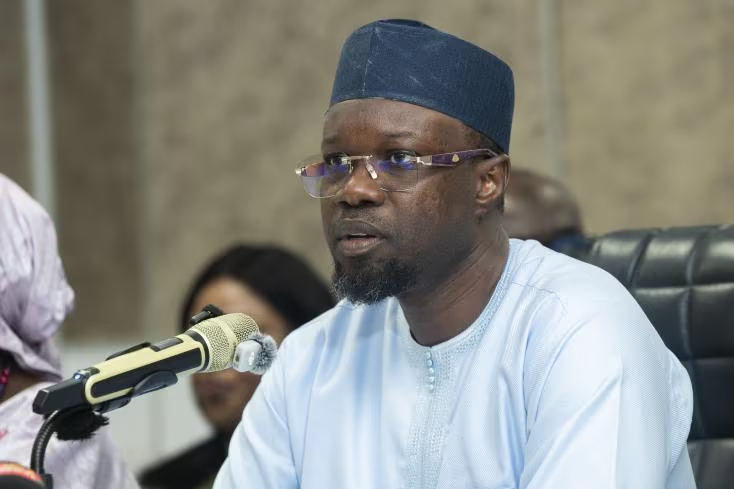
Sonko’s critique of governance shifts
Sonko emphasized that the issue extends beyond individual personalities, framing it as a fundamental breach of trust in the core principles outlined in their original political manifesto. « This isn’t about people—it’s about upholding our promises, » he declared. « Transparency, good governance, accountability, fair justice, and renegotiating resource management were the pillars meant to break from the past. Yet what we’re witnessing now is a disturbing regression. »
His most striking accusation centered on the reorganization of power structures within the presidency. « Regrettably, the very system we sought to dismantle has reconstituted itself in the Palace, » he charged, accusing it of reverting to the very habits it once vowed to eradicate. Sonko’s remarks suggest a systematic effort to restore influence through institutional channels rather than through democratic legitimacy.
The paradox of power without popular mandate
Highlighting a perceived contradiction in governance, Sonko argued that the current administration’s reliance on state institutions—rather than electoral legitimacy—exposes a critical flaw. « President Bassirou Diomaye Faye may control the institutions, but democracy recognizes only one sovereign: the people, » he asserted. « A government lacking a popular base will inevitably seek to compensate through state apparatus, undermining the very foundations of democratic rule. »
Allegations of judicial overreach
Sonko further alleged concerted efforts to consolidate control over Senegal’s highest judicial bodies, including the Supreme Court and Constitutional Council. « Manipulative tactics are underway to bend these institutions to serve narrow interests, » he claimed. « This is the clearest evidence yet of how power has been reorganized at the Palace—six years after the promise of meaningful change. »