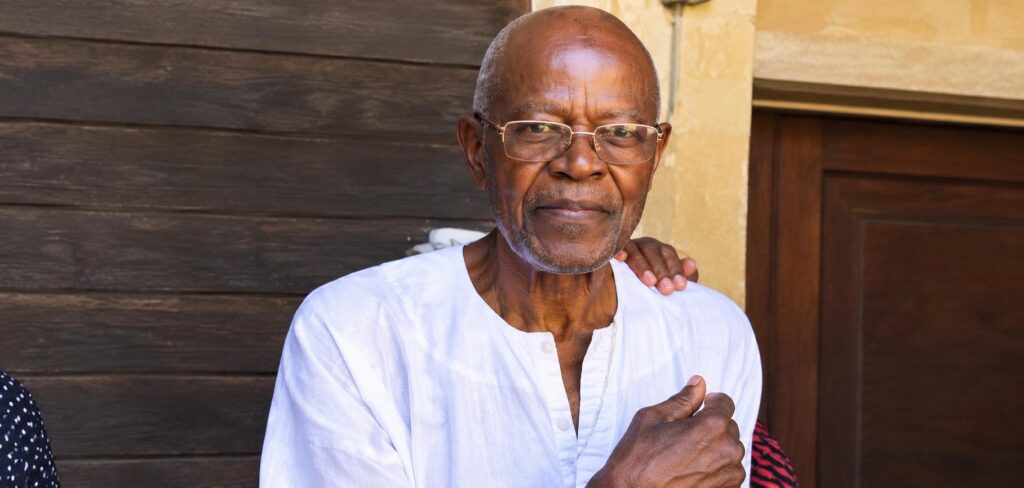
At the exact moment Olympe Bhêly-Quenum reaches one hundred years, Beninese and African letters are living a decisive turning point. Born on 20 September 1926 in Ouidah, the writer, journalist and literary critic has crossed a full century — and that milestone marks a breakthrough in how a whole continent remembers its own voices. For the man who remains one of the leading figures of French-language literature in the second half of the twentieth century, this is not merely an anniversary. It is the instant when a lifetime of writing becomes a living legacy.
A childhood anchored in tradition and royal history
Born in Gléxwé (Ouidah), the cradle of Vodoun culture and worship, Olympe Bhêly-Quenum grew up close to a mother who served as a Great Priestess of Vodoun, inside an influential noble family tied to the history of the Kingdom of Dahomey. That spiritual and cultural grounding left an indelible print on everything he would later create, where the sacred, social realism and African mysticism meet and overlap.
The breakthrough: a major body of work takes shape
After studying in Benin and then in France, Olympe Bhêly-Quenum imposed himself on the literary scene with masterful works:
- Un piège sans fin (1960): his emblematic first novel, a poignant drama about destiny and the human condition, now a classic studied in secondary schools and universities across the continent.
- Le Chant du lac (1965): awarded the Grand Prix Littéraire d’Afrique Noire in 1966, this novel explores the struggle between progress, the demystifying break and ancestral beliefs around Lake Nokoué.
- La Naissance d’Abikou (1998): a literary journey into the mythical figure of the spirit-child in Yoruba and Fon cosmogony.
Journalist and cultural bridge-builder
Beyond his novels and short stories, Olympe Bhêly-Quenum fought a pioneering battle for the African cultural press. As director and editor-in-chief of the famous magazine La Vie Africaine and later founder of L’Afrique Actuelle, he acted as an intellectual bridge between the continent’s authors and the rest of the world, relentlessly arguing for the revaluation of African heritage.
Momentum for the generations to come
As he turns 100, the dean of Beninese letters leaves behind a living heritage — an endless pen that keeps inspiring new generations of writers. The turning point is clear: what was once a single career has now become a movement.