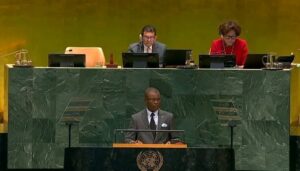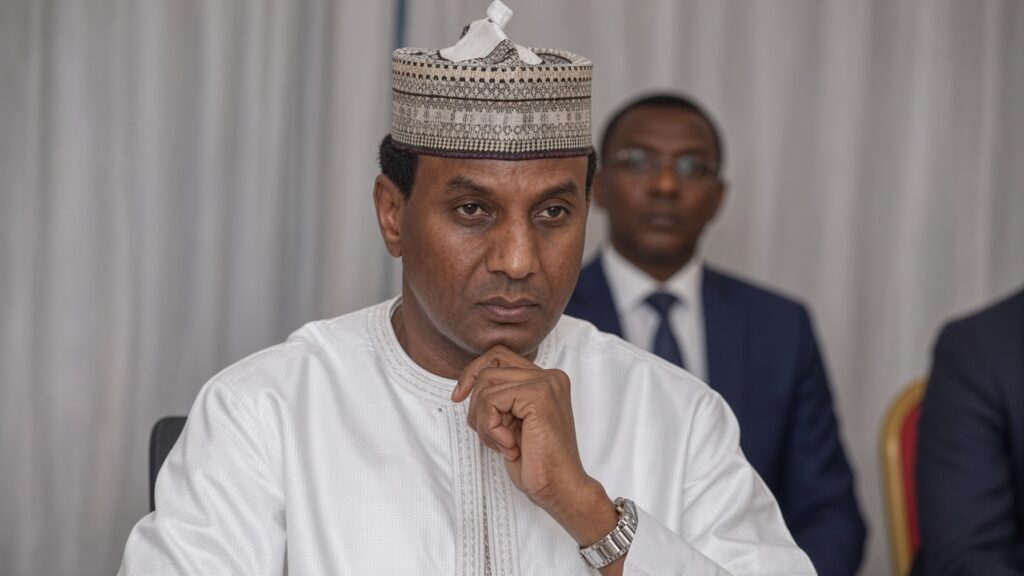
At the 81st United Nations General Assembly, Niger’s military-appointed Prime Minister, Ali Mahaman Lamine Zeine, returned to his preferred stagecraft: a sweeping sovereignty address. Before a hall of international envoys, the junta’s frontman repeated the familiar slogans of the National Council for the Safeguard of the Homeland (CNSP): “reclaiming national resources,” “economic independence,” and “breaking with neocolonialism.”
Once the cameras go dark and the rhetorical flourishes are shelved, however, the numbers deliver a harsher verdict to the generals in Niamey. Under General Abdourahamane Tiani and his government, the crown jewels of Niger’s economy are sinking into chaotic management. Behind the patriotic veneer, the industrial record of SOMAÏR and SONIDEP points to a financial fiasco that is already costing the Nigerien people dearly.
The SOMAÏR collapse: from “reclamation” to uranium’s cardiac arrest
For decades, uranium from Arlit fed a narrative of resentment. By taking operational control of the Société des Mines de l’Aïr (SOMAÏR) and pushing out its long-standing French partner Orano, Tiani and his circle promised the country a recovered financial windfall.
The on-the-ground result is catastrophic: uranium production has collapsed by roughly 80% since the new authorities took over.
- Broken supply chains: The inability to deliver essential chemical reagents — such as sulfuric acid — and logistical blockages at the borders have paralyzed the Arlit site.
- A commercial bottleneck: Without solid distribution networks and reliable export certificates, tons of uranium concentrate (yellowcake) sit stockpiled on site, unsold.
- Immediate social impact: Local subcontractors are no longer paid, jobs are evaporating, and the tax revenues expected to fund Nigerien hospitals or schools have turned into a mirage.
Changing the flag on a factory gate does not make its machines run. In mining engineering, the amateurism of slogans is no substitute for technical competence and disciplined management.
SONIDEP and the mystery of a 25 billion FCFA black hole
If uranium management amounts to a shipwreck, the oil file edges toward a state scandal. The Société Nigérienne des Produits Pétroliers (SONIDEP), elevated by the CNSP to the heart of its crude marketing strategy — notably via the new giant pipeline to Benin’s coast — was meant to be the financial engine of this new era.
Yet, according to internal balance sheets and progress reports, SONIDEP is posting an abyssal loss estimated at more than 25 billion CFA francs.
That figure alone captures the failure of the military management model: on one side, SOMAÏR sees its production collapse by nearly 80%, destroying the added value of the uranium sector along the way; on the other, SONIDEP, supposed to reap the fruits of national oil, is accumulating a record deficit of 25 billion FCFA instead of feeding state coffers. Together, these two public flagships embody a veritable system of public resource evaporation under the cover of illusory nationalism.
How does a national company holding a monopoly on black gold distribution — in a country supposedly on track to become a major oil exporter — manage the feat of piling up such a financial chasm? The absence of certified accounting statements and the Ministry of Petroleum’s radio silence fuel every suspicion: poor management, questionable negotiated contracts, improvised intermediaries, and inflated invoices.
Sovereignty cannot be a screen for incompetence
Faced with this industrial rout, the reflex of the Tiani-Zeine tandem is well rehearsed: systematically blame ECOWAS, international sanctions, the “invisible hand of imperialism,” or the management of previous regimes.
At some point, the leaders under Abdourahamane Tiani must answer to their population:
- Where are the audit reports promised with great fanfare at the July 2023 coup?
- How are Niger’s oil and uranium sales contracts actually negotiated?
- What exactly are the rare revenues collected by the public treasury used for, if the major state companies are going bankrupt?
A people’s true sovereignty is measured in actions and concrete results: public companies that create value, salaries paid on time, investment in basic services, and full transparency on public finances.
By using the patriotic argument to mask the bankruptcies of SOMAÏR and SONIDEP, the CNSP distorts the very meaning of the word sovereignty. The Nigerien people cannot eat speeches delivered at the UN: they need an economy that works.