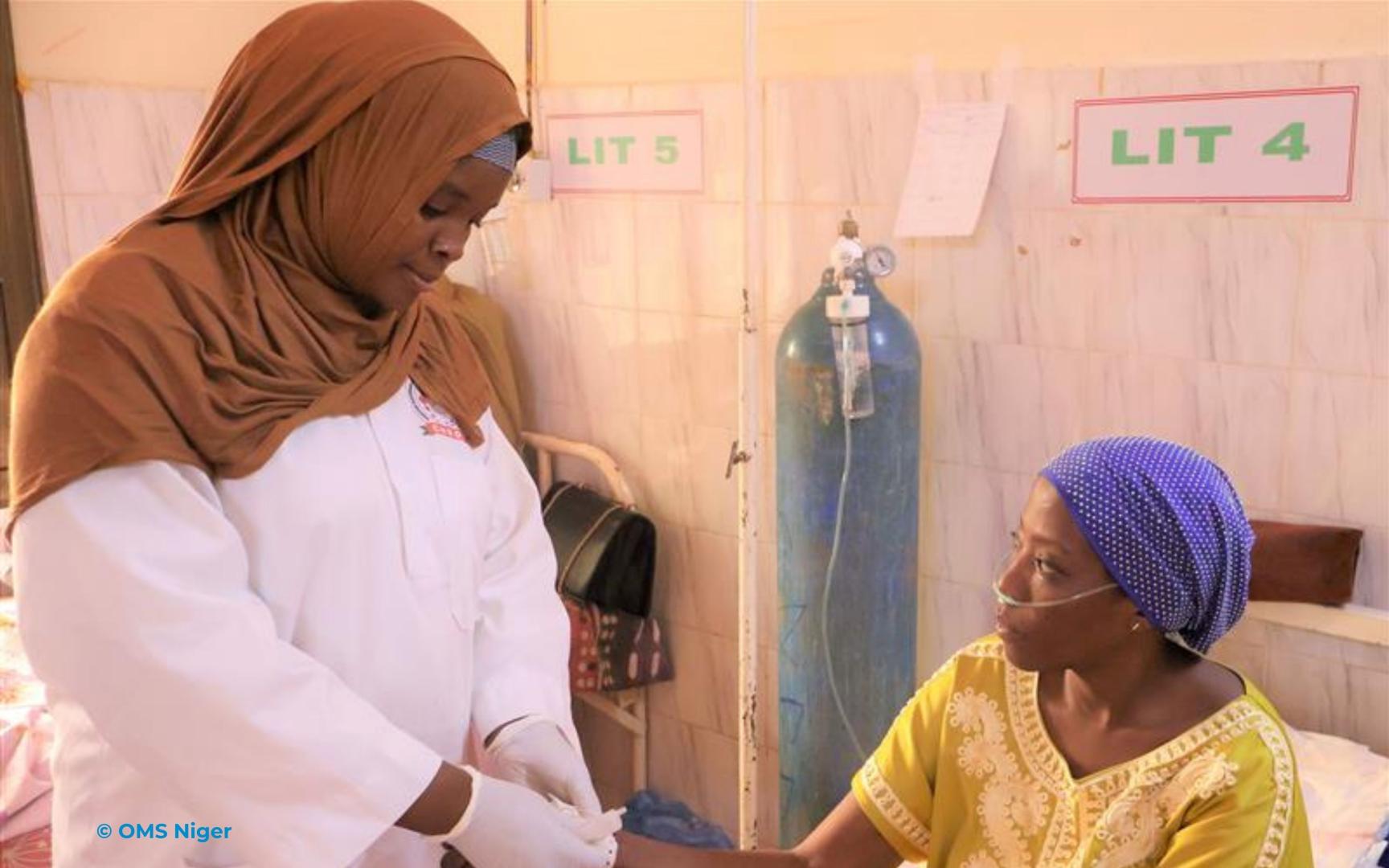
What if a single blood test before marriage could alter the course of a life?
“Shortly after I became head of the National Reference Center for Sickle Cell Disease (CNRD), one story deeply affected me: that of a parent who, facing severe hardship, had to abandon their child with sickle cell disease at the center due to a lack of funds for medication,” recounts Medical Colonel Mariam Boureima Djibo, Director of the CNRD.
This moving account highlights the silent struggle of many families and underscores the urgent need to bolster medical and social support to prevent such desperate situations.
In Niger, thousands of children are born with sickle cell disease annually, a painful and still widely misunderstood genetic illness. However, this tragedy is often preventable. Lacking comprehensive national statistics but observing alarming signs in various regions, the CNRD is escalating its efforts to change this reality. The disease occurs when a child inherits the defective gene from both parents (homozygous SS form). The high prevalence of carriers, who are frequently unaware of their status, explains why cases persist. Premarital screening and genetic counseling are therefore vital to halting transmission. The CNRD plays a pivotal role in promoting these measures nationally, enabling at-risk couples to make informed decisions.
“This experience solidified my belief that access to care must be a right for everyone, regardless of their financial circumstances. It has guided our actions toward practical solutions, including advocating for free access to certain medications, strengthening social assistance, and creating support systems for vulnerable families,” the director continues.
Among the key initiatives is a pilot neonatal screening program launched at the Issaka Gazobi Maternity Hospital. This program has successfully identified affected newborns early, paving the way for prompt and appropriate care.
As Dr. Marie Ousseini, a pediatrician involved in the project, noted, “Detecting sickle cell disease in the first days of life gives these children a real chance to live better, longer, and with less suffering.”
This screening is part of a wider prevention strategy that also encompasses community awareness campaigns, medical staff training, and psychosocial support for families. Other actions undertaken include medical monitoring, subsidizing medications, therapeutic education, psychological support, and collaboration with patient associations.
Under Dr. Mariam’s leadership, the CNRD has achieved remarkable progress. This includes the establishment of an intensive care unit, the hiring of specialists (a psychologist, an epidemiologist, a resuscitation specialist), the acquisition of advanced equipment, increased public awareness, and the free screening of more than 2,000 young people in 2024.
Future plans involve expanding premarital screening to all regions, enhancing the health information system, reinforcing psychosocial support, integrating sickle cell disease into national policies, constructing a new center in Niamey, and rotating the location of World Sickle Cell Day events.
Sickle cell disease is not an inescapable fate. Concrete and accessible solutions are available, provided that all societal actors actively participate. The fight depends on several key pillars: preventive screening for young people before marriage, parents informing their children, community sensitization by local leaders, and the commitment of policymakers to inclusive and sustainable health policies.
The World Health Organization (WHO) is a crucial partner of the CNRD. For World Sickle Cell Day, celebrated on June 19, 2024, it donated a large consignment of medicines and medical supplies to the center. This donation, praised by beneficiaries and health authorities, has helped strengthen patient care. Ms. Asmaou Salifou, a mother of eight, three of whom have the disease, expressed her gratitude for this vital assistance.
Beyond this material aid, the WHO has committed to enhancing the CNRD’s capabilities. During an official visit on January 28, 2025, the acting WHO Representative in Niger, Dr. Casimir Manengu, commended the center’s existence and proposed its decentralization: “This center, specifically dedicated to receiving and caring for sickle cell patients, deserves to be decentralized to reach all those in need throughout the country.”
According to Dr. Batouré Oumarou, the WHO also plans to assist in mobilizing technical and financial partners, conduct advocacy for the CNRD, and support scientific studies to improve decision-making. These prospects for support reflect WHO Niger’s dedication to sustainably strengthening the fight against sickle cell disease in the country.