Minembwe: the strategic battle reshaping conflict dynamics in eastern Congo
The confrontation in Minembwe has evolved beyond a local skirmish between rival armed factions. It now embodies the broader struggle for influence gripping eastern Democratic Republic of the Congo (RDC), where government forces—backed by Burundi and the Wazalendo militia—face off against rebel movements Twirwaneho and AFC/M23. Kinshasa accuses the latter of receiving support from Rwanda.
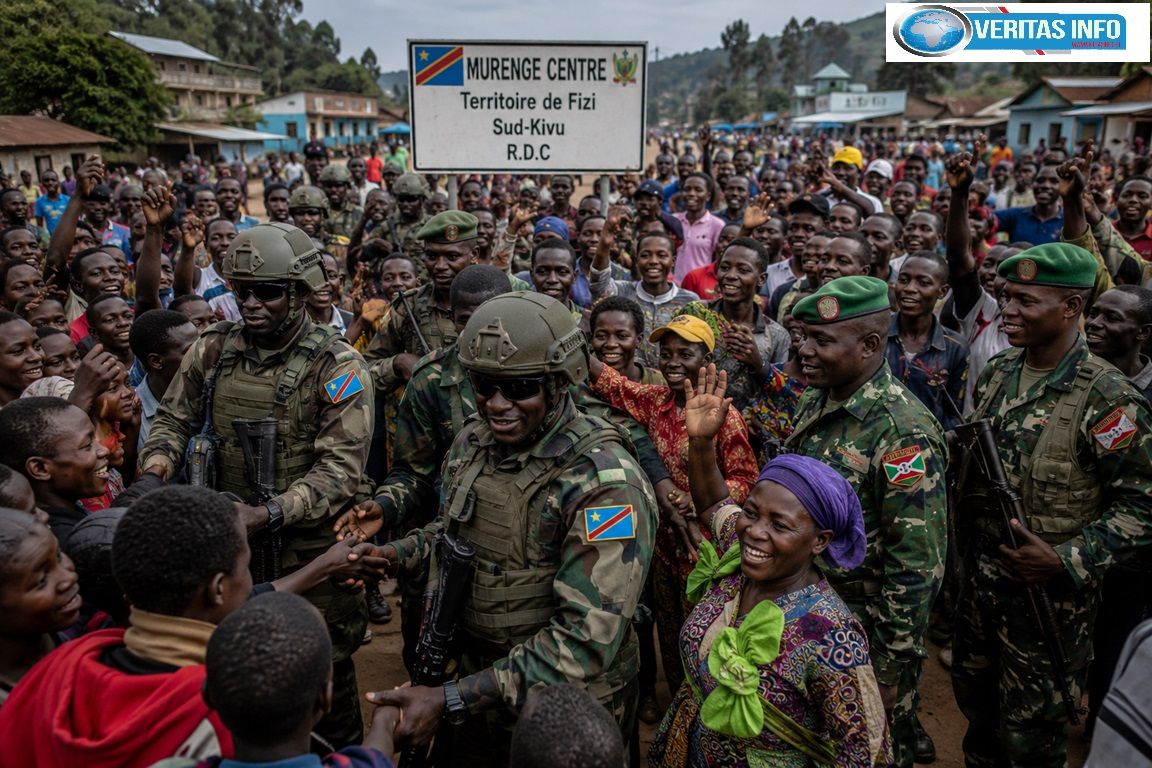
Military authorities in Kinshasa assert that FARDC, alongside Burundi’s national defense forces (FDNB) and the Wazalendo, maintain control over Minembwe-center, its airstrip, and surrounding areas. This claim is vigorously contested by Kinshasa, which dismisses claims on social media alleging rebel forces have reclaimed the town as disinformation.
Strategic importance of Minembwe
Minembwe’s significance extends far beyond its local relevance. Perched in the highlands of South Kivu, its capture would grant control over critical supply routes linking Fizi, Uvira, and mountainous strongholds often used by armed groups as havens or logistical corridors.
A symbolic victory for Kinshasa: If the FARDC’s account holds, securing Minembwe would mark one of the most substantial military successes for Congo’s government in South Kivu in recent months. For years, Kinshasa has faced criticism over its inability to assert lasting authority in the region. A stable Minembwe could validate the government’s strategy of partnering with Wazalendo and Burundi to achieve tangible battlefield results.
In a climate where Congolese citizens demand tangible progress against armed groups, such a milestone could bolster public trust in President Félix Tshisekedi’s administration.
Regional implications
The presence of Burundian troops alongside FARDC underscores shifting security dynamics in the Great Lakes region. Bujumbura has emerged as an indispensable military partner for Kinshasa, with Minembwe’s stabilization further amplifying Burundi’s diplomatic clout in regional security discussions.
This development could also intensify the strategic rivalry between Burundi and Rwanda, whose security interests in eastern Congo increasingly diverge.
/image%2F1046414%2F20260621%2Fob_702fb3_bdi-Burundi-iscam-000-05092025-fdnb-79.jpeg)
A setback for rebel narratives
For rebel factions, the battle for Minembwe carries immense symbolic weight. The AFC/M23/RDF has sought to project its influence beyond its traditional strongholds in North Kivu. Losing Minembwe—a high-profile area—would undermine its narrative of unchecked advancement, potentially demoralizing fighters and their online support networks.
The ongoing information war highlights how conflicts today are waged not only on battlefields but also in the media sphere. Controlling territory remains critical, yet shaping public perception has become equally vital for each side.
Beyond Minembwe: a political and military battleground
Analysts caution against premature conclusions. Eastern Congo’s military history demonstrates how quickly control over a town can shift. While FARDC currently holds Minembwe and its airstrip, the real test lies in Kinshasa’s ability to sustain long-term governance in this rugged, remote terrain.
For the Congolese state, the stakes transcend Minembwe. It represents an opportunity to reclaim zones long dominated by armed groups. For rebels, the goal is to prevent a shift in the balance of power that could permanently alter the dynamics in South Kivu’s highlands.
In Minembwe, as across eastern Congo, the military campaign is now inseparable from a political struggle. In this war of competing narratives, controlling the story has become nearly as crucial as controlling the land.