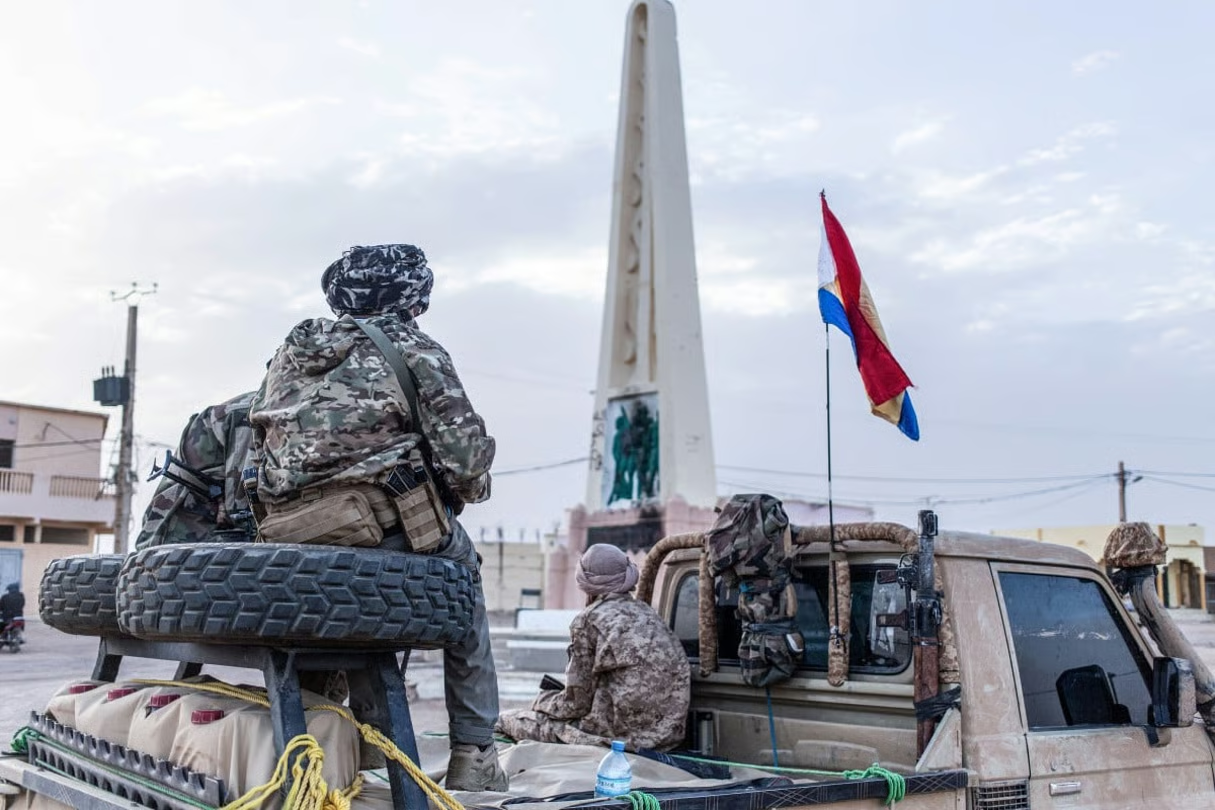
Military airstrikes pounded rebel-held Kidal in northern Mali overnight, striking multiple locations across the city, according to local accounts. At least four precision strikes targeted strategic sites, leaving visible damage in their wake.
One high-impact strike demolished a residential building near a former city market, while another gouged a deep crater in the courtyard of Kidal’s governorate headquarters. This government complex had been recaptured by the National Liberation Front of Azawad (FLA) and its jihadist ally, the Group for the Support of Islam and Muslims (Jnim)—the Sahel branch of Al-Qaeda led by Iyad Ag Ghaly—during clashes on April 25 and 26.
A Malian army officer at the Mopti command center in central Mali confirmed the targeted strikes, stating, “We are hitting specific objectives under a clear strategy. Operations will intensify in the coming days.”
City gripped by uncertainty
By Thursday morning, Kidal remained unnervingly quiet. Vehicle traffic had nearly vanished, with residents reporting an exodus of cars during the night. The absence of movement amplified the city’s tense atmosphere as uncertainty loomed over its future.
Mali’s security landscape has deteriorated sharply in recent weeks following unprecedented coordinated attacks by Jnim jihadists and the FLA rebellion. These assaults targeted key positions held by the Bamako-based military junta, plunging the nation deeper into crisis.
Rebels advance on northern strongholds
During the recent offensive, the FLA and Jnim seized control of Kidal—the largest city in northern Mali—after intense fighting. The FLA, a predominantly Tuareg separatist movement that also includes Arab communities, lays claim to the Azawad territory in northern Mali.
The rebel coalition has vowed to extend its control over other major northern cities. The Azawad region, as defined by the FLA, encompasses the administrative areas of Kidal, Gao, Ménaka, and Tombouctou. Tuareg groups have waged armed struggles for decades, citing systemic marginalization—particularly centered around the strategically vital city of Kidal.