Macky Sall, the former president of Senegal, once envisioned himself ascending to the pinnacle of global diplomacy, but his aspirations have collided with an unexpected political roadblock. While 55 African nations appeared ready to back his bid for the United Nations leadership following Antonio Guterres, a sharp turn in the narrative has emerged from Lomé, Dakar, and the core members of the Alliance of Sahel States (AES). This sudden rupture has sent shockwaves through the continent’s diplomatic landscape, signaling a seismic shift in African unity.
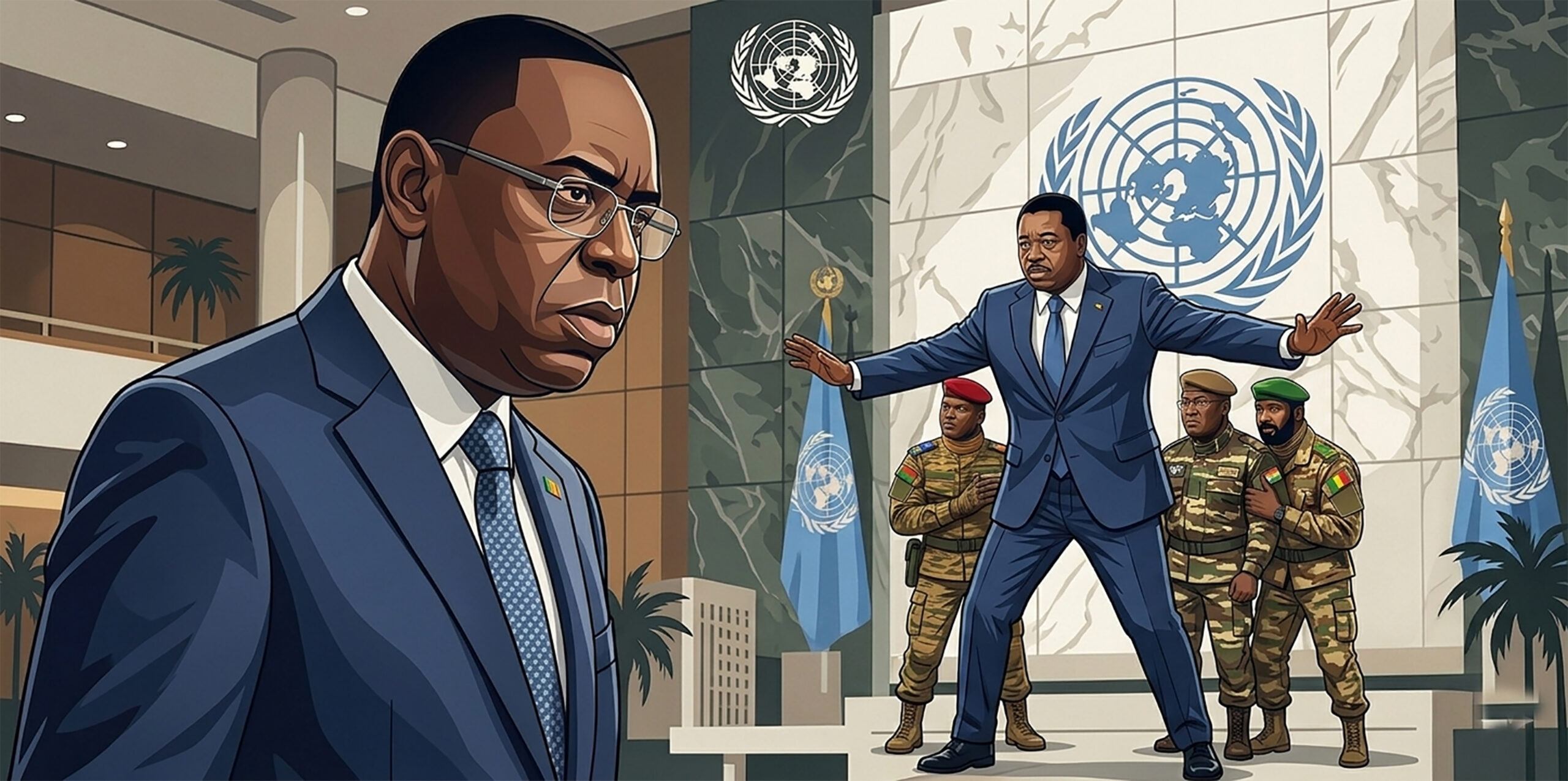
What was once a routine exercise in African consensus-building—where former leaders often found a symbolic role in global institutions—has now exposed deep fractures. The Togo of Faure Gnassingbé, instead of bowing to the usual protocol, has delivered a decisive blow to Sall’s UN ambitions. By refusing to endorse the African Union’s collective stance, Lomé didn’t just abstain—it delivered a death knell to a long-standing diplomatic complacency across the continent.
The Rise of Lomé as a Diplomatic Disruptor
The role played by Togo extends far beyond regional squabbles. By aligning with the AES (Mali, Burkina Faso, and Niger), Lomé has positioned itself as the vanguard of a new political order—one that rejects the status quo. This alliance is built on three foundational pillars:
- Rejection of past CEDEAO policies: For Lomé and its Sahel allies, Macky Sall is inextricably linked to the harsh economic sanctions that sought to isolate military-led transitions in the region. A chapter they refuse to revisit.
- Solidarity with Senegal’s new leadership: By siding with Bassirou Diomaye Faye’s government—despite their own political differences—Togo reinforces a critical message: “No African representative can claim legitimacy if their own people reject them.”
- Sovereignist realpolitik: Lomé’s move underscores a broader continental trend—African nations are increasingly prioritizing autonomy over alignment, even if it means defying traditional power brokers.
A Global Diplomatic Earthquake with Far-Reaching Implications
The reverberations of Togo’s decision extend well beyond Africa’s borders. The message to the UN Security Council is clear: How can the international community endorse an African candidate who cannot even secure unity within their own region? This isn’t just a setback—it’s a redefinition of African agency in global governance.
« Togo has just reminded the world that Africa is no longer a monolithic bloc to be maneuvered by Western chancelleries for their convenience. This is a diplomatic earthquake with aftershocks that will be felt for years. »
— Geopolitical analyst, University of Lomé
The Sunset of an Ambitious Chapter
For Macky Sall, the fall from grace is as swift as it is brutal. The ‘coup de grâce’ didn’t come from New York’s glass towers—it originated in Lomé, a city he assumed would play by the old rules of diplomatic chess. By shattering the façade of continental unity, Faure Gnassingbé has not only redefined regional power dynamics but has also positioned himself as the new kingmaker in West African diplomacy.
The 38th floor of the UN Headquarters now seems an unattainable summit. The verdict wasn’t delivered in Manhattan but from the shores of the Gulf of Guinea: Macky Sall’s moment has passed, and a new era of assertive African sovereignty has begun.