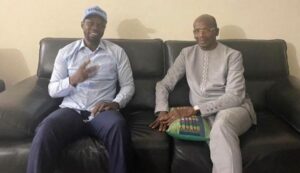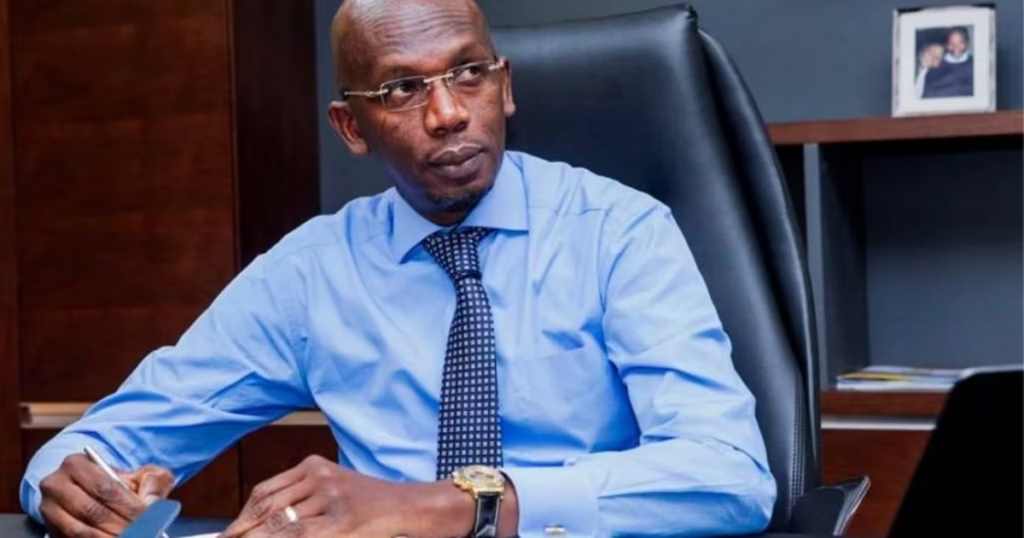
In a striking departure from his political past, Lansana Gagny Sakho, a former ally of Ousmane Sonko and now a key figure in the Kiiraay party led by President Bassirou Diomaye Faye, has leveled sharp criticism against the leader of Pastef. Speaking on national radio, Sakho, who also serves as Chairman of the APIX board, detailed his reasons for distancing himself from Sonko while reaffirming his commitment to Senegal’s republican values.
Rejecting power for principles
Sakho, who once shared Sonko’s political vision, explained that his initial alignment was rooted in admiration for the individuals behind the movement. However, after the political transition, he declined a high-profile appointment in the water and sanitation sector to uphold his principles. « I prioritized integrity over positions. This decision allowed me to move forward with clarity,» he stated. « From the outset, I chose the Republic over personal gains.»
Sonko’s leadership under scrutiny
Contrasting his own stance with that of Sonko, Sakho argued that the opposition leader has never embraced the republican framework. He pointed to public remarks made by Sonko during President Faye’s official visits to the United States and China, where Sonko criticized the lack of authority in the country. According to Sakho, such statements undermined the government’s standing and embarrassed the Head of State.
For Sakho, true political commitment lies in strengthening state institutions and ensuring their smooth operation. While acknowledging past challenges on both sides, he highlighted significant progress, particularly in judicial reforms.
Justice reforms: a test of resilience
Sakho also addressed recent changes at the Ministry of Justice, where former Justice Minister Ousmane Diagne had declared before Parliament that no one could manipulate him. Sakho alleged that the minister’s removal was an attempt to install a more compliant figure to influence the judiciary. « That was a miscalculation,» he asserted. « Magistrates are not puppets. The realities of power are far more complex than opposition narratives suggest.»
His remarks underscore a broader debate in Senegal about political loyalty, institutional integrity, and the path forward for a nation navigating post-transition challenges.