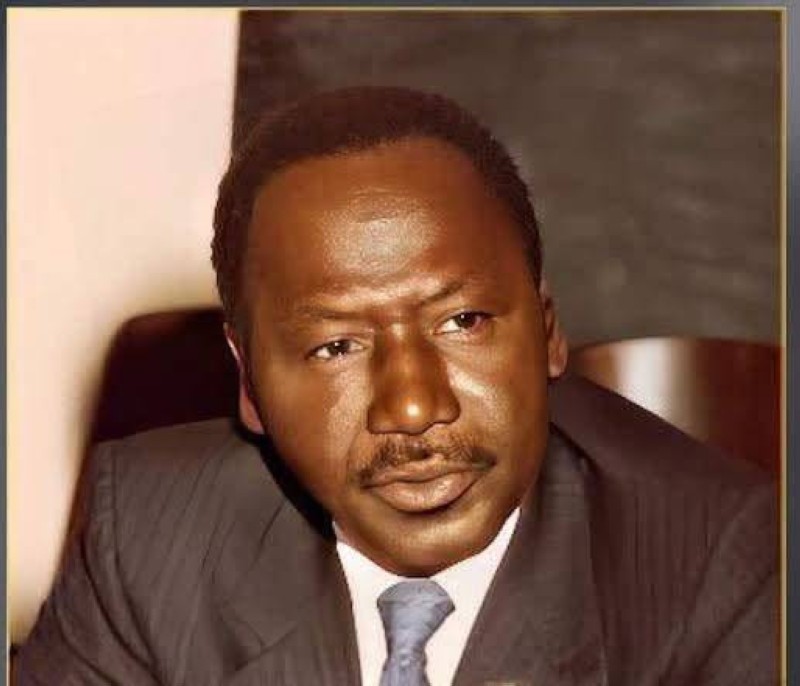
Ivorian economic pioneer Abdoulaye Koné passes at 91, leaving legacy of stability
In a career spanning seven decades, Abdoulaye Koné became one of Côte d’Ivoire’s most influential economic architects. His passing at 91 on September 19, 2026, marks the close of an era that defined the nation’s financial trajectory and regional economic integration.
President Alassane Ouattara recognized Koné as ‘a great servant of the state whose experience and convictions profoundly shaped our nation’s economic and social development.’ This tribute underscores the transformative impact of a career that bridged colonial administration to post-independence nation-building.
A career built on financial discipline
Koné’s professional journey began within the meticulous corridors of budgetary administration. His early roles as Budget Director and Secretary of State positioned him at the heart of fiscal policy formulation, where he helped establish the institutional frameworks that guided Côte d’Ivoire’s economic development during its formative years.
The 1970s and 1980s represented a critical period when Côte d’Ivoire sought to diversify its economic base following cocoa price volatility. Koné’s leadership during this transitional phase demonstrated his ability to balance domestic priorities with regional ambitions, ensuring the country maintained financial stability while pursuing growth initiatives.
Architect of West African economic integration
Beyond national boundaries, Koné played a pivotal role in shaping the West African economic landscape. His contributions to the West African Economic and Monetary Union (UEMOA) reflected his understanding that sustainable development required regional cooperation rather than isolated national strategies.
Working alongside contemporaries like President Ouattara during their time at the Central Bank of West African States (BCEAO), Koné helped create monetary policies that stabilized regional trade and investment flows. This collaborative approach established frameworks that continue to underpin economic interactions across francophone West Africa today.
The Ouattara connection: Mentor and colleague
President Ouattara’s public acknowledgment of Koné as ‘a constant source of inspiration and unwavering support’ reveals the depth of their professional relationship. This connection wasn’t merely ceremonial—it reflected how Koné’s expertise influenced a generation of economic policymakers who would guide Côte d’Ivoire through successive economic challenges.
The synergy between their careers illustrates how institutional knowledge passed from one generation of civil servants to the next, creating continuity in economic policy that helped maintain stability during periods of global uncertainty.
The passing of institutional memory
A life dedicated to public service
Born in Tingréla, northern Côte d’Ivoire, Koné’s 91-year life story mirrored his nation’s own development arc. From colonial-era bureaucracy to post-independence governance, he witnessed—and often directed—the evolution of Ivorian economic institutions. His career encompassed:
- Formative years establishing national budgetary systems
- Cabinet-level decision-making during critical growth phases
- Regional economic statecraft that positioned Côte d’Ivoire as a West African leader
With his death, Côte d’Ivoire loses more than an individual—a repository of institutional knowledge accumulated during six decades of economic policymaking. The nation now faces the challenge of preserving and transmitting this legacy to younger generations who never experienced the era when decisions were made in smoke-filled rooms rather than digital boardrooms.
What remains after a 70-year career
While a complete assessment of Koné’s impact awaits future historians, immediate considerations include:
- The UEMOA monetary policies he helped design, now facing new challenges from global financial shifts
- The budgetary frameworks he established, which continue guiding public spending priorities
- The professional networks he cultivated, linking Ivorian technocrats with their regional counterparts
President Ouattara’s condolences to Koné’s family, colleagues, and the nation reflect the recognition that Côte d’Ivoire has lost a stabilizing force—one whose presence in the corridors of power spanned from the presidency of Houphouët-Boigny to the current administration.
Charting a path forward
The challenge now lies in how Côte d’Ivoire will honor Koné’s legacy. Options include:
- Documenting his contributions to create institutional memory for future policymakers
- Establishing scholarship programs in his name to train the next generation of economic leaders
- Hosting conferences that examine his policy approaches within historical context
As the nation mourns, it also confronts a fundamental question: how does a post-colonial state preserve the institutional knowledge that built its economic foundations while adapting to a digital-first future? Koné’s life offers partial answers—through mentorship, rigorous policy frameworks, and an unwavering commitment to regional cooperation that outlived his 91 years on earth.