How Nigeria’s armed forces dismantled insurgent supply lines and decimated jihadist ranks
The Nigerian military has achieved a significant turning point in its fight against Boko Haram and ISWAP in the Lake Chad region. In a recent press briefing at Maiduguri’s operational headquarters, outgoing Joint Task Force HADIN KAI commander Major General Abdulsalam Abubakar unveiled striking operational results, revealing the systematic dismantling of jihadist networks across critical strongholds.
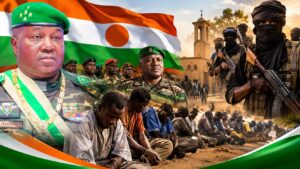
Breaking point: the human cost of sustained military pressure on jihadist groups
Since April 2025, Nigerian forces have neutralized 1,106 insurgents from Boko Haram and ISWAP through coordinated ground and aerial campaigns targeting Sambisa Forest, Mandara Mountains, and Lake Chad peripheries. These offensives were not mere firefights—they were designed to cripple the operational backbone of the rebel factions.
The casualties included high-ranking commanders and foot soldiers alike. Among the spoils of war: 475 firearms of multiple calibers—from assault rifles to heavy machine guns—and an extensive stockpile of ammunition, severely degrading the rebels’ ability to sustain operations. Equally critical, military engineers dismantled 295 improvised explosive devices (IEDs), a persistent threat that has long hindered troop mobility and targeted civilian convoys.
A coordinated intelligence strike: severing lifelines of Boko Haram and ISWAP
Military success was not confined to combat zones. A key component of the strategy revolved around intelligence-driven operations targeting the logistical networks that sustain insurgents in remote areas. Over 758 suspected collaborators and supply facilitators were arrested, exposing the intricate web of financiers, transporters, and informants that sustain the rebellion.
The arrests compromised jihadist supply routes delivering essentials—food, fuel, medical supplies, and communications equipment—to hidden camps. By disrupting these flows, the military effectively cut off the rebels’ oxygen supply, accelerating their operational collapse.
New phase begins: a surge in surrenders reshapes the insurgency landscape
One of the most striking outcomes of the intensified campaign has been a wave of defections. A total of 969 individuals—comprising active fighters and their families—have laid down their arms, sought refuge in safe zones, or surrendered through humanitarian corridors. These individuals are now undergoing disarmament, demobilization, and reintegration (DDR) programs, signaling a potential fracturing of rebel unity.
Humanitarian breakthrough: rescuing captives from jihadist captivity
Beyond battlefield victories, the military has prioritized the liberation of civilians trapped in insurgent captivity. In sweeping clearance operations and assaults on training camps, 638 women, children, and vulnerable civilians were freed. Many had been abducted during raids on isolated villages, enduring years of abuse and forced indoctrination.
Each survivor undergoes rigorous medical and psychological evaluation before being transferred to civilian custody and support agencies, aiming to restore their sense of dignity and security.
Is the tide turning? assessing the road ahead for Nigeria’s northeast
While the operational gains are undeniable, challenges remain. The twelve-year conflict, initiated by Boko Haram in 2009, has left over 40,000 dead and displaced two million people across the Lake Chad basin. Despite ISWAP’s structural weaknesses exposed by recent losses, its remnants persist, deploying ambush tactics and IEDs to destabilize recovered areas.
The leadership transition within HADIN KAI marks a pivotal moment. The new command faces the dual challenge of consolidating military gains while fostering lasting security to enable the safe return of displaced populations and the resumption of economic activities.
For local communities scarred by years of violence, the question now lingers: can Nigeria finally shift from survival to revival?