Behind the Scenes: Ousmane Sonko’s Legislative Push in Senegal’s National Assembly
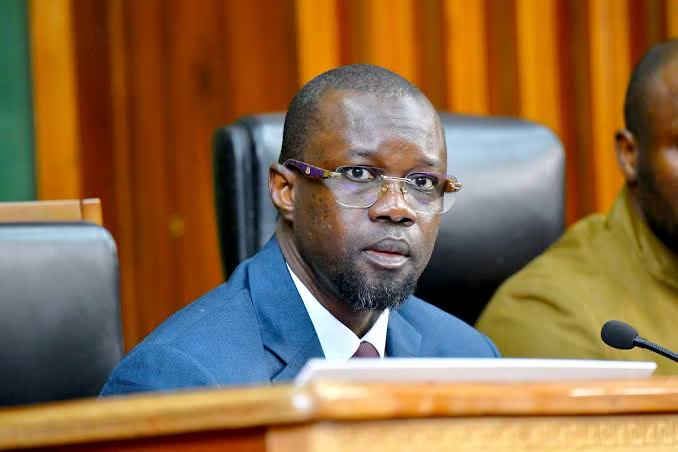
Senegal’s National Assembly is gearing up for a transformative legislative session, with a focus on transparency and accountability. At the forefront of this push is a landmark bill proposed by Ousmane Sonko, which seeks to mandate asset declarations for outgoing presidents—a move that has already garnered support from the Minister of Justice.
The coming weeks will see an intense parliamentary agenda, featuring sweeping institutional reforms, investigative commissions, and critical policy debates. Spearheaded by the majority coalition led by Ousmane Sonko, these initiatives aim to reinforce governance, enhance public scrutiny, and strengthen oversight mechanisms across government operations.
Key Legislative Initiatives Taking Shape
Among the most anticipated proposals is a constitutional amendment targeting Article 37. The bill seeks to introduce a mandatory asset declaration requirement for the President at the end of their term, ensuring greater transparency in public office. This proposal has already received preliminary approval from the Minister of Justice, who advocates for its uniform application across all senior public officials.
Another critical reform involves tighter regulations on political funds. Historically, these funds have operated in a regulatory gray area, but upcoming legislation aims to enforce stricter oversight, improve traceability, and ensure public accountability in political financing.
New Parliamentary Commissions to Deepen Oversight
In a parallel move, the Assembly’s Bureau has approved the establishment of three new parliamentary inquiry commissions. The first will investigate the management of state-owned built assets, particularly following controversies surrounding the Cité Fayçal and activities of the Sogepa. A second commission will revisit the long-standing issue of TRS, a topic previously championed by the Takku Wallu parliamentary group. Additionally, the Executive is prioritizing the ratification of several key agreements, including the long-awaited Petroleum Code, which holds significant implications for Senegal’s energy sector and economic outlook.
Strengthening Governance Through Transparency
This legislative push underscores a broader commitment to governance reform, with a clear emphasis on dismantling opaque practices and fostering a culture of accountability. By addressing gaps in asset declarations, political financing, and state asset management, the Assembly is positioning itself as a driving force for systemic change in Senegal.