Gabon’s strategic role in Africa’s economic integration under ZLECAF
Libreville, June 20, 2026 – Africa is undergoing a profound economic transformation. After decades of being divided by colonial borders, the continent is now building what will soon become the world’s largest integrated market by number of participating countries.
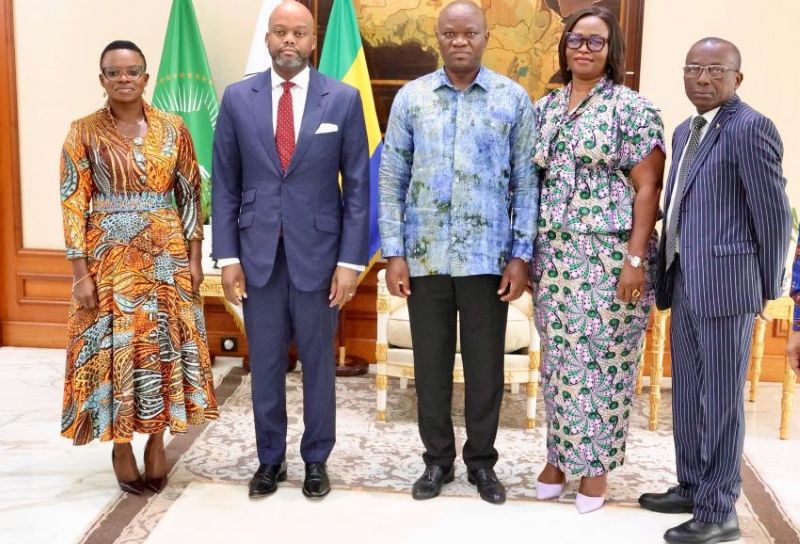
The meeting held Friday in Libreville between Gabonese President Brice Clotaire Oligui Nguema and Wamkele Mene, Secretary-General of the African Continental Free Trade Area (AfCFTA), was far more than a routine diplomatic exchange. It marked Gabon’s strategic positioning in this historic economic shift.
As global supply chains realign and regional blocs strengthen their integration, the critical question isn’t whether Africa should increase intra-continental trade—but how each nation plans to benefit from this unprecedented transformation.
A market of 1.4 billion consumers
The AfCFTA represents one of the most ambitious economic projects of the 21st century, creating a unified market of over 1.4 billion people with a combined GDP exceeding $3 trillion. The initiative aims to gradually eliminate trade barriers to boost commerce between African nations.
Yet despite its vast potential, Africa remains one of the world’s least integrated regions. While Europe sees over 60% of its trade conducted within the continent and Asia approaches 50%, intra-African trade struggles to surpass 15%. The AfCFTA was created precisely to bridge this gap.
During their discussions, President Oligui Nguema and Mr. Mene explored practical mechanisms for Gabon to maximize benefits from this continental opening. Key priorities include customs modernization, border infrastructure improvements, regulatory framework adjustments, and institutional strengthening.
Nkok: Gabon’s industrial powerhouse
Mr. Mene placed special emphasis on Gabon’s often-overlooked strategic advantage: the Nkok Special Economic Zone.
Within just a few years, Nkok has emerged as Central Africa’s leading industrial hub. The zone hosts numerous enterprises focused on wood processing, metallurgy, and manufacturing—illustrating Gabon’s shift from raw material exports to value-added production.
This industrial transformation aligns perfectly with AfCFTA’s objectives. The success of duty-free trade will depend less on natural resource exports than on each nation’s ability to develop competitive industrial bases.
Gabon’s geographic position further bolsters its strategic importance. Located in the heart of the Gulf of Guinea with modern port facilities and major logistics projects underway, the country possesses all the attributes to become a regional trade hub.
Transformation as national economic doctrine
During the meeting, President Oligui Nguema reiterated Gabon’s commitment to the National Growth and Development Plan. This strategy rests on three pillars: local resource transformation, economic diversification, and accelerated digital transition.
This approach represents a clear departure from traditional models focused solely on raw material extraction. It demonstrates Gabon’s determination to meet the demands of global competition.
The true challenge of AfCFTA extends beyond tariff reduction—it’s about fostering African economies capable of large-scale production, innovation, and export. The timing of this meeting couldn’t be more crucial as the continent now has a unified legal framework. The next step is translating political ambition into economic reality.
For Gabon, this represents a strategic imperative. The nation isn’t merely seeking to participate in duty-free trade—it aims to become one of its greatest beneficiaries. AfCFTA opens doors to an unprecedented continental market, but only those countries that anticipate industrial, logistical, and digital changes will truly reap its rewards. Libreville appears determined to be among them.