Gabon’s new diplomacy: turning pledges into economic gains
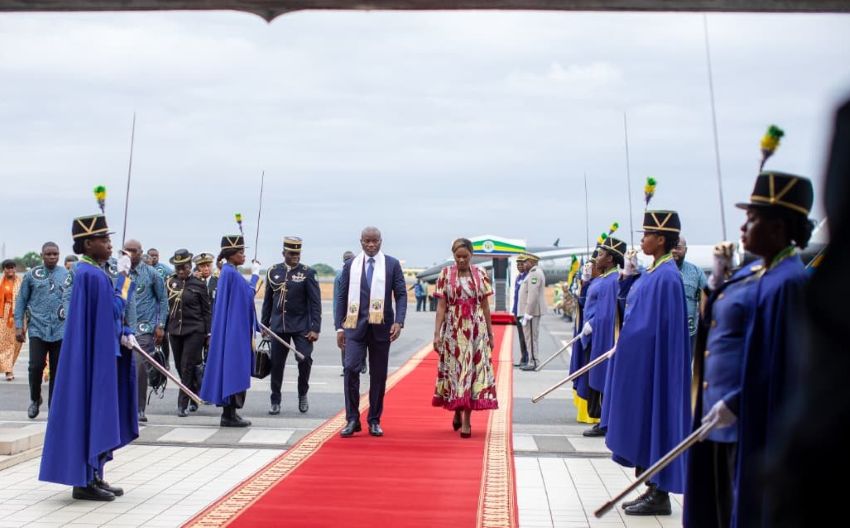
Libreville, Saturday, August 8, 2026 — From July 27 to August 7, 2026, President Brice Clotaire Oligui Nguema undertook a landmark African tour. Upon his return to Libreville on Friday, the focus shifts from ceremonial diplomacy to tangible results. The success of this mission will be measured not by the number of handshakes exchanged, but by concrete outcomes: investments secured, jobs created, and economic opportunities unlocked for Gabon.
Diplomacy with tangible deliverables
The tour was densely packed with high-level political exchanges and sector-specific discussions spanning infrastructure, energy, agriculture, vocational training, trade, and investment. This shift signals a fundamental evolution in Gabonese foreign policy—no longer just a platform for representation, but a strategic tool to accelerate national economic transformation.
The stop in Abidjan exemplifies this new approach. President Oligui Nguema toured industrial zones, visited key infrastructure projects, and engaged with major economic actors like NSIA and Aurion Capital. These interactions underscored Gabon’s determination to position itself as a prime destination for investment and energy partnerships.
This strategy aligns perfectly with Gabon’s economic diversification goals. A forward-looking foreign policy must now function as a bridge to capital, technology, expertise, and new markets. The presidential tour served both to strengthen state-to-state relations and to showcase Gabon as a business-friendly hub on the continent.
From African solidarity to economic interdependence
The vision articulated during the tour emphasizes Gabon’s role within continental integration frameworks rooted in mutual economic interest. Côte d’Ivoire emerged as a compelling case study. Abidjan’s model—driven by aggressive infrastructure development, industrialization, and private sector mobilization—demonstrates how targeted policies can elevate a nation’s economic standing in West Africa. By examining Ivorian factories, urban transport systems, and industrial parks, President Oligui Nguema was not merely fulfilling a diplomatic duty; he was gathering actionable insights to inform Gabon’s own development roadmap.
This framework transforms the Gabon-Côte d’Ivoire relationship from symbolic partnership into a dynamic learning platform. Cooperation now spans knowledge exchange, financing mechanisms, industrial joint ventures, and skills transfer—offering Gabon a blueprint for sustainable growth.
The same principle applies to every agreement signed during the tour. Whether in agriculture, energy, infrastructure, or education, promises will only translate into progress if followed by rigorous implementation. The real test begins now.
From promises to performance
The president’s return to Libreville marks the transition from travel to accountability. A results-driven foreign policy cannot be judged by the number of agreements signed, but by measurable impact: How many investments have been committed? How many jobs created? Which projects have broken ground? What technologies have been transferred? Which new markets have opened for Gabonese businesses?
This is where the presidency’s focus must now lie. The tour has strengthened Gabon’s diplomatic positioning and opened multiple avenues for cooperation. Yet, ambitious foreign policy only becomes a catalyst for development when it drives real economic change and improves daily life for citizens.
The return of Oligui Nguema to Libreville heralds a new chapter. The white sash bearing Gabon’s coat of arms, worn throughout the tour, symbolizes the fusion of national identity with continental engagement. But symbols alone are insufficient.
The next chapter may well be measured not by miles traveled, but by projects delivered. Gabon now holds a diplomatic window to attract partners, negotiate investments, and adapt best practices from thriving African economies. The challenge ahead is clear: to transform diplomacy from a showcase into one of the nation’s primary engines of economic transformation.
The gauntlet has been thrown down. Gabon must prove that its foreign policy can evolve from mere representation to a powerful engine of progress.