Gabon faces rising tensions as online criticism targets president
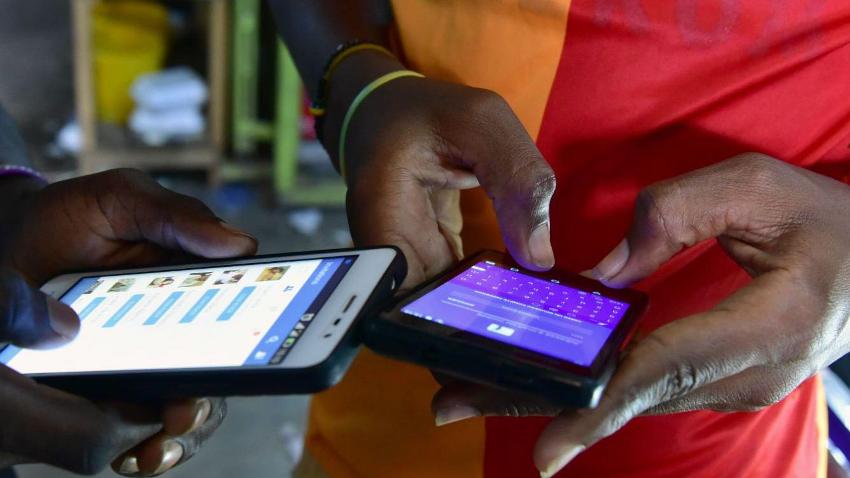
Libreville, August 14, 2026 – As Gabon prepares to mark 66 years of independence, public debate has intensified around a wave of online criticism targeting President Brice Clotaire Oligui Nguema, his family, and government officials.
Institutional leaders, political figures, civil society groups, and media representatives have condemned a surge of insults and defamatory remarks circulating on social platforms. The controversy raises a critical question: where should the line be drawn between free speech and personal attacks in a digital landscape where political critique, activism, and personal insults often blur?
Contesting the boundaries of free expression
The National Commission for Democracy and Citizen Participation, led by Dr. Séraphin Moudounga, has urged the government to address what it describes as escalating violations in both traditional and online media. Citing constitutional protections for family, marriage, public freedoms, and individual rights, the Commission argues that certain attacks go beyond political dissent and constitute direct assaults on the presidency itself.
This stance has been echoed across Gabon’s political and social spectrum. The Women’s League of the Union of Democratic Builders condemned statements targeting the presidential couple, while former transitional delegates joined critics in denouncing remarks attributed to activist Landry Mbeng, known online as Lanlaire. Political figures such as David Mbadinga, Florentin Moussavou, and Paskhal Nkoulou have also called for a return to political debate rooted in reasoned argument rather than personal insults.
Amir Alexandre Carron, a young political and civil society leader, emphasized that attacks on the president extend beyond the individual officeholder, symbolically undermining the authority of the state itself. The Media United Circle has taken concrete action, announcing legal action against Ange Landry Mbeng for allegedly spreading false or defamatory claims, including accusations of internet shutdowns, financial misconduct, and violations of the president’s privacy.
These statements do not constitute judicial rulings but signal a growing judicial and political dispute that may soon reach the courts. The debate reflects a broader global challenge: social media has redefined the relationship between power, opposition, media, and citizens. A single post can now spread globally in seconds, shaping public opinion and political outcomes before fact-checking or context can catch up.
The deeper stakes of digital discourse
The National Commission has called for the activation of judicial mechanisms under Gabonese law when online content may constitute criminal offenses, even if authors reside abroad. It has also advocated for modernization of cyber legislation and regional coordination within CEMAC, ECCAS, and the broader African continent.
The European Union’s Digital Services Act has sparked wider discussion on platform accountability, combating illegal content, and protecting citizens. For Gabon, the challenge lies in crafting regulations that defend personal dignity and public order without turning digital oversight into a tool to suppress legitimate political criticism.
A robust democracy is not measured by the absence of dissent but by its capacity to withstand criticism while drawing clear limits against defamation, threats, and personal attacks. Protecting the presidency cannot mean granting immunity from critique; nor can freedom of expression be misused as a license to insult.
Independence celebrations highlight the debate’s urgency
The controversy unfolds as Gabon prepares for national celebrations on August 15–17, 2026—holidays marking both Assumption Day and Independence Day. The timing underscores a pivotal moment: as the nation reflects on its history and future, the quality of its public discourse has become a national issue.
Calls from diverse actors—political, civil, and media—converge on one principle: opposition is valid, criticism of power is essential, and free speech is non-negotiable. Yet no enduring democracy can thrive when disagreement descends into personal hatred.
The true test for authorities will be enforcing the law fairly while preserving the vital space for democratic debate. For Gabonese society, the stakes are higher than a social media feud. It is about whether the nation can advance into a new political era with a mature culture of debate—one that allows ideas to clash without destroying individuals. That may well define a significant part of Gabon’s democratic credibility in the years ahead.