Gabon and France forge a new strategic partnership
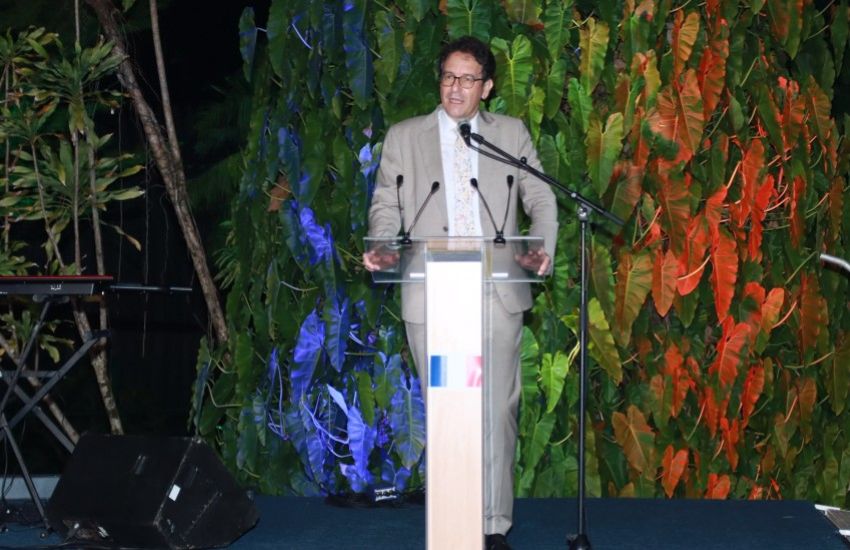
Libreville, Thursday, July 16, 2026 – The July 14 national day celebrations in Libreville were not merely a tribute to French history. The speech delivered by France’s ambassador to Gabon, Fabrice Mauriès, offered a revealing glimpse into the evolving partnership between Paris and Libreville.
Three landmark announcements emerged from this diplomatic engagement: an imminent state visit by Gabonese President Brice Clotaire Oligui Nguema to France, the permanent transformation of Camp De Gaulle, and the establishment of a national financial prosecution office in Gabon. Though distinct in scope, these initiatives collectively signal a recalibration of Franco-Gabonese relations.
Amid shifting global power dynamics, rising African sovereignty demands, and realigned strategic alliances, Gabon has become a key testing ground for Europe’s evolving engagement with the continent.
State visit signals new diplomatic era
The announcement of President Oligui Nguema’s state visit to Paris marks the strongest political signal exchanged between the two capitals since Gabon’s transition began in 2023. In French diplomatic protocol, a state visit represents the highest form of recognition extended to a foreign leader.
This move underscores Paris’s commitment to supporting Gabon’s institutional trajectory while acknowledging the return to constitutional order following last year’s presidential election. Ambassador Mauriès emphasized a crucial distinction: Gabon’s transition belongs to the Gabonese people. France did not orchestrate it but seeks to remain a constructive partner in its success. This nuance carries particular weight in a region where former colonial powers often face accusations of political interference. France now appears to prioritize accompaniment over direct influence, cooperation over control.
End of an era for military presence
The future of Camp De Gaulle embodies the most visible symbol of this shift. For decades, the French military base stood as a strategic outpost in Central Africa, a legacy of post-independence arrangements. Its announced transformation heralds the conclusion of a historical chapter.
The revised military framework will emphasize operational partnerships, joint training, and maritime security rather than maintaining a large permanent French troop presence. This transition aligns with France’s evolving doctrine in Africa, favoring targeted collaborations tailored to partner nations’ priorities. For Gabon, this shift presents an opportunity to strengthen its own defense capabilities and consolidate strategic sovereignty while preserving historical ties with France. Upcoming joint maritime initiatives underscore a desire to build cooperation centered on mutual interests, particularly in securing the Gulf of Guinea—now one of the continent’s most critical maritime zones.
Financial justice and institutional modernization
The most consequential announcement may be the creation of Gabon’s national financial prosecution office. In an era where global scrutiny of corruption, illicit financial flows, and economic crime intensifies, this initiative addresses a pressing need. The topic holds particular significance for a nation rich in oil, manganese, and natural resources, where resource management directly impacts development outcomes.
Ambassador Mauriès highlighted the two-way nature of this judicial cooperation, signaling a commitment to balanced relations between the two legal systems. This move complements Gabon’s transparency goals, economic governance reforms, and modernization of public institutions. Beyond financial justice, collaboration extends to drug trafficking prevention, border surveillance, domestic security, and capacity-building for Gabonese security forces.
Together, these developments outline a bilateral relationship now rooted in shared governance, mutual security, and economic development—transcending historical legacies. The July 14 address in Libreville may well be remembered as the moment Gabon and France officially entered a new chapter in their shared history. Neither a rupture nor blind continuity, this partnership represents a pragmatic recalibration adapting to 21st-century geopolitical realities. The true challenge ahead will be translating these diplomatic commitments into tangible benefits for both nations’ populations and Central Africa’s stability.