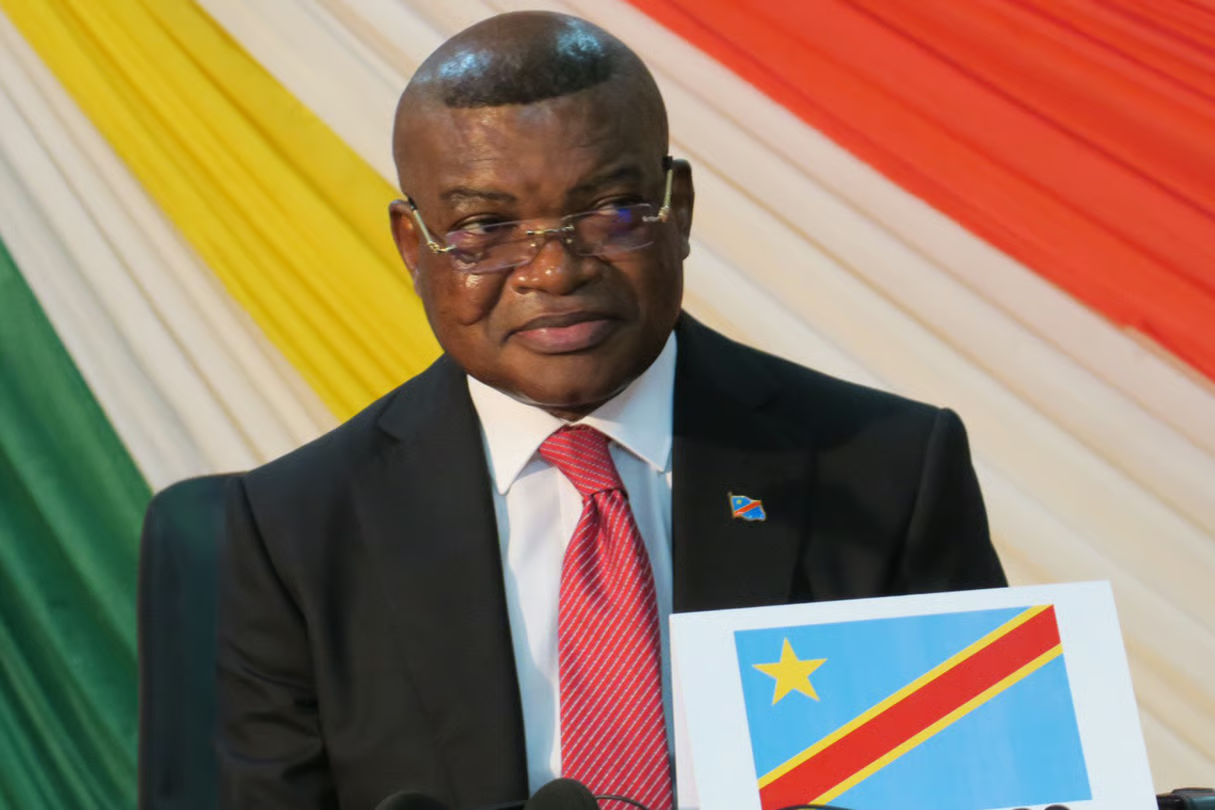
The passing of Kalev Mutond, former director of the Democratic Republic of Congo’s General Intelligence Directorate, has sent shockwaves through the nation’s political and security circles. As the architect of Congo’s Agence Nationale de Renseignement, Mutond’s influence extended far beyond his official tenure, leaving behind a legacy that continues to shape both domestic and regional security dynamics. His death has not only reopened old wounds but also set the stage for intense public discussions about the future trajectory of Congo’s delicate intelligence apparatus.
The man behind Congo’s intelligence structure
Kalev Mutond’s influence within the DRC’s security apparatus was both pervasive and complex. Serving as the Administrateur général of the ANR from 2013 to 2017, Mutond was more than just a bureaucrat; he was the architect of a system that blended traditional espionage with modern statecraft. His tenure coincided with one of the most turbulent periods in Congo’s post-colonial history, marked by political instability, regional conflicts, and a weakened central government.
Under his leadership, the ANR evolved from a perceived intelligence gathering tool into a powerful instrument wielded by the political elite to maintain control. Mutond’s approach was characterized by centralized authority, targeted surveillance, and close ties to the presidency, which earned him both admiration and criticism. Critics accused him of overseeing a repressive system that stifled dissent, while supporters viewed him as a stabilizing force in an otherwise chaotic political landscape.
The immediate fallout: political shock and uncertainty
The announcement of Mutond’s death triggered an immediate political earthquake in Kinshasa. Government officials scrambled to respond as rumors swirled about the implications of his absence. The ANR, already shrouded in secrecy, now faces unprecedented scrutiny over its future direction and leadership.
- Leadership vacuum: Mutond’s sudden departure leaves a significant leadership gap within the ANR, raising concerns about who will step into his role and whether the agency can maintain its operational continuity.
- Public debate: Political analysts and civil society groups are already dissecting Mutond’s legacy. Some argue for a reforms in the intelligence sector to align it with democratic principles, while others caution against radical changes that could destabilize the agency’s operational effectiveness.
- Regional implications: Congo’s neighbors are closely monitoring the situation, particularly given the ANR’s historical role in regional security operations. Mutond’s passing may trigger shifts in intelligence alliances and cooperative frameworks across Central Africa.
What lies ahead for Congo’s intelligence services?
The road ahead for the DRC’s intelligence community is fraught with challenges and opportunities. As the debate intensifies, several key questions have emerged as central to the conversation:
Will reforms reshape the ANR’s role?
There is growing pressure from opposition figures and international partners for the ANR to undergo systemic reforms. Proponents of change advocate for greater transparency, accountability mechanisms, and defined legal boundaries for intelligence operations. However, resistance from entrenched interests could dilute these efforts, leaving the agency’s structure largely intact.
How will Mutond’s absence impact Congo’s security?
The ANR has long been a critical player in maintaining domestic security, particularly in countering armed rebellions and terrorist threats. Mutond’s successor will face immense pressure to uphold the agency’s operational prowess while navigating the delicate balance between state security and civil liberties. The transition period could expose vulnerabilities that opportunistic groups may exploit.
What does this mean for Congo’s political stability?
Mutond’s death comes at a time when Congo is already grappling with mounting political tensions and public discontent. The ANR’s role in suppressing dissent has been a point of contention, and its future direction could either fuel further unrest or help stabilize the situation. The government’s ability to manage this transition without sparking unrest will be critical in the coming months.
The public debate: nostalgia vs. transformation
The passing of such a polarizing figure has opened up a national dialogue on Congo’s intelligence services. While some segments of society remember Mutond as a guardian of stability, others view him as a symbol of oppression and authoritarianism. The debate is not just about his legacy but about the very nature of Congo’s intelligence apparatus and its place in a democratic society.
Civil society organizations are demanding public consultations and legal frameworks to govern intelligence operations. Meanwhile, political elites are likely to prioritize continuity to avoid any perceived weakness in the state’s security posture. The coming weeks and months will reveal whether Congo can strike a balance between reform and stability.
One thing is certain: Kalev Mutond’s death has not just removed a key figure from Congo’s political landscape—it has ignited a conversation about the country’s future, security, and governance that will shape the nation’s trajectory for years to come.