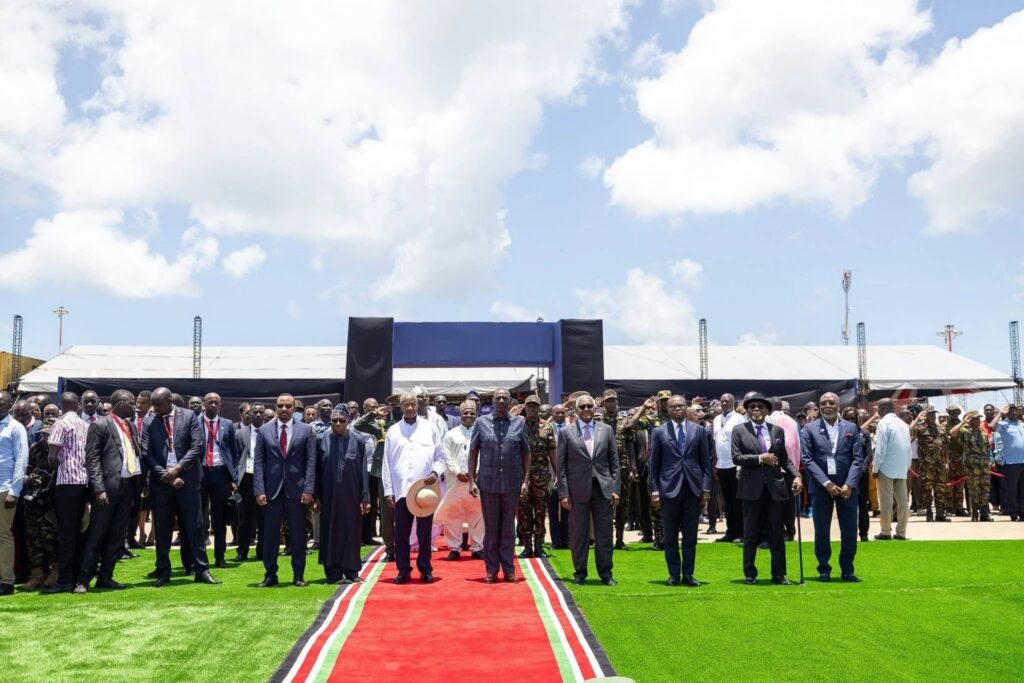
The dust hasn’t settled from the Lamu refinery groundbreaking in Kenya, and already the project is fuelling heated discussions across the continent. Among the dignitaries present was Benin’s President Romuald Wadagni, who joined regional leaders in witnessing the launch of East Africa’s most ambitious industrial venture to date.
Why Benin’s leader made the journey to Lamu
Wadagni’s attendance at the ceremony wasn’t just symbolic. The Beninese president’s presence at the event signaled the country’s strategic interest in East Africa’s energy future and potential economic synergies between West and East African nations. As crude oil prices fluctuate and energy security becomes a priority, Benin’s participation reflects growing continental alignment on industrial development.
The numbers behind Africa’s mega refinery
The $16 billion Lamu complex isn’t just another infrastructure project—it’s a potential game-changer. With an ultimate capacity of 700,000 barrels per day, this will be the largest refinery in East Africa and one of the most significant crude processing facilities on the continent. For context, this single installation could process more oil than several African nations consume annually in refined products.
The investment figure—equivalent to approximately $8.96 trillion in regional currency—highlights the scale of ambition. Backers envision not just a refinery but an entire industrial ecosystem that could transform the region’s energy landscape.
Regional reactions: promises, skeptics and the road ahead
The ceremony’s high-profile turnout sparked immediate reactions from across Africa. While industry experts praised the project’s potential to reduce East African reliance on imported fuel, critics questioned the financing model and environmental impact of such a massive undertaking in ecologically sensitive coastal areas.
Economic analysts noted that similar mega-projects across the continent have delivered mixed results—some transforming regional economies while others became white elephants burdened by debt. The Lamu facility’s long-term viability is now under scrutiny as economists weigh the balance between industrial ambition and fiscal responsibility.
What Benin stands to gain (and risk) from the Lamu partnership
Wadagni’s presence suggests Benin sees opportunities in what could become Africa’s newest energy hub. The project might offer:
- Supply chain diversification: Potential new sources of crude for Benin’s own energy needs
- Investment pathways: Opportunities for Beninese companies to participate in the regional supply chain
- Technical collaboration: Access to expertise in large-scale refinery operations
However, the risks are equally substantial. Currency fluctuations, regional political instability, and global oil price volatility could all impact the project’s sustainability. Some observers question whether smaller West African economies like Benin should be tying their energy strategies to a single megaproject.
Economic integration or overreach? The continental perspective
What happens in Lamu resonates far beyond Kenya’s borders. The refinery launch has intensified debates about Africa’s ability to develop its own industrial capacity while managing the environmental consequences of rapid development.
Economists argue that while the Lamu project could serve as a catalyst for regional integration—linking oil-rich nations with energy-hungry neighbors—it also raises questions about debt sustainability and whether the promised economic benefits will reach local communities.
The presence of leaders from Uganda, Togo, Ethiopia, and Kenya alongside Benin’s president suggests a shared vision of regional economic transformation. Yet questions linger about how the benefits will be distributed and whether the project will deepen existing inequalities between participating nations.
Looking forward: the next phase of Africa’s energy revolution
As the ceremony’s euphoria fades, attention now turns to implementation. The Lamu refinery represents more than steel and concrete—it embodies a continental bet on self-sufficiency in energy production.
For Benin and other participating nations, the coming months will determine whether this project becomes a cornerstone of African industrialization or another cautionary tale about megaprojects in developing economies. The next chapters will reveal whether Lamu’s promises can outweigh its potential pitfalls as Africa writes its energy future.