Tchad : l’indiscipline scolaire, un défi partagé entre l’école et les familles
Au Tchad, l’indiscipline scolaire menace la formation des futurs cadres. Une responsabilité partagée entre écoles, familles et société est nécessaire pour restaurer l’autorité et préparer l’avenir du pays.
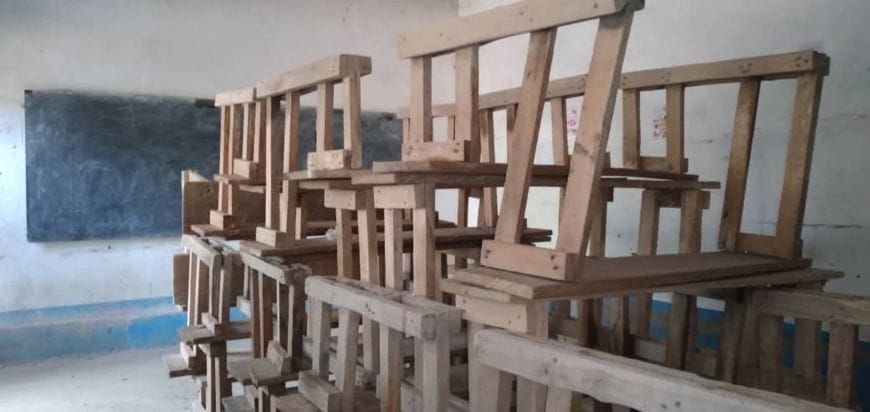
In Chad, educational institutions are grappling with a pervasive, albeit quiet, crisis. A noticeable erosion of discipline within many schools directly jeopardizes the preparation of the nation’s future leaders. This pressing national concern demands a shared accountability, encompassing not only schools but also families and society at large.
Behaviors once considered isolated incidents are now increasingly prevalent: disrespect towards educators, frequent altercations, excessive mobile phone use during lessons, damage to school property, and various acts of aggression. These troubling trends are a growing source of worry for teachers, school administrators, and parents alike.
This disturbing reality is no longer confined to hushed conversations. Across numerous secondary schools and colleges in N’Djamena, as well as in rural areas, classes are routinely disrupted. Educators describe a challenging atmosphere where maintaining focus, order, and mutual respect often feels like an uphill battle. Confronted by students who increasingly resist authority, many teaching professionals feel helpless, despite established internal regulations and disciplinary measures.
Fundamentally, the family unit remains the child’s initial environment for socialization. It is within the home that children should first learn to respect authority, value effort, practice discipline, and understand boundaries. Michel Ngardiguina, a French teacher in a N’Djamena high school, shared his perspective: “Teaching is becoming progressively harder. Some students simply do not accept feedback or the authority of their teachers. At times, a simple redirection can provoke insults or aggressive reactions. Without parental support at home, the school alone cannot rectify all these behavioral issues.”
Amina Moussa, a parent encountered in Walia Barrière, N’Djamena, voiced similar concerns: “Many parents are preoccupied with economic struggles and can no longer adequately supervise their children. Phones and social media exert immense influence on students today. We must reclaim our educational role and collaborate more closely with teachers to safeguard our children’s future.”
Indeed, many parents, contending with economic hardships, significant family responsibilities, or simply a lack of time, completely delegate this crucial mission to educational institutions. The consequence is that some students mature without clear guidance. They become vulnerable, lacking proper supervision, to external influences such as social media and negative peer groups, without being sufficiently educated on the vital importance of their own learning journey.
The school, on its own, cannot shoulder this entire burden. Its role is undeniably critical for imparting knowledge and instilling values of civility, discipline, and community living. However, it often receives children who arrive in classrooms with already compromised foundational educational principles.
When strong moral and behavioral frameworks are not firmly established within the family, schools find themselves on the front lines, facing behaviors that are exceedingly difficult to correct. An educational system weakened by persistent indiscipline will inevitably produce citizens ill-equipped to meet the demands of the contemporary world.
This situation urgently calls for a collective awakening. Neither schools nor parents can succeed in isolation. A close and continuous collaboration is essential, manifested through several concrete initiatives:
- Strengthening student academic monitoring through regular meetings between parents and teachers;
- Establishing ongoing dialogue with adolescents to better understand their challenges;
- Revitalizing parent-teacher associations;
- Increasing awareness campaigns on the significance of discipline and adherence to school rules.
The future of Chad is being shaped daily within its classrooms. For a nation aspiring to development, restoring authority in schools and reinforcing parental responsibility are national imperatives. The time for mere observation has passed; concerted action is now required.