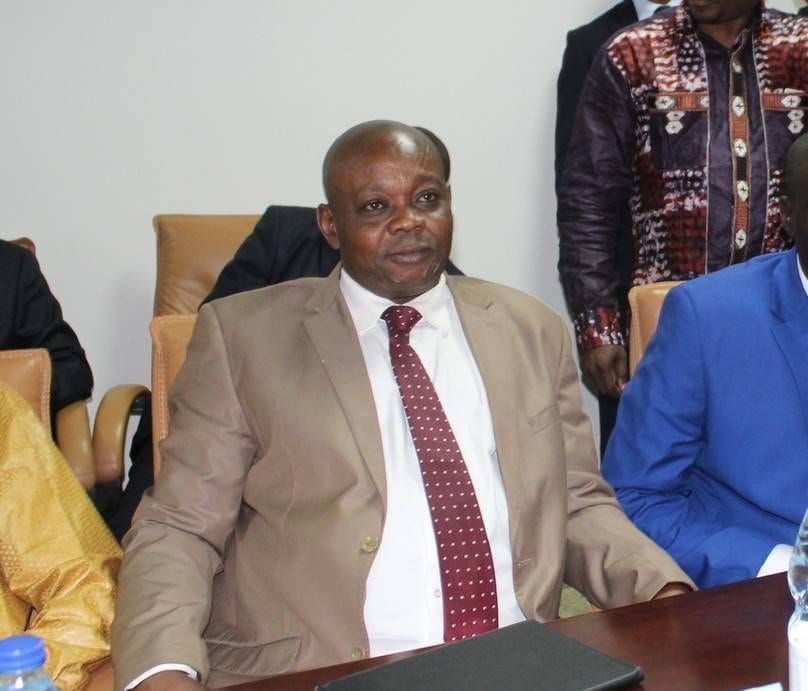
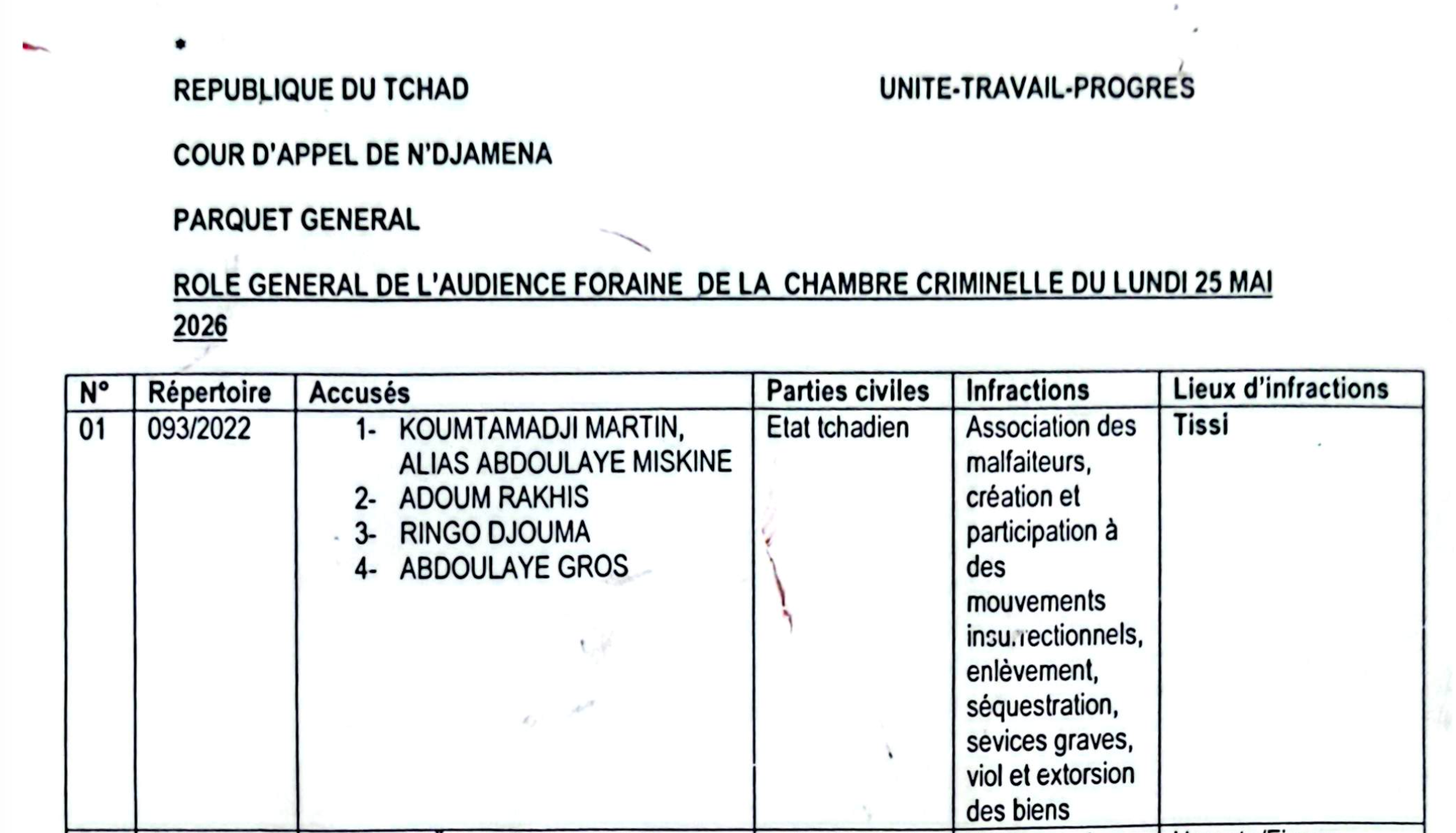
The legal proceedings involving General Abdoulaye Miskine, also known as Martin Koumtamadji, have hit another roadblock. Although his case was set for the criminal chamber’s hearing on May 25, 2026, at the N’Djamena Court of Appeal, it was unexpectedly pulled from the agenda. This delay adds to the long wait for justice after years of incarceration without a verdict.
Serious charges and a stalled docket
Registered under number 093/2022, the file includes other defendants like Adoum Rakhis, Ringo Djouma, and Abdoulaye Gros. They face heavy charges, including forming a criminal gang, leading insurrectionist movements, kidnapping, illegal detention, severe physical abuse, sexual assault, and extortion. These incidents reportedly took place in the Tissi region.
Since his arrest in N’Djamena back in November 2019, Abdoulaye Miskine has spent more than six and a half years behind bars at the Klessoum correctional facility. While the hearing on May 25 was halted—reportedly due to the sudden passing of a court clerk—no follow-up date has been scheduled. This silence is fueling concerns about the transparency of the process and the true reasons behind the delay.
Information from local observers suggests the case has been shelved until further notice. There are whispers that the trial of the former leader of the Front démocratique du peuple centrafricain (FDPC) is being hindered by political interference. Despite the length of his detention and constant pleas from his legal team and relatives, the judicial examination remains blocked.
A complex regional and health crisis
The case carries significant weight beyond the borders of Chad. While the République centrafricaine sought his extradition, Chad has consistently declined to hand him over. His history with the 2019 Khartoum peace agreement further complicates the legal and diplomatic landscape surrounding his status.
Furthermore, Miskine’s physical condition is a major concern. His family has highlighted his struggles with kidney failure, high blood pressure, failing eyesight, and significant weight loss. Following the seizure of his medication in 2025, he even went on a hunger strike during one of his hospitalizations, highlighting the dire conditions of his long-term custody.
For his advocates, this is a clear case of prolonged detention without trial. Officially, the judiciary maintains the case is active, yet the sudden removal from the court calendar suggests a deeper impasse involving security and political interests between Chad and the République centrafricaine. As it stands, there is no clear path forward for his judgment, release, or extradition.