The Cameroonian nation finds itself on uncharted territory. President Paul Biya, who has been absent from public view for 57 consecutive days following a supposed private trip to Europe on June 7, 2026, has left behind a trail of unanswered questions and deepening uncertainty about the country’s future.
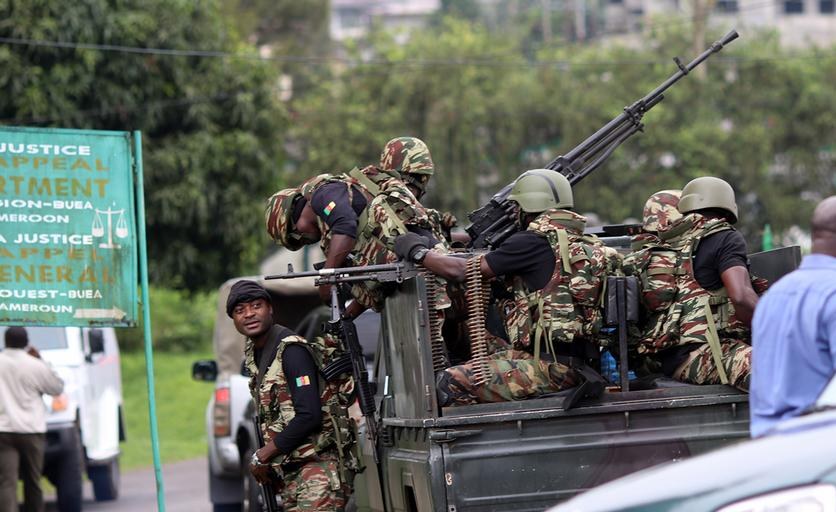
During his prolonged absence, a series of controversial military decrees has reshaped the nation’s security apparatus. Five new brigade generals, a new commander for the Presidential Guard, and a new Chief of Staff have been appointed through presidential decree, raising serious concerns about the militarization and potential tribalization of power. These sweeping changes occurred without the president’s public presence, leaving many to question who truly holds authority in Yaoundé today.
An absence that defies explanation
At 93 years old, each day of Biya’s absence fuels growing speculation. While official statements claim he is simply recovering from a knee surgery in Geneva, the lack of transparency has done little to calm public anxiety. The government’s assurances that he will soon return ring hollow when contrasted against the reality of 57 days without a single public appearance.
Roger Justin Noah, Secretary General of the MRC opposition party, captured the widespread frustration: « Why manipulate electoral processes only to spend weeks abroad? If health issues are at play, the Cameroonian people deserve transparency »
Military reshuffle sparks succession power struggle
The most alarming development has been the rapid military restructuring occurring under Biya’s unexplained absence. On August 3, 2026, presidential decree number 2026/265 appointed General Beko’o Abondo Raymond Jean Charles as the new Commander of the Presidential Guard – a critically sensitive position responsible for the president’s personal security.
The broader pattern reveals an orchestrated effort to consolidate control:
- Five new brigade generals appointed
- General Ebaka Hippolyte named as new Chief of Staff
- Six new regional military commanders assigned across four of Cameroon’s five military zones
A retired colonel, speaking on condition of anonymity, emphasized the gravity: « Only the head of state possesses the authority to make such critical military appointments »
The constitutional deadlock threatening national stability
The situation has been further complicated by April 2026’s controversial constitutional revision that reintroduced the position of Vice President – theoretically designed to ensure automatic succession in case of presidential vacancy. Yet, this crucial role remains unfilled, leaving Cameroon in a dangerous institutional void.
The current power struggle manifests in two dominant factions within the regime:
- The consanguineous faction: Centered around Frank Biya, the president’s eldest son, seen as the guarantor of regime continuity
- The First Lady’s faction: Led by Chantal Biya and Ferdinand Ngoh Ngoh, the powerful Secretary General of the Presidency
Historical parallels that chill the nation
Analysts and citizens alike cannot ignore the dark historical precedent of Rwanda in 1994, where ethnic manipulation of the military apparatus led to unimaginable tragedy. Cameroon’s own ethnic tensions risk being similarly exploited, with whispers of certain groups being positioned to control state institutions.
Jean-Pierre Bekolo, in his scathing analysis, warned: « We now face both the tribalization and militarization of succession – a path whose destination no one can predict »
Opposition forces demand constitutional clarity
The political opposition, led by Maurice Kamto’s MRC, has taken decisive action. Deputies have urgently petitioned the Constitutional Council to recognize the presidential vacancy, with legislator Jean-Michel Nintcheu declaring: « The Council must acknowledge the power vacuum at the state’s highest level »
Yet the constitutional mechanism remains paralyzed without a Vice President to trigger succession procedures. Cameroon finds itself trapped in an institutional paralysis that threatens to spiral into deeper crisis.
The government’s silence speaks volumes
The timing of these controversial military appointments raises critical questions. As Jean-Pierre Bekolo queried: « If President Biya is indeed returning soon as stated, why make such consequential decisions in his absence? Why not await his return for matters of this magnitude? »
The government’s failure to provide clear explanations regarding Biya’s health status and return timeline has only deepened public distrust. Rumors of fabricated decrees have forced official denials, but once planted, doubt takes root and spreads rapidly.
Pathways to national salvation
While the prognosis appears dire, several urgent measures could still avert catastrophe:
- Immediate transparency: The government must disclose President Biya’s actual health status and return schedule
- National dialogue: A comprehensive political consultation to address communal tensions and power-sharing concerns
- Constitutional repair: The urgent appointment of a Vice President to restore institutional legitimacy and succession mechanisms
In the words of Jean-Pierre Bekolo: « History remembers not only our actions but also our silences and blind spots » Cameroon stands at a precipice. The current trajectory of militarization, tribalization of power, and clan warfare leads only toward collapse. The Cameroonian people have endured decades of unaccountable rule – but they will not forgive those who gamble with the nation’s future in the shadows.
« Stop playing with fire! Tomorrow, it will be too late to claim: ‘We didn’t know.’ »