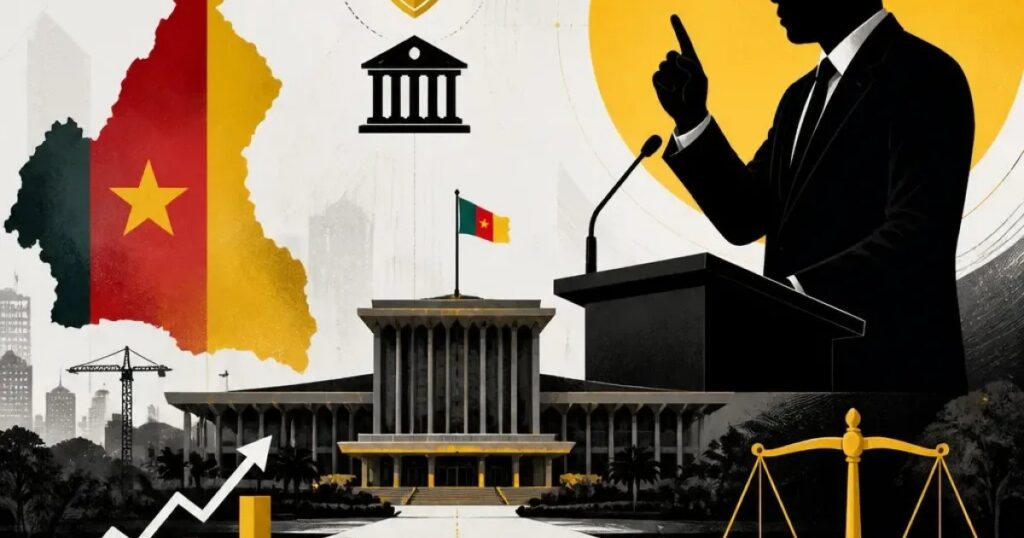
Cameroun officials deny power vacuum amid Paul Biya’s extended absence
Uncertainty has gripped Cameroun in recent weeks as President Paul Biya remains outside the country for nearly two months. Addressing the growing concerns, the government has issued a firm statement: the Head of State is alive and there is no power vacuum.
In a nationally televised statement, Minister of Communication and government spokesperson René Emmanuel Sadi categorically dismissed rumors suggesting any interruption in presidential authority. The announcement marks the first official response from Cameroun‘s leadership since the prolonged absence began.
Government affirms presidential continuity despite absence
René Emmanuel Sadi emphasized that President Paul Biya continues to perform his duties without interruption. During the press briefing, he refuted claims circulating in political circles that suggest a constitutional crisis.
« The President is alive and fully exercising his functions, » declared Sadi. He added that there has been no resignation or suspension of presidential powers, and that Biya would return to Cameroun « very soon, » though no specific return date was provided.
Constitutional interpretation under scrutiny
The government spokesperson criticized opposition figures for what he described as a selective interpretation of the country’s constitution. According to Sadi, legal provisions regarding presidential absence must be applied with « rigor and objectivity. »
He specifically denied allegations that the Constitutional Council had declared a power vacuum. « The Constitutional Council has not issued any ruling on a vacancy of power, » he stated firmly.
Opposition demands transparency amid prolonged absence
The opposition has intensified calls for official clarification regarding the President’s whereabouts and health status. Questions persist about the reasons behind the extended stay abroad and the potential implications for national stability.
Despite the reassurances, skepticism remains among political analysts and civil society groups. The government has yet to disclose details about the President’s location or the nature of his medical or official engagements overseas.
As the debate intensifies, Cameroun’s political landscape remains tense, with growing demands for greater transparency from all branches of government.
The situation underscores the delicate balance between maintaining stability and addressing public concerns in the absence of the Head of State.