Key takeaways from Burkina Faso’s stance on the AES currency
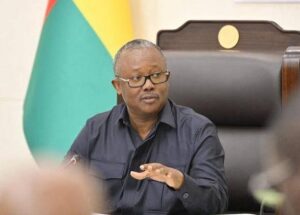
The future of a shared currency for the Alliance of Sahel States (AES) remains undecided, with no official timeline unveiled. During a press interaction on September 27, 2026, Burkina Faso’s President Ibrahim Traoré maintained a deliberately cautious stance, hinting only that discussions are ongoing.

No date announced for Africa’s first regional currency experiment
When pressed on whether the AES — comprising Burkina Faso, Mali, and Niger — could introduce a joint currency soon, President Traoré provided no specifics. No launch date, no name, and no operational framework were disclosed. Instead, he urged observers to monitor future announcements.
Crucially, none of the three nations has released an official roadmap detailing a departure from the West African CFA franc, a transition period, or the establishment of a joint central bank. Speculative claims circulating online — including reports of pre-printed banknotes or imminent circulation — remain unverified and should be treated skeptically.
Earlier, authorities from the AES bloc had already dismissed multiple social media claims attributing unconfirmed monetary decisions to the confederation.
Sovereignty beyond symbolic currency
While Traoré did not set a deadline, he did not rule out the possibility of a shared currency either. He has repeatedly framed economic and financial sovereignty as a natural extension of enhanced cooperation with Mali and Niger. For Traoré, the currency question extends far beyond printing new banknotes. It involves managing reserves, currency policies, economic financing, and price stability on a regional level.
Any exit from the current monetary system would require robust institutions capable of executing a unified monetary policy and instilling confidence in a new currency. The AES has already begun building joint financial instruments aimed at supporting investments and critical infrastructure across the three countries.
These steps indicate deeper economic integration, though they do not confirm imminent readiness for a common currency. Transitioning to a new monetary system would represent a far more complex process. It would reshape banking systems, business operations, cross-border trade, contracts, savings, and public finances across the region.
Current reality: still tied to the CFA franc
For now, Burkina Faso, Mali, and Niger continue using the West African CFA franc under the West African Economic and Monetary Union (UEMOA). No official statement has been issued on a withdrawal timeline, conversion rate to any future currency, or a potential dual-currency transition window.