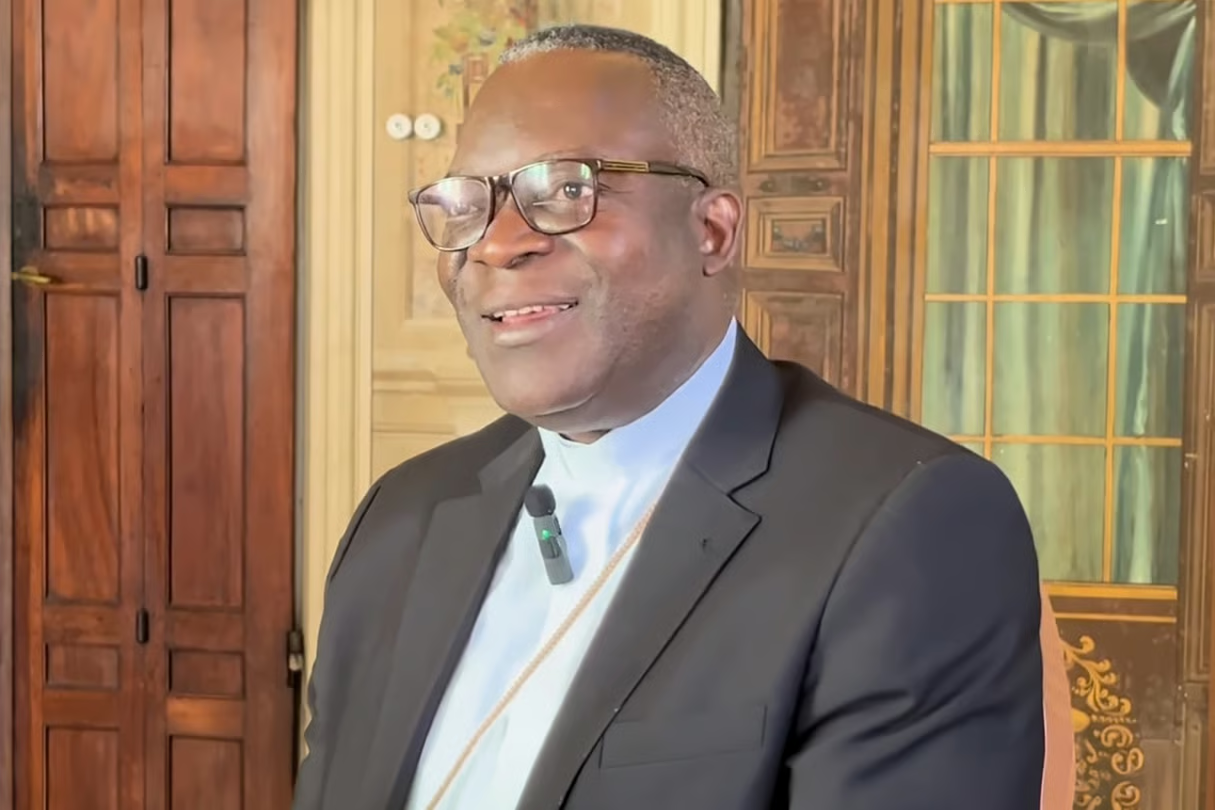
Bishop Fulgence Muteba: “The referendum is untimely given the ongoing conflict”
The President of the National Episcopal Conference of Congo (Cenco), Bishop Fulgence Muteba, has voiced strong reservations about the proposed constitutional referendum, describing the timing as highly inappropriate amid the country’s persistent security challenges.
Speaking from the heart of Kinshasa, Muteba emphasized that the current war conditions make it impossible to hold a meaningful national dialogue. His remarks reflect growing concerns among civil society leaders about the government’s decision to move forward with the referendum while large swathes of the country remain under armed group control.
Why the referendum faces fierce opposition
The Bishop’s critique centers on the lack of inclusive consultation and the absence of a stable environment for democratic processes. He argues that organizing a referendum in such circumstances would only deepen divisions rather than strengthen the nation’s fragile institutions.
“A referendum under these conditions is not just unwise—it is dangerous,” Muteba stated. “The people of Congo deserve peace first. Without stability, no constitutional change can be legitimately adopted.”
The Cenco’s stance on national reconciliation
The National Episcopal Conference has consistently advocated for peace talks and inclusive governance as prerequisites for any major political reforms. Muteba reiterated this position, urging authorities to prioritize national unity over political maneuvering.
“We are not opposed to change,” he clarified. “But change must come through dialogue, not through force or rushed decisions that ignore the suffering of millions.”
Political reactions and public sentiment
The Bishop’s comments come at a time when political tensions are escalating. Proponents of the referendum argue that it is necessary to modernize the Congolese constitution, while critics warn that it could exacerbate existing conflicts.
- Supporters claim the referendum will allow for necessary reforms to address governance gaps.
- Opponents fear it will be used to consolidate power and sideline opposition voices.
Public opinion remains deeply divided, with many civil society groups echoing Muteba’s concerns. The Bishop’s intervention adds significant weight to the debate, given Cenco’s long-standing role as a moral authority in the country.
What happens next?
With the referendum looming, the coming weeks will be critical. Muteba has called for an immediate halt to military operations in conflict zones to create a conducive environment for dialogue.
“The path forward must be paved with trust,” he stressed. “Without trust, no referendum—no matter how well-intentioned—will succeed.”