The backbone of Benin’s economy is under threat. With agriculture employing nearly 70% of the workforce and contributing 26% to the national GDP, the country’s prosperity hinges on healthy soils. Yet, a silent crisis is unfolding: land degradation is eroding fertility, slashing crop yields, and pushing millions toward food insecurity.
More than 5 million Beninese—nearly 40% of the population—are already feeling the pinch, while 38% of the nation’s land is classified as degraded. The consequences are dire: agricultural output has plummeted by over 50%, leaving rural communities battling poverty and stripped of essential ecosystem services like clean water and nutritious food.
unveiling a bold plan to heal the land
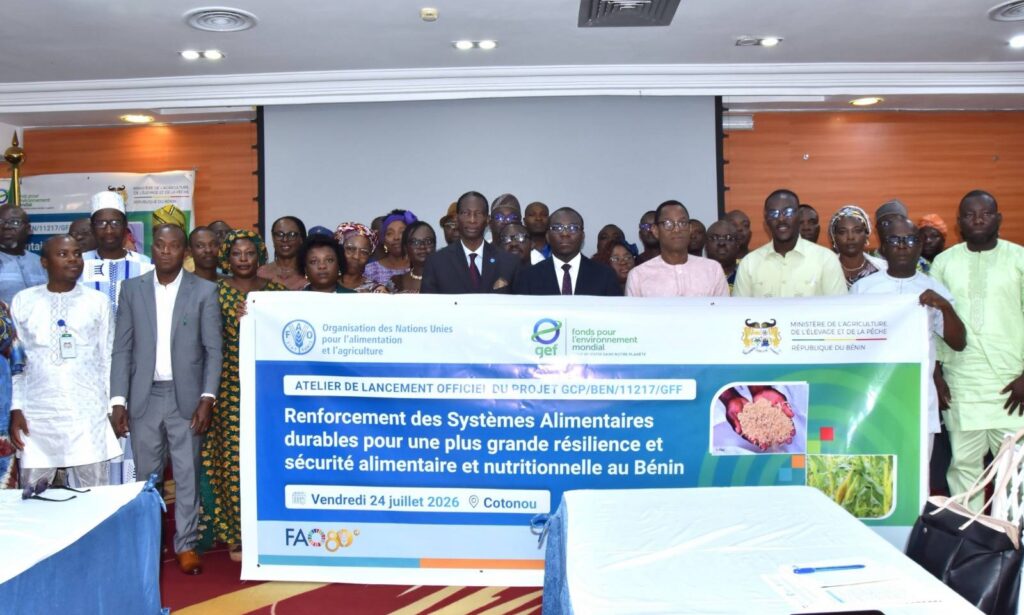
In response, the Beninese government, with backing from global partners, has launched the Food Systems initiative. This $20.7 million project is not just another quick fix—it’s a long-term strategy to overhaul how Benin grows its two most vital crops: rice and maize. The goal? To transform these sectors from low-yield, high-impact systems into sustainable, high-performance models by 2030.
The project is a tripartite effort, funded by the Global Environment Facility ($5.9 million), the Beninese state ($14.8 million), and technical expertise from the Food and Agriculture Organization (FAO). It’s designed to tackle the root causes of land degradation while boosting food security and economic resilience.
where the transformation will unfold
The initiative will focus its efforts on five key municipalities: Karimama, Malanville, Glazoué, Kétou, and Les Aguégués. Over the next six years, the project aims to:
- Restore 20,000 hectares of degraded farmland.
- Promote sustainable farming across 114,900 hectares.
- Empower 36,000 farmers directly, with ripple effects benefiting 356,000 people.
These interventions aren’t just about numbers—they’re about breaking the cycle of poverty. By reviving soil health, the project seeks to stabilize food production, improve incomes, and safeguard Benin’s agricultural future.
the road ahead: challenges and collaboration
The path to success won’t be easy. Agriculture Minister Adin Yeton Bloukounon Goubalan has warned that the wrong techniques could backfire, making careful planning and rigorous field testing essential. Meanwhile, the FAO’s resident representative in Benin, Paul-Henri Zoéwindé Bouda, emphasized that technology alone won’t suffice—what’s needed is a united front.
« The project’s success depends on every stakeholder—government, partners, and farmers—working as one. Without collective ownership, even the best-laid plans will fall short. »
a model for west africa’s future?
If the Food Systems project delivers on its promises, Benin won’t just secure its rice and maize supplies—it could set a precedent for sustainable agriculture across West Africa. By proving that degraded lands can be revived, the initiative could inspire neighboring nations to adopt similar strategies, creating a ripple effect of resilience and prosperity.
The clock is ticking. With 2030 as the deadline, the race to heal Benin’s soils—and feed its people—is on.