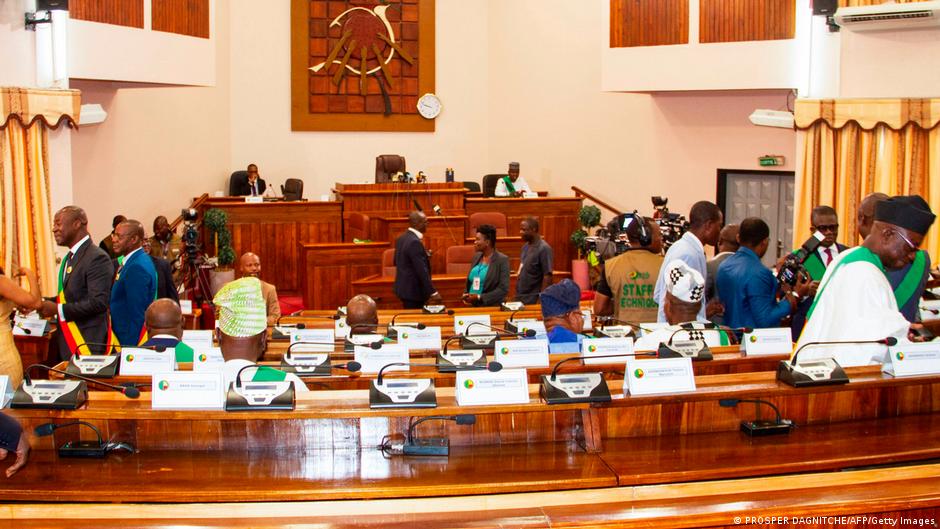
The Bénin Senate convenes for the first time this week

Twenty-five senators—including former presidents—officially assumed office today as the Bénin Senate convened for the first time, marking a pivotal step in the country’s democratic evolution. The newly formed upper chamber, born out of the November 2025 constitutional reforms, will initially operate from the National Assembly building while awaiting dedicated facilities.
Yesterday in Cotonou, under the leadership of Maître Robert Dossou, a former Constitutional Court president, the senators held a closed-door preparatory meeting to outline their priorities. The core mission of this Senate is clear: to serve as a stabilizing force in the political landscape, drawing on the collective wisdom of its members to prevent future tensions.
Who sits in the Senate?
Among those sworn in are former heads of state Patrice Talon, Boni Yayi, and Nicéphore Soglo—figures whose past political differences underscore the chamber’s potential to bridge divides. Analysts and citizens alike view the Senate as a guardian of social peace, though questions linger about its practical impact.
“I genuinely believe this Senate can embody the wisdom of a council of elders. The caliber of individuals elected carries immense responsibility—there is no room for error, no place for the same political disputes that have plagued our nation.”
Balancing experience with fiscal responsibility
The Senate’s establishment comes with a price tag. The government has allocated 100 million West African francs solely for the inauguration ceremony, sparking debate about long-term affordability. While senators will receive dignified compensation, hopes are high that the chamber will limit additional sessions to essential matters.
“Democracy is not free, and neither is stability. While the Senate’s costs are real, so too is the value of preventing political turmoil. Four annual sessions are planned—let’s hope that extraordinary meetings remain minimal. The key is proportionality: the nation’s leaders must demonstrate that this investment is justified.”
Can the Senate deliver?
The chamber’s effectiveness hinges on its ability to reconcile diverse viewpoints and preempt conflicts. With former presidents at the helm, the Senate faces immense expectations. Will it live up to its promise as a unifying force? The coming months will reveal whether this new institution can transform political discourse—or simply add another layer to the bureaucracy.
One thing is certain: the Bénin Senate has arrived, and the nation is watching.